
Last updated November 15, 2026
 Wood & steel frame
 Wrought iron
 Farm & ranch
 Sliding driveway gates
 LiftMaster operators
Free on-site gate assessment - hinges, posts, and your LiftMaster or Nice gate operator checked before anything is quoted
The assessment is free and the quote is the invoice.
Get your free estimateGate Repair Permits, Codes & Inspections in Lakewood, CO: What You Need to Know
Swapping a gate motor sounds like a simple hardware swap. Then the electrician asks about the dedicated 120V circuit, and the project quietly turns into electrical work with a permit attached. That is the piece most gate projects in Lakewood miss: the gate itself is often not the regulated part. The wiring feeding it is. This guide walks through when gate work crosses from repair into permitted installation, how HOA approvals stack on top of city permits, what a gate inspection actually checks, and what unpermitted electrical work means when you sell a Lakewood home. If you’re weighing a repair against a replacement, the permit question should shape the decision before anyone orders parts.
Quick Answer
In Lakewood, most gate repairs (hinges, latches, arms, rollers, sensors, control boards) don’t require a permit. But a new electric gate operator that needs a new dedicated 120V or 240V circuit usually does, because the electrical work falls under Jefferson County and City of Lakewood electrical permitting. Add low-voltage access control (keypads, intercoms, loop detectors) and you may need a separate low-voltage permit. When in doubt, call the City of Lakewood building department before work starts and confirm the scope with your contractor in writing.
Styles & brands we work with
- Wrought iron
- Wood & steel frame
- Farm & ranch
- Sliding driveway gates
- LiftMaster operators
Table of Contents
- Repair vs. Installation: Where the Permit Line Sits in Lakewood
- When an Electric Gate Operator Triggers an Electrical Permit
- Access Control and Low-Voltage Permits
- HOA Approvals and City Permits: Why You May Need Both
- What Happens at a Gate Inspection in Lakewood
- Unpermitted Gate Work and a Colorado Home Sale
- Common Mistakes to Avoid
- Frequently Asked Questions
Repair vs. Installation: Where the Permit Line Sits in Lakewood
The permit threshold comes down to one question: are you replacing a component that already exists, or are you adding or altering a system that wasn’t there before? That distinction shapes almost every permit decision on gate work in Lakewood, and it’s the one most homeowners never hear explained plainly.
Repair work generally stays on the no-permit side of the line. Replacing a worn hinge, swapping a bent roller, adjusting a latch that won’t catch, replacing a limit switch, or changing out a control board on an existing operator are all repairs. Nothing new is being added to the property and no new circuit is being created. If your gate is a manual swing gate with a sagging post, that’s a repair too, even when it involves resetting the post in concrete.
Installation and alteration usually cross into permit territory. Installing a brand new electric gate operator, running a new dedicated circuit out to the gate, or changing the type of operator (say, from a swing to a slide) are the kinds of work that get reviewed. The reason isn’t gate-specific: it’s that electrical and structural work on a property is generally regulated, and a licensed electrician pulling the permit is how the city verifies the circuit is safe and to code.
Here’s a simple way to think about it:
- Repair, typically no permit: hinge, roller, latch, arm, sensor, control board, keypad swap on existing wiring, battery backup, post reset on an existing manual gate.
- Installation, typically a permit: new operator with a new dedicated electrical circuit, new trenching and conduit to the gate, change of operator type, new structural posts for a new gate.
- Grey zone: swapping an operator like-for-like on an existing circuit. Even here, clear it with the city before work starts rather than after.
The safe habit: call the City of Lakewood building department and describe the work in a sentence or two. The person on the phone will tell you whether a permit applies to your specific scope. Get that answer before the gate specialists schedule anything.
When an Electric Gate Operator Triggers an Electrical Permit
Most modern electric gate operators need a dedicated power run. That means a new circuit from the panel, a trench or conduit path to the gate location, and a disconnect near the operator. That work is electrical work, and in Jefferson County and the City of Lakewood, that’s the piece that usually requires a permit.
An operator swap on an existing circuit is a different situation. If the previous operator already had a proper dedicated circuit and the new unit runs on the same voltage, the electrical scope may be limited to reconnecting the existing conductors. In that case, many projects proceed without a new electrical permit. But confirm it, because the consequence of getting it wrong lands on you, not the installer.
Here’s how a typical electrified gate install plays out with permitting in mind:
- Confirm the operator model and its power requirement. A residential swing operator like a Mighty Mule may run on a 120V dedicated circuit, while some heavier-duty systems need 240V.
- Have a licensed electrician pull the electrical permit if a new circuit is being added. The permit is filed under their license, not the gate company’s.
- Install the conduit, conductors, and disconnect to code. This is inspected by the electrical inspector, not the gate specialist.
- Mount the operator, set limits, install safety edges and photo eyes, and test the full travel. This is gate work, done after the electrical rough-in.
- Final inspection covers both the electrical and the safety device installation.
Safety matters here. The 120V or 240V feed to a gate operator is live electrical work, and the disconnects and grounding are what make it safe to service later. We never recommend opening a panel or making a connection at the operator yourself. For gate-related electrical work, that’s a job for a licensed electrician who pulls the permit, and for the gate system itself, our team at electric gate repair handles the operator side.
Access Control and Low-Voltage Permits
Keypads, intercoms, card readers, loop detectors, and safety photo eyes are all low-voltage devices. That doesn’t automatically mean no permit. In many jurisdictions, low-voltage wiring for access control is treated separately from high-voltage electrical, and a low-voltage permit may be required when new wiring is run to a new device.
Two things determine whether your Lakewood access control project needs its own permit:
- New wiring vs. existing wiring. Replacing a failed keypad on wiring that already exists is generally a repair. Running new conductors from the operator or house to a new keypad location is generally a new installation.
- Scope of the device. A simple entry keypad may not trigger a low-voltage permit. A full access control system with loop detectors and intercom may, depending on how the city classifies the work. A DoorKing telephone entry system on a residential gate is the kind of install where you should ask before drilling.
The practical advice from the field: if you’re running new wire through conduit, ask the same question you’d ask about a new circuit. Call the City of Lakewood, describe the device and the wiring path, and get a yes or no. If yes, the licensed low-voltage contractor or electrician pulls the permit, and the inspection confirms the devices are installed correctly and the safety elements are functional.
The safety edges and photo eyes deserve their own mention here, because they’re both a code requirement on most automatic gates and the thing that gets skipped when a homeowner DIYs the wiring. A gate that closes on a child or a pet because the safety device failed is the exact scenario the inspection is designed to prevent. Whether it’s a Ghost Controls residential unit or a DoorKing commercial-grade system, the safety devices are not optional.
HOA Approvals and City Permits: Why You May Need Both
Lakewood’s older neighborhood HOAs and newer subdivisions both enforce architectural rules, and those rules are separate from city permits. An HOA architectural review committee approves the look and function of a gate change. The city approves the code and electrical side. You often need both, and they don’t talk to each other.
What the HOA typically reviews:
- Gate design, material, height, and color
- Fence line and post placement within the lot
- Setback from the property line and distance to sidewalks or right-of-way
- Privacy and sightline considerations
- Whether the change fits the recorded plat or the neighborhood’s architectural guidelines
What the city reviews:
- Whether a structural or electrical permit is required
- Electrical code compliance for a new operator circuit
- Safety device installation on automatic gates
- Right-of-way or easement impact if the gate reaches beyond the property line
The sequencing that saves the most headaches: get HOA approval first, then pull any city permits, then schedule the work. If you reverse the order, you can end up with a permitted electrical install that the HOA rejects on architectural grounds, which means you’re redoing the install or fighting the board. Both processes take weeks, so start early. And if your HOA has a written specification (many Lakewood-area ones do), bring that spec to the gate specialist so the design on paper matches the actual opener, post, and operator model. That detail prevents change orders.
What Happens at a Gate Inspection in Lakewood
An inspection on gate electrical work isn’t an inspection of your gate’s appearance. The inspector is verifying that the electrical installation is safe and code-compliant, and that the safety devices on the automatic operator function correctly. It usually takes 20 to 30 minutes on site.
A typical inspection sequence:
- Verify the permit scope. The inspector checks the permit (usually filed under the electrician’s license) against what was actually installed.
- Electrical rough-in check. Conduit, conductors, disconnect, and grounding are checked for code compliance.
- Operator and safety devices. Photo eyes and safety edges are tested by interrupting the beam or pressing the edge during a travel cycle to confirm the gate reverses.
- Control and disconnects. The inspector confirms the operator and controls are correctly grounded and the disconnect is accessible.
- Sign-off or correction notice. If everything is to code, you get a passed inspection. If anything fails, you get a correction list and a re-inspection.
To pass on the first visit, the simplest rules are: don’t install the operator until the electrical rough-in has been inspected (if the city requires a rough-in), keep the permit and plans on site, and make sure the safety devices are working before the inspector arrives. A gate inspector can’t test a photo eye that’s been wired shut or bypassed, and that’s a common reason for a correction notice. We’ve seen enough failed inspections across nine brands (LiftMaster, FAAC, BFT, Linear, Viking, Ghost Controls, DoorKing, Elite, and Mighty Mule) to know the failure points are almost always electrical or safety-device related, not gate-mechanical.
Unpermitted Gate Work and a Colorado Home Sale
Colorado’s seller disclosure form asks about unpermitted work and known code violations. That’s the piece most homeowners don’t think about until they’re staring at the disclosure form a week before closing. Unpermitted electrical work on a gate operator can become a disclosure item, and depending on the wording and the buyer’s inspector, it can slow a sale or become a negotiation point.
What actually happens in practice isn’t dramatic. A buyer’s inspector notes “gate operator installed without permit visible,” the buyer’s agent asks for documentation, and you either produce a permit and inspection record or you explain there wasn’t one. If the electrical work is clean and to code, most transactions proceed. If it isn’t, the buyer’s inspector can flag it as a potential safety issue, which can prompt a repair request or a request for a credit.
The fix is straightforward when caught early:
- In Lakewood, ask the City of Lakewood building department whether the work can be permitted retroactively, and what inspections would be required.
- Have a licensed electrician review the existing circuit and confirm it meets code before a permit application.
- Keep every permit and inspection record with the home’s maintenance file, because a clean paper trail at closing is far easier to produce than at the last minute.
The cleanest approach is to pull the permit at the time of installation. A gate system with a paper trail sells a home faster than a gate system without one, and the cost of a permit is almost always less than the cost of a late-stage repair request or a delayed closing.
Common Mistakes to Avoid
- Assuming “gate work” is outside the permit system. The gate itself often isn’t the regulated part, but the electrical circuit and safety devices usually are. Ask the City of Lakewood first, not the contractor last.
- Ordering the operator before the HOA approves the design. A gate that fails the HOA review has to be redesigned, and the operator that fit the rejected design may not fit the approved one. Sequence HOA approval before hardware selection.
- Letting the installer touch the new circuit. Electrical permitting sits with a licensed electrician. The gate specialist shouldn’t be the person who pulls a circuit out of a panel, and reputable companies won’t offer to.
- Skipping the safety edge and photo eye on an automatic gate. These devices are required for a reason. A gate that reverses on contact protects people, pets, and vehicles, and it’s the first thing an inspector tests.
- Treating a keypad swap as scope-free. Replacing an existing keypad is generally a repair. Running a new wire to a new keypad location may need a low-voltage permit. Know which one you’re doing.
- Assuming a Mighty Mule or Ghost Controls residential operator is exempt. The operator model doesn’t change the permit rules. The circuit and the safety devices do. Even the most common residential system needs proper wiring and functioning safety edges.
- Throwing out the permit paperwork after the install. When you sell a Lakewood home, that paperwork becomes your evidence that the electrical work was inspected. Keep it with the home’s records.
See the difference
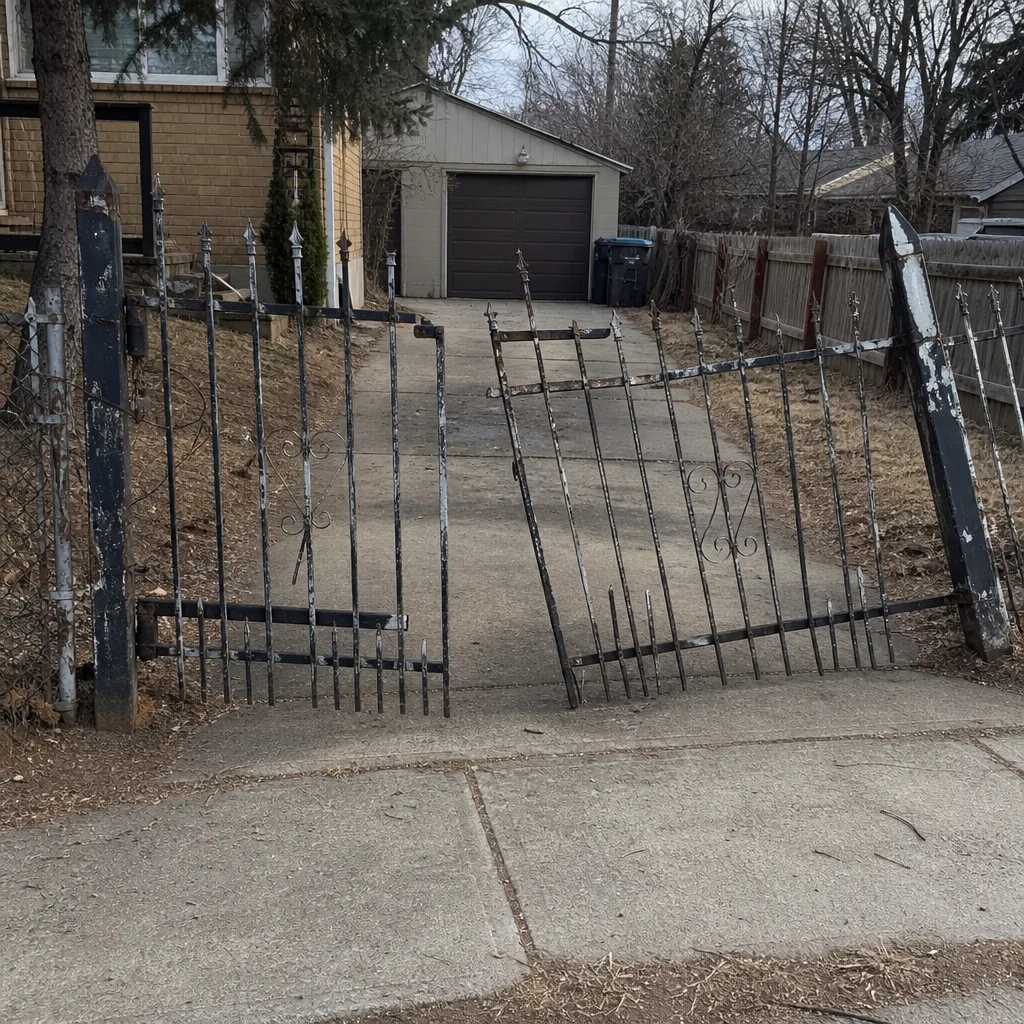 Before
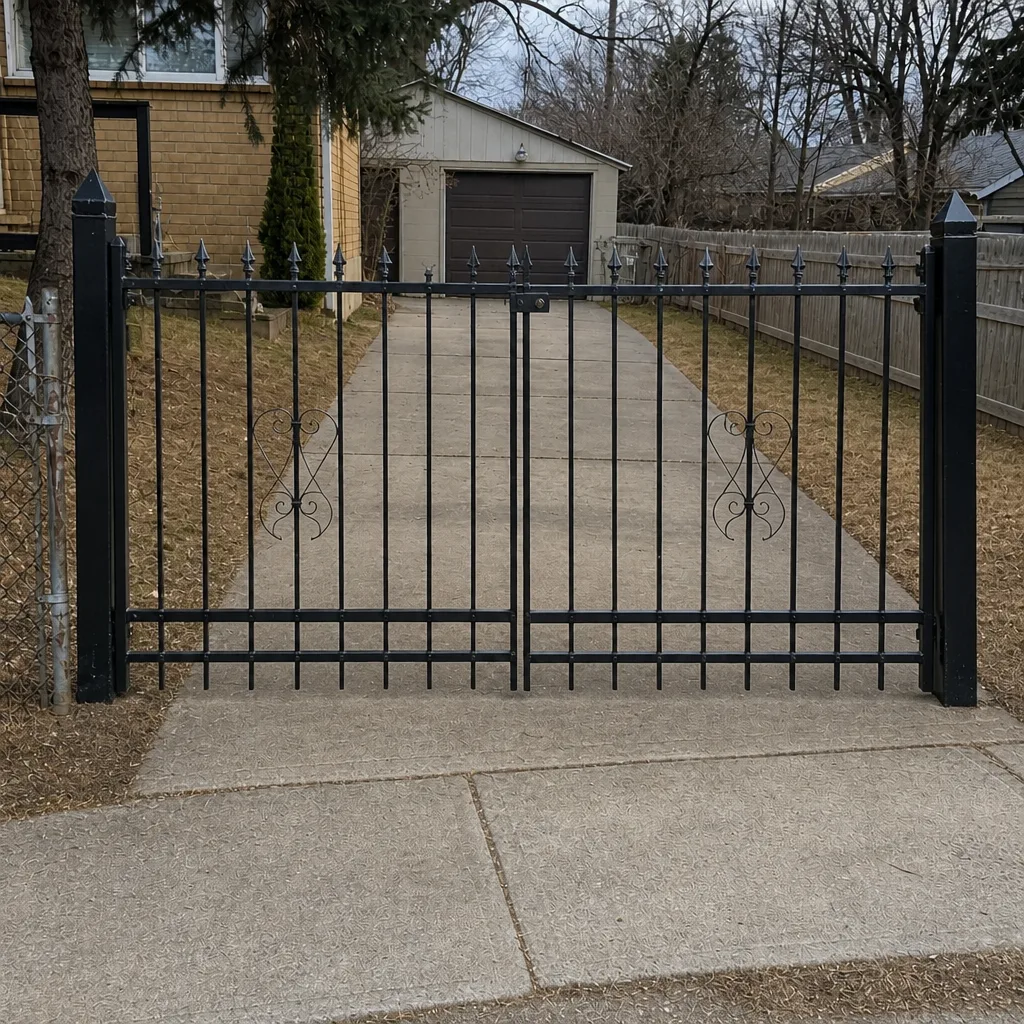 After
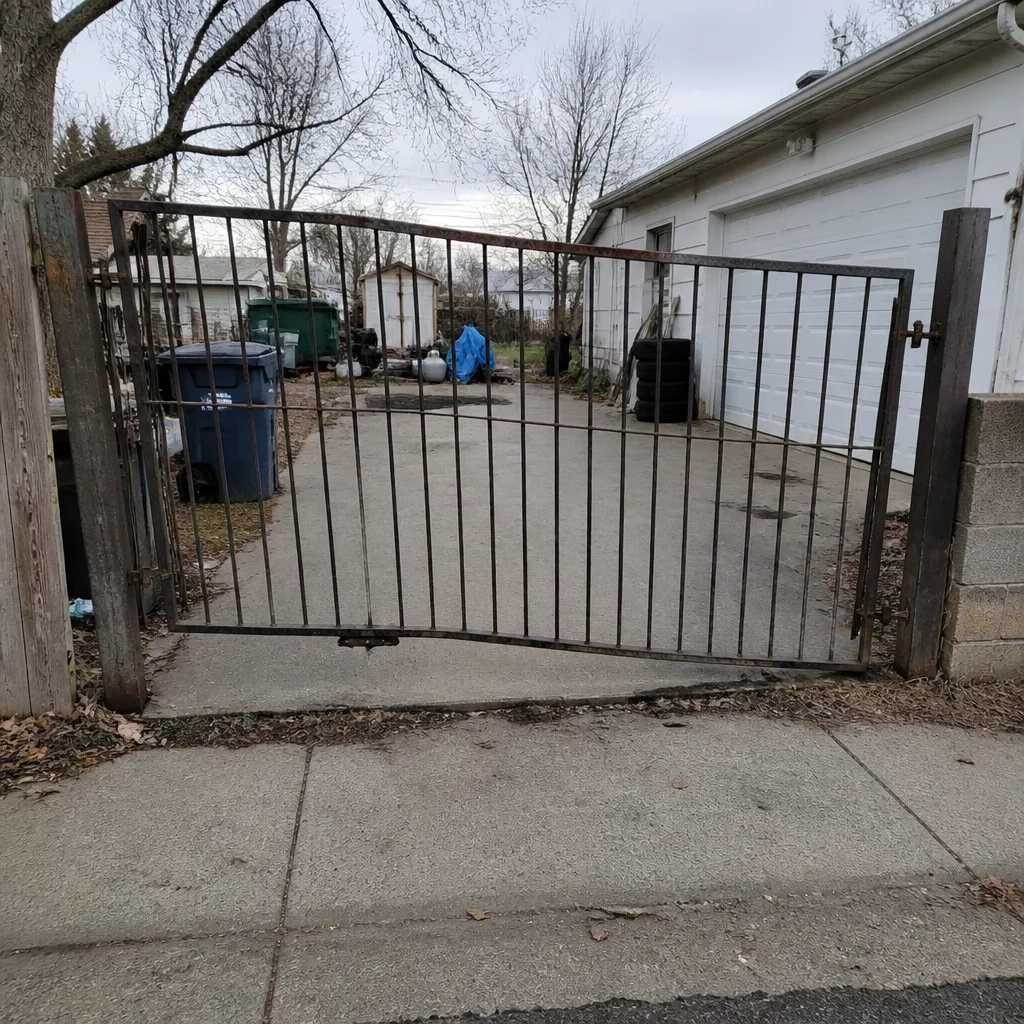 Before
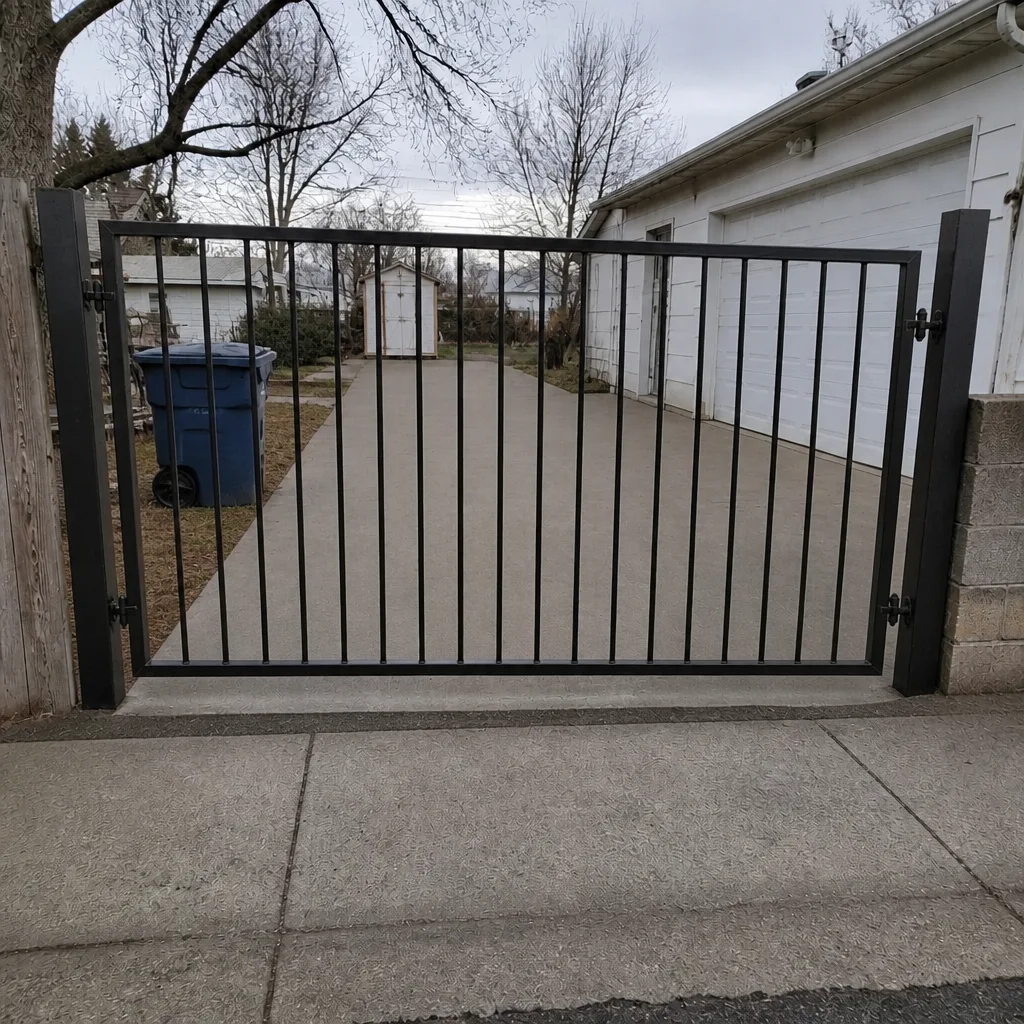 After
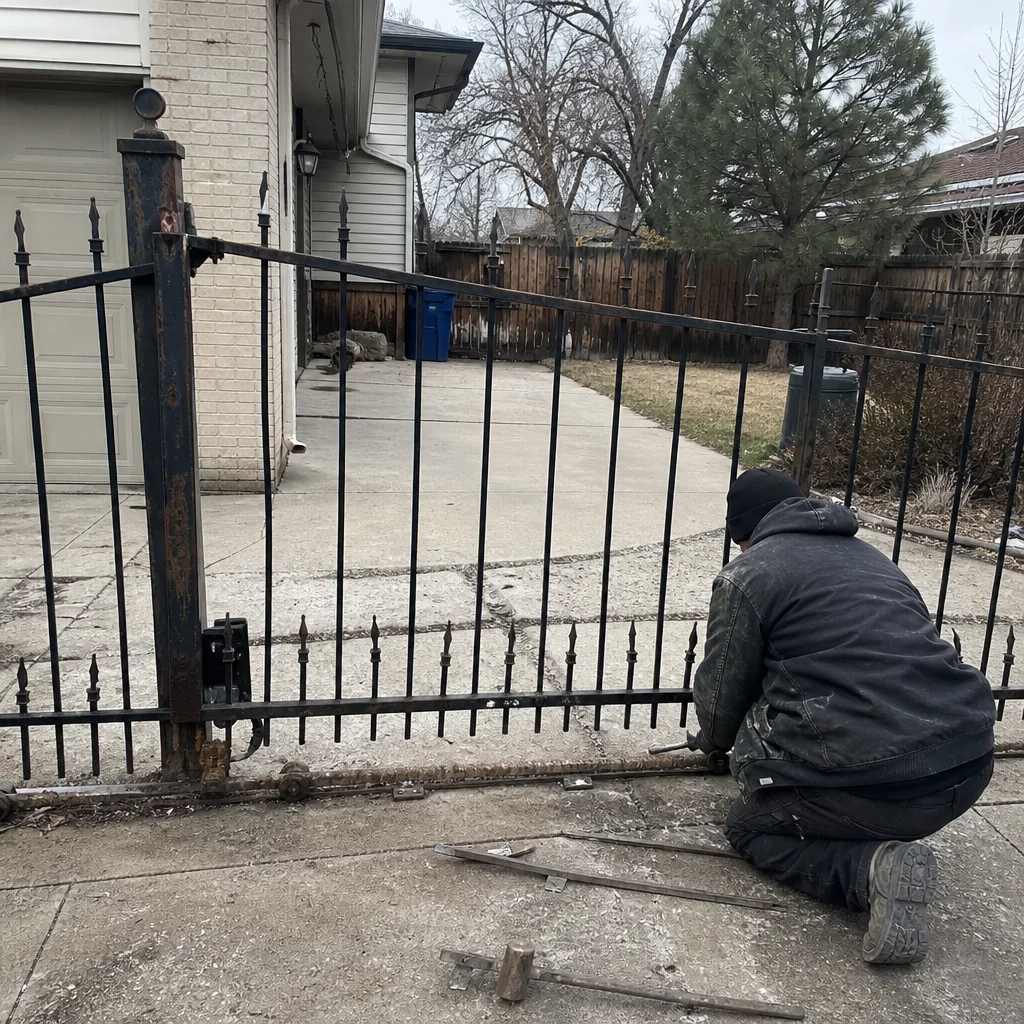 Before
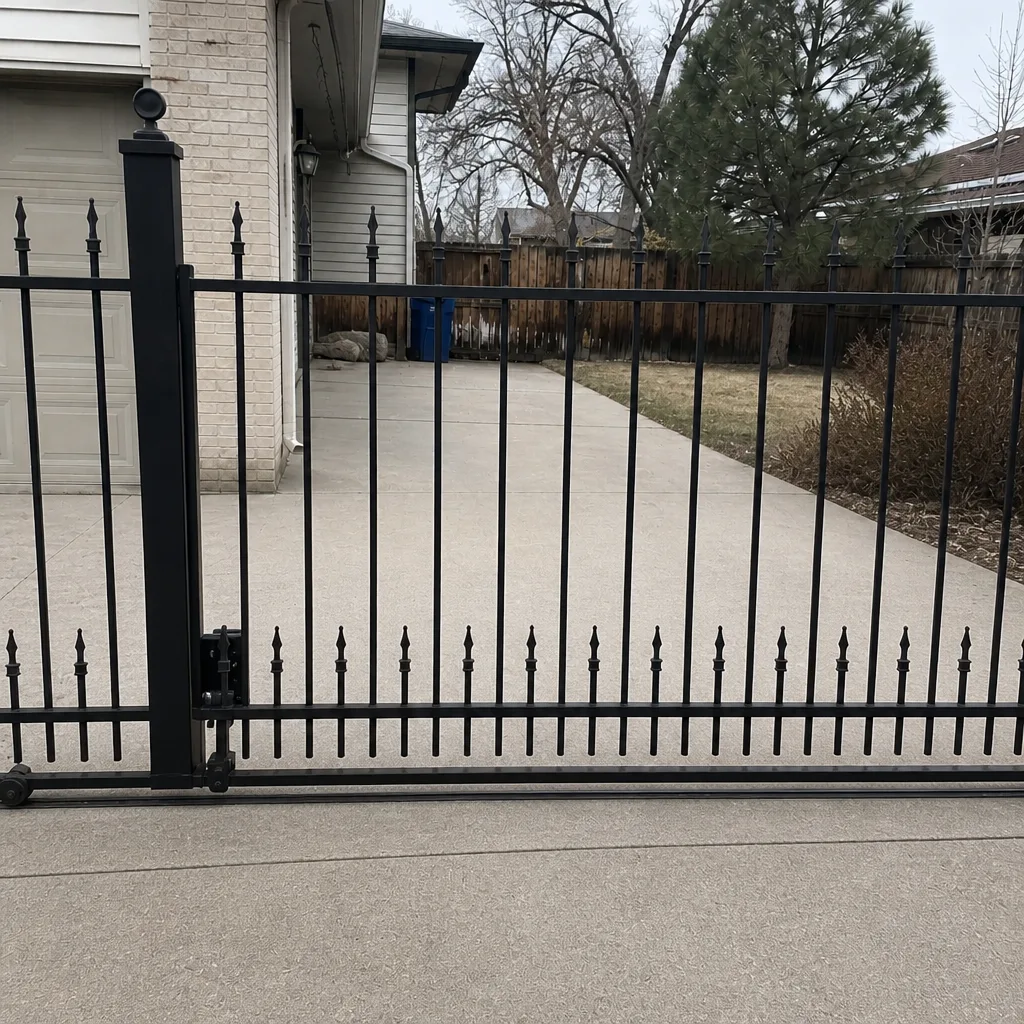 After
When to Call a Professional
Some gate questions are answerable by phone. Others need eyes on the gate, the wiring, and the operator before anyone can give you a straight answer. Call a gate specialist when your operator is throwing a fault code you can’t identify, when the gate reverses or jerks during travel, when a brand you recognize (Elite, DoorKing, FAAC, or any of the nine we work on) is giving you a symptom pattern you don’t recognize, or when the safety photo eye or edge isn’t working and the gate closes through it. Call when you’re planning a replacement and need to know what the electrical scope looks like before you commit to a model. And call when your HOA has an architectural specification you want to match to the actual hardware, because that’s where a quick conversation prevents a delayed install.
Lakewood Gate Repair offers free estimates in Lakewood. Call (866) 330-9331. We answer 24/7. Fast dispatch from 7am to 7pm, Sunday through Friday. Our technicians have up to 12 years of experience, and we work exclusively on gates: repair, electrical repair, and installation, from the motor to the hinge. Every estimate we write spells out the scope, including any electrical work, before anyone starts. The written estimate sets the price, and you’ll see it in writing before we begin.
Frequently Asked Questions
Most gate repairs in Lakewood don’t require a permit. Replacing a hinge, roller, latch, sensor, control board, or adjusting an existing operator on existing wiring is typically repair work. A new operator circuit or a new access control run is different, and the City of Lakewood can confirm on a short call. Call (866) 330-9331 if you want us to walk through the scope with you before you decide.
Yes, usually, when the operator needs a new dedicated 120V or 240V circuit. The electrical work is permitted and inspected, and a licensed electrician pulls the permit. If an existing dedicated circuit is already in place and you’re swapping like-for-like, the scope may be smaller, but confirm the details with the city before work starts. Call (866) 330-9331 for a free estimate on the gate side.
Sometimes. Low-voltage access control (keypads, intercoms, loop detectors, card readers) may need a low-voltage permit when new wiring is run to a new device, and may not when it’s a straight replacement on existing wiring. Whether it applies depends on the City of Lakewood and the scope, so ask before drilling. Call (866) 330-9331 and we’ll help you scope the gate side of the install.
Yes, often both. HOAs approve the design, materials, height, and placement; the city addresses code, electrical, and safety device compliance. The two don’t overlap, and one doesn’t replace the other. Start with the HOA review because it can change what hardware you order. Call (866) 330-9331 for a free estimate once the design is set.
The inspection checks the electrical installation and the safety devices on an automatic operator, not the appearance of the gate. That means the conduit, conductors, disconnect, and grounding are verified, and photo eyes and safety edges are tested for proper reversal. Keeping the safety devices functional and the electrical work clean is what passes on the first visit. Call (866) 330-9331 if your gate has failed a safety test or reversed unexpectedly.
It can show up during the buyer’s inspection and become a disclosure question at resale. In Colorado, the seller disclosure form asks about unpermitted work, so the fix is to permit the existing work retroactively if Lakewood allows it, have a licensed electrician verify the circuit, and keep the paperwork. Call (866) 330-9331 for a free estimate on the gate inspection and any repairs needed to get it permit-ready.
The Bottom Line
The gate is often the least regulated part of the project. The circuit, the low-voltage wiring, and the safety devices are what trigger permits and inspections, and that’s the part most homeowners don’t ask about until closing. Repair work generally stays permit-free in Lakewood. New operator circuits and new access control wiring usually don’t. HOA architectural approvals are separate from city permits, and you may need both. Inspections verify the electrical and safety side, not cosmetics, so working safety edges and a clean electrical install pass on the first visit. For the gate itself, our team at Lakewood Gate Repair handles the repair, electrical repair, and installation from a single-trade focus. If you’re in Lakewood and weighing a repair or replacement, we’ll help you scope it, quote it in writing, and schedule it, with the price set by the written estimate before work starts.
Contact Us
Call (866) 330-9331 for a free estimate. We answer 24/7. Fast dispatch from 7am to 7pm, Sunday through Friday. Our technicians have up to 12 years of experience on gate systems, and we work exclusively on gates: manual and electric repair, electrical repair, and full installation. From a Mighty Mule residential swing gate to a DoorKing access control system, our team knows the brand, the hardware, and the permit questions that come with the install. If your gate is failing, planning a replacement, or facing an inspection, call us and we’ll walk through the scope before anything is scheduled. Visit our Lakewood page to see how we work with homeowners and property managers across the area, and see what our gate repair service covers in detail.
Written by the team at Lakewood Gate Repair.