
Last updated November 15, 2026
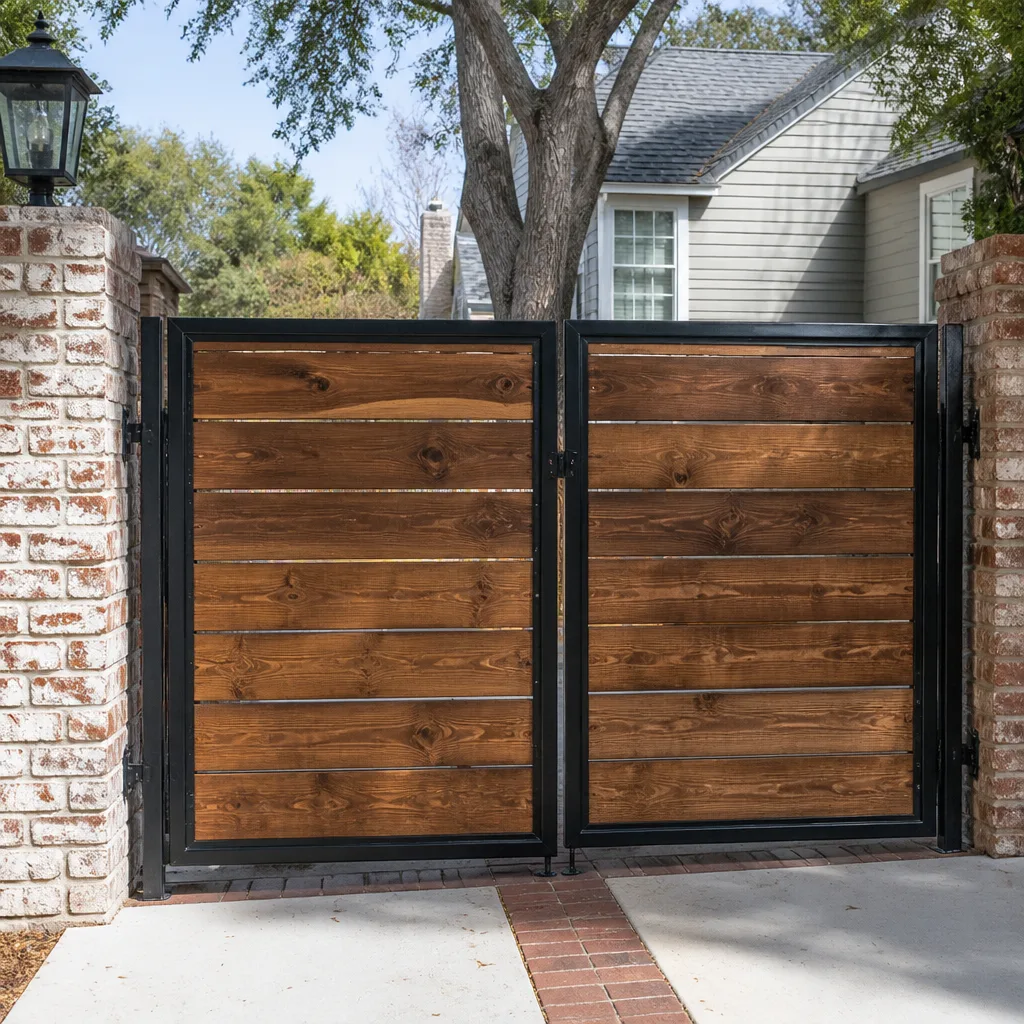 Wood & steel frame
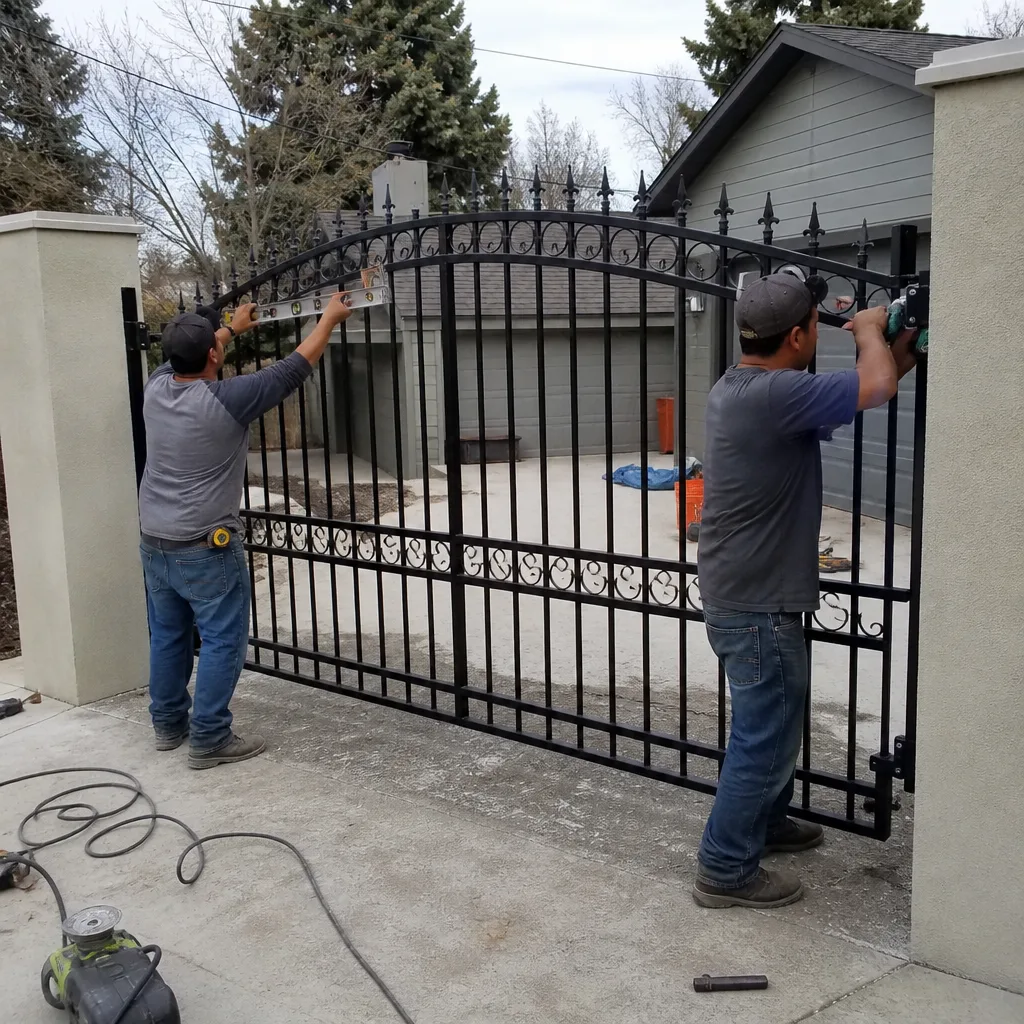
 Wrought iron
 Farm & ranch
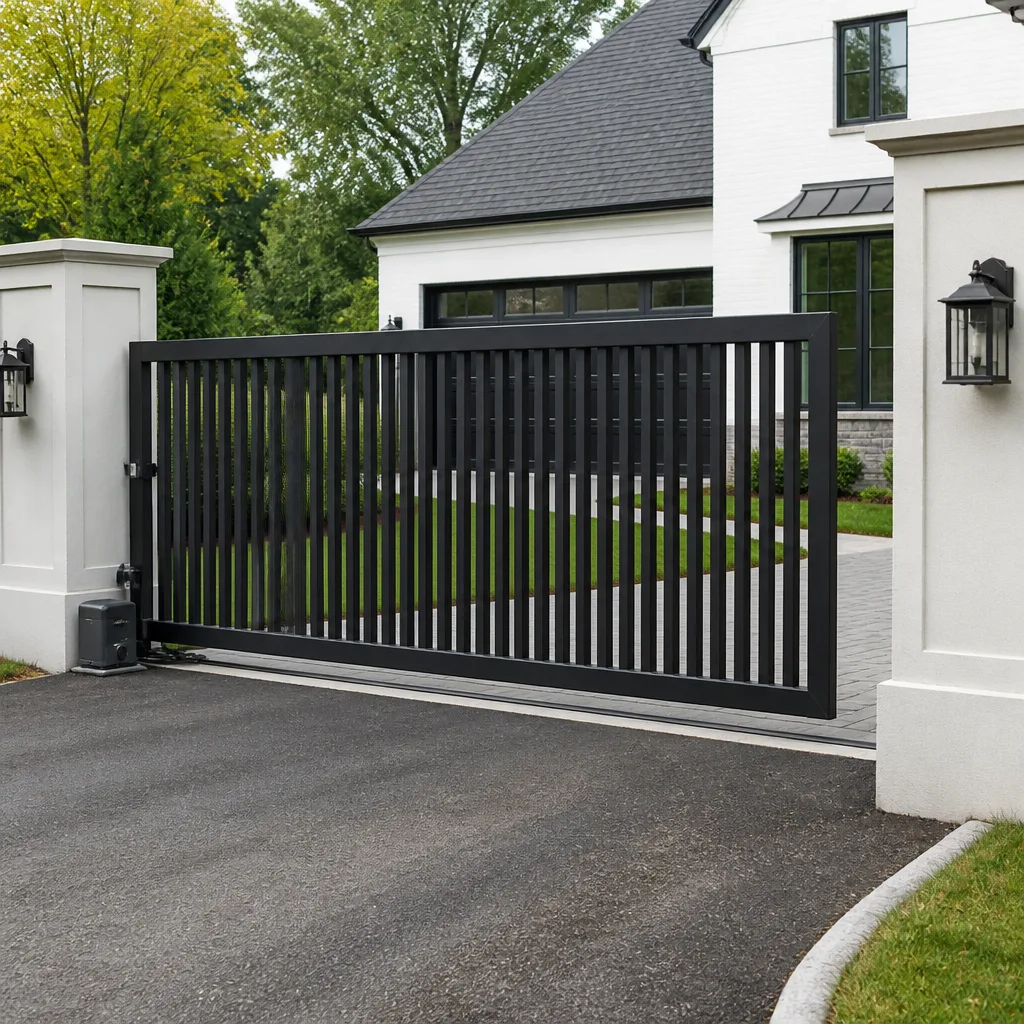 Sliding driveway gates
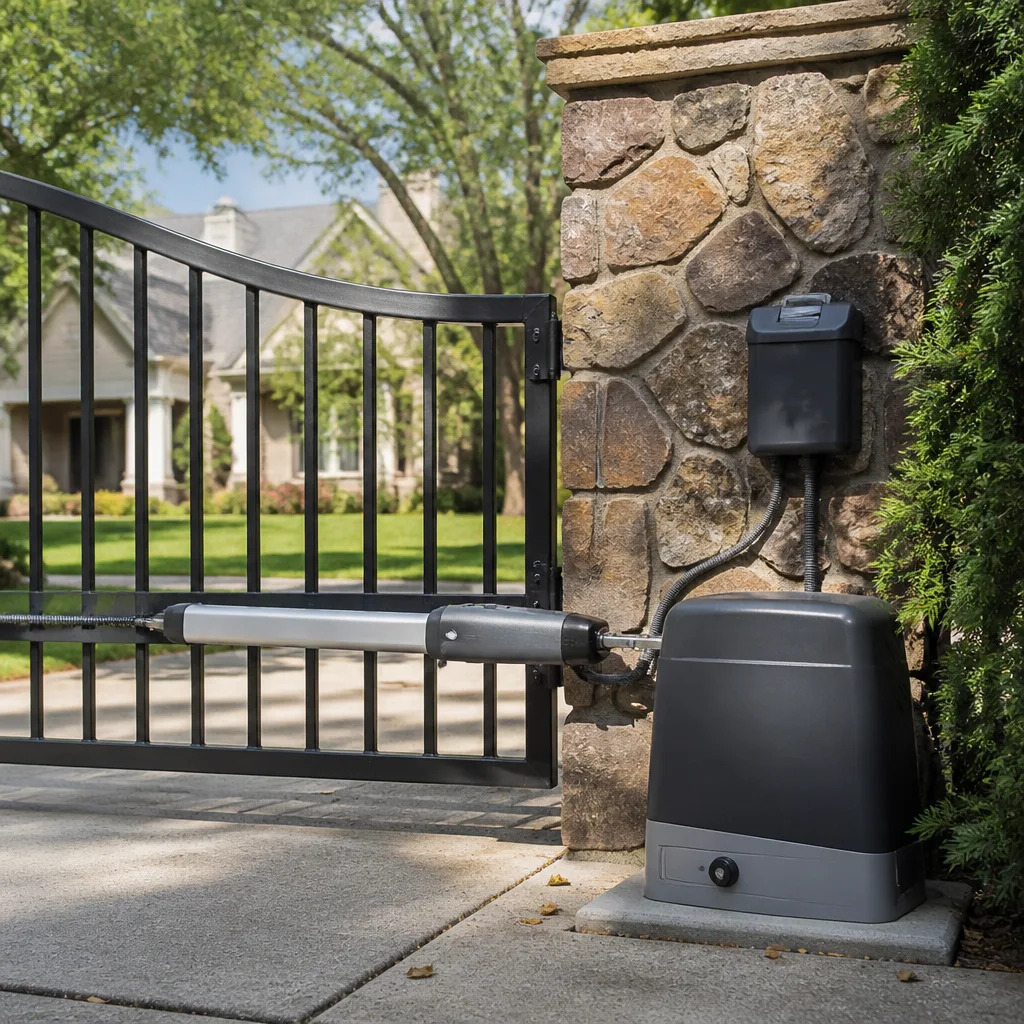 LiftMaster operators
Free on-site gate assessment - hinges, posts, and your LiftMaster or Nice gate operator checked before anything is quoted
The assessment is free and the quote is the invoice.
Get your free estimateGate Repair Warning Signs: A Lakewood Homeowner’s Reference Guide
A gate that reverses direction partway through its cycle isn’t malfunctioning. It’s doing exactly what it’s programmed to do when it meets resistance. The board reads the torque spike, concludes something is in the path, and sends the gate back. That’s safety logic working correctly. The real question is what’s creating the resistance, and that’s where the diagnostic work starts. Most gate failures in Lakewood announce themselves 60 to 90 days before they strand you, but the signs don’t mean the same thing on every gate type. A symptom on a swing gate points somewhere completely different than the same symptom on a slide gate. This guide maps the behaviors you’re seeing to the causes they usually indicate, so when you call, you’re giving a technician real information instead of a guess.
Quick Answer
Gate repair warning signs are early changes in how your gate moves, sounds, or responds: slow operation, mid-travel reversal, grinding, partial opening, or a remote that only works up close. On a swing gate these usually point to hinge binding, operator torque settings, or battery failure. On a slide gate they more often mean track debris, worn rollers, or a chain that’s jumped a sprocket. Signs that involve a gate moving on its own, failing to stop, or dropping are immediate safety risks. Everything else can usually wait for a scheduled repair window.
Styles & brands we work with
- Wrought iron
- Wood & steel frame
- Farm & ranch
- Sliding driveway gates
- LiftMaster operators
Table of Contents
- Symptom-to-Cause Mapping: What the Five Most Common Behaviors Mean
- Why Warning Signs Look Different in Winter and Summer
- Operator Warning Signs vs. Structural Warning Signs
- Which Warning Signs Are Immediate Safety Risks
- Access Control Symptoms That Signal Bigger Problems
- Swing Gate vs. Slide Gate: Same Symptom, Different Cause
- What You Can Check Yourself Before Calling
- Brand-Specific Clues You’ll Notice on Your Own Operator
Symptom-to-Cause Mapping: What the Five Most Common Gate Behaviors Mean
Five behaviors account for most of the service calls we run in Lakewood. Each one narrows the problem before anyone arrives on site, and knowing which behavior you’re seeing speeds up the repair considerably.
1. Slow operation
A gate that’s noticeably slower than it used to be usually isn’t an operator problem. Slide gates slow down when rollers flatten, when the track collects grit, or when a chain loses tension. Swing gates slow down when hinges dry out or a post has shifted slightly. In cold weather, grease thickens and hydraulic operators move more sluggishly, which is normal. Persistent slowness in warm weather points to mechanical drag.
2. Reversal partway through the cycle
An electric gate repair call almost always starts here. The operator is detecting resistance and treating it as an obstruction. The resistance itself has a source: a hinge binding at one point in the arc, a track obstruction the wheels roll over, or a safety sensor reading a phantom. A BFT or Linear operator with a misaligned photocell will reverse at the same point every time, which is a strong clue.
3. Grinding noise
Grinding means metal-to-metal contact. On slide gates it’s usually a worn chain and sprocket, or rollers that have lost their bearings. On swing gates it’s hinge pins with no grease left, or a bent arm on the operator linkage. Grinding gets worse fast. It’s the one sound that should move a repair up the schedule rather than wait.
4. Partial opening
A gate that opens partway and stops could be a limit switch that’s drifted, a battery that no longer delivers enough current under load, or an operator that’s overtorqued against a mechanical bind. Swing gates with mechanical arms often lose their arc setting over time. Solar-powered Ghost Controls systems commonly show partial travel as the battery drops.
5. Failure to respond
If the gate doesn’t move at all, work outward from the signal. Remote, then receiver, then board, then power. Sometimes it’s a dead battery in the transmitter. Sometimes it’s a tripped breaker or a control board that lost its programming after a power surge. Viking and Linear units both show this after storm-related outages.
Why Warning Signs Look Different in Winter and Summer
Lakewood’s temperature swings change how gate hardware behaves, and a homeowner who doesn’t account for season will misread the symptom. Cold reveals mechanical problems. Heat reveals electrical ones. Knowing which you’re looking at saves a wasted service call.
In winter, frozen ground shifts posts slightly. A swing gate with a small post lean will drag at one point in the arc and reverse. Grease in hinges and on chains thickens, adding drag that disappears on warm days. Steel contracts, which can tighten clearances and bring parts into contact that weren’t touching before. If your gate only reverses on cold mornings and runs fine by afternoon, note that pattern. It tells a technician exactly where to look.
In summer, the opposite happens. Metal expands, clearances open up, and mechanical drag usually goes away. What shows up instead is electrical. Control boards overheat in direct sun. Batteries in solar-charged operators can boil off or fail. Photocells that get direct afternoon sun can misread and cause phantom reversals that only happen in late afternoon. If your gate misbehaves at the same time of day, pay attention to whether that time correlates with sun or heat rather than with use.
Before you call, note three things:
- Whether the problem happens at all temperatures or only at temperature extremes.
- Whether it happens at the same point in the gate’s travel every time.
- Whether it happens at the same time of day regardless of use.
That three-item record turns a vague description into a diagnostic clue. It’s the single most useful thing you can hand a technician who hasn’t yet been to the property.
Operator Warning Signs vs. Structural Warning Signs
Every gate failure belongs to one of two families: the operator system or the gate structure itself. The distinction matters because the wrong diagnostic wastes time and money, and because structural problems get worse while operator problems don’t usually damage the gate.
Operator warning signs
These originate in the motor, control board, sensors, wiring, or remote system:
- The gate responds to the remote only at close range.
- The gate beeps or flashes a fault code.
- Reversal happens at random points in the cycle.
- The gate runs at normal speed but won’t complete its travel.
- The remote works for one gate but not another on the same property.
- DoorKing access controls lag or drop keypad entries.
Operator problems are usually electrical and usually diagnostic-visible. A technician with a meter and a board flash-code reference can move through them in sequence.
Structural warning signs
These originate in the gate leaf, hinges, posts, track, rollers, or chain:
- The gate sags visibly or hangs at one end.
- Hinges squeal or show rust streaks.
- A slide gate jumps its track or rides up on one side.
- The gate leaf contacts the ground or drags at the open or closed position.
- Posts are visibly leaning or the concrete footing shows cracks.
Structural problems compound. A gate running on a bad track stresses the operator on every cycle. In our experience, the biggest single cause of premature operator failure in Lakewood is a structural problem nobody fixed. If you’re replacing an operator because it keeps failing, have the gate structure evaluated first. That’s the pattern gate repair technicians recognize from repeated service on the same property.
Which Warning Signs Are Immediate Safety Risks
Most gate repairs can wait for a scheduled window. A few cannot, and the distinction is worth understanding clearly.
Stop using the gate and call immediately if any of these are present:
- The gate moves without a command. A slide gate that creeps open overnight or a swing gate that opens on its own is a control board or safety sensor failure. This is a security and safety problem at the same time.
- The gate doesn’t stop or reverse when something is in its path. Photocell or safety edge failure on an electric gate means the gate will close on whatever is in its way. Do not test this with a person, vehicle, or pet as the obstruction.
- The gate leaf has dropped, tilted, or come off its track or rollers on a slide gate. A slide gate that has ridden off its track can fall, and the panels are heavy enough to cause serious injury.
- Exposed or damaged wiring at the operator, keypad, or photocell. Mains voltage at a gate can be present at a keypad or sensor housing. Don’t touch the equipment, and don’t open any enclosure to look inside.
- Burned smell or visible scorching at the operator or control box. This indicates a board or power supply failure that’s already damaged something.
For items that involve wiring, moving panels, or safety sensors, we recommend stopping use of the gate and having it looked at by a trained technician. Gate operators carry mains voltage and stored potential energy in the gate leaf and drive system. Diagnosing by inspection is fine. Reaching into a running mechanism or an open control box is not.
Everything else – slow operation, grinding, partial opening, remote inconsistency – typically allows a scheduled repair. Grinding gets moved up because it’s actively damaging parts.
Access Control Symptoms That Signal Bigger Problems
Keypads, intercoms, and remote receivers are often the first place an underlying wiring or power problem shows up. Homeowners read these as separate annoyances. A gate specialist reads them as early warnings that the operator is next.
Watch for these patterns:
- Keypad lag. A keypad that takes one or two seconds to register a code, or that beeps intermittently, is usually receiving low voltage. Low voltage at a keypad almost always means a failing transformer or a wire that’s been partially damaged.
- Intercom static. Static or dropped audio on an intercom points to a wiring issue or a ground problem. It’s rarely the intercom unit itself unless that unit is old.
- Remote inconsistency. If a remote works from inside a car but not from the driveway, or works sometimes and not others, the receiver is receiving a weaker signal than it should. Common causes are a failing receiver module, antenna damage, or interference from something newly installed on the property. A remote that works fine on one gate and not another at the same property points at the second gate’s receiver or wiring, not the remote.
- Loop detector dropout. Loop detectors under the driveway sometimes lose sensitivity over years as the loop wire degrades. This shows up first as intermittent vehicle detection, then consistent failure.
These symptoms cost less to fix early. A transformer replacement is a small job. A control board that’s been running on marginal power for a winter is a larger one. When access control misbehaves in Lakewood, treat it as an indication to have the whole gate system checked, not just the keypad.
Swing Gate vs. Slide Gate: Same Symptom, Different Cause
The same symptom means different things depending on gate type. Use this as a quick-reference map. Note the pattern: swing problems skew mechanical, slide problems skew electrical and track-related.
- Slow operation: swing – hinge binding, arm wear, cold grease. Slide – roller flat, track debris, chain tension loss, motor load increase from all of those.
- Reversal partway through: swing – a bind at one point in the arc, or safety sensor reading the arc as an obstruction. Slide – track obstruction, misaligned photocell, or the gate riding up on one roller.
- Grinding: swing – hinge pin without grease, bent linkage. Slide – chain and sprocket wear, roller bearing failure.
- Partial opening: swing – limit switch drift, arc setting lost, or overtired mechanical arm. Slide – limit switch drift, undervoltage during travel, or the gate catching at a track transition.
- Failure to respond: swing – usually electrical: remote, receiver, board, or power. Slide – same, plus loop detector failure if the gate is triggered by driveway loops.
This is why a technician who works only on gates comes to a property with a plan rather than a guess. The symptom alone doesn’t narrow the problem. The combination of symptom, gate type, and brand does. Call (866) 330-9331 with the three can usually name what to bring before anyone rolls out. We answer 24/7.
What You Can Check Yourself Before Calling
A few observations from the safe side of the gate are genuinely useful. They don’t require touching any mechanism and they don’t expose you to moving parts or mains wiring. Do these before calling, and keep notes:
- Watch a full cycle from start to finish. Note exactly where the gate reverses, slows down, or sounds different. “Halfway through the closing” is a more useful clue than “the gate stops.”
- Check the operator for fault lights or beeps. Most operators flash a fault code sequence. Count the flashes and note them. Viking, Linear, and BFT systems all use flash codes that narrow the problem to a specific part of the system.
- Test the remote from further away. Walk back from the gate. If the remote only works from close range, the receiver or antenna is the likely issue.
- Look at the track and rollers on a slide gate. Obvious debris, leaves, or gravel in the track is worth noting. Do not reach into the mechanism while the gate is powered.
- Look for visible sag or post lean. A gate that’s not plumb when at rest is a structural symptom that should be described, not corrected.
- Note whether the malfunction correlates with temperature or time of day. That single correlation often points the technician to the cause before the first tool is out.
Do not open the control box, adjust limit switches, or attempt to fix the gate while it’s powered. Leave any electrical diagnostic work to a trained technician. The notes above are what a technician wants. Disassembly isn’t.
Brand-Specific Clues You’ll Notice on Your Own Operator
Gate operators fail in brand-specific patterns. If you know what your operator is, you can often name the likely failure before calling, and a technician can bring the right part.
BFT operators are professional-grade and often installed on heavier gates. They’re generally reliable, which means when they misbehave the cause is usually downstream: a track obstruction, or a photocell that’s drifted. BFT control boards are diagnostic-friendly and flash codes on the board.
Linear operators are common on residential slide gates in the Lakewood area. Their most frequent failure is remote-receiver dropout after power surges, and limit switch drift on older units. A gate that opens exactly to the wrong point is often showing a limit switch that needs reset.
Viking swing gate operators show a lot of hinge-related binding on gates that haven’t had hardware service. The operator works harder than it needs to because the gate itself is dragging, and the board eventually overheats or trips.
Ghost Controls is a residential DIY-tier brand, and its weakest point is battery. A system that opens partway and stops is showing low battery under load, which is common if the panel isn’t getting direct sun. If your Ghost Controls operator has been sluggish for weeks and then fails completely, check the battery before suspecting the board.
If you’re not sure of the brand, find the operator’s model sticker on the housing or inside the control box door. Note the brand and model; that tells a technician what to bring on the first visit.
Common Mistakes to Avoid
- Bypassing the safety sensors to “test” the gate. Disabling photocells or safety edges removes the one feature that stops the gate from hitting a person or vehicle. Never do this, even briefly.
- Assuming the operator is the problem. A gate that binds at the hinge will kill a new operator just as fast as the old one. Check the gate structure and track before replacing parts.
- Overtightening hinges or track bolts after a minor adjustment. Over-torqueing distorts the geometry and creates a new bind point elsewhere. Gates are sensitive to small changes.
- Greasing hinges with the wrong product. Heavy grease in cold weather becomes a drag on the gate. Ask before applying anything to a gate in Lakewood where temperatures swing from deep cold to summer heat.
- Ignoring a single grinding episode. Grinding is the one symptom that gets worse fast. One noisy cycle is often one worn part. Six months of grinding is a full chain-and-sprocket replacement.
- Treating a keypad or intercom problem as unrelated. Low-voltage symptoms at access control are usually the first signal of a failing transformer or wiring issue that will eventually lock up the operator.
- Calling a general handyman for an electric gate. A generalist will often adjust what’s visible and stop. The board, the sensors, and the wiring need gate-specific diagnostic experience. A dedicated gate specialist recognizes the specific operator on sight.
See the difference
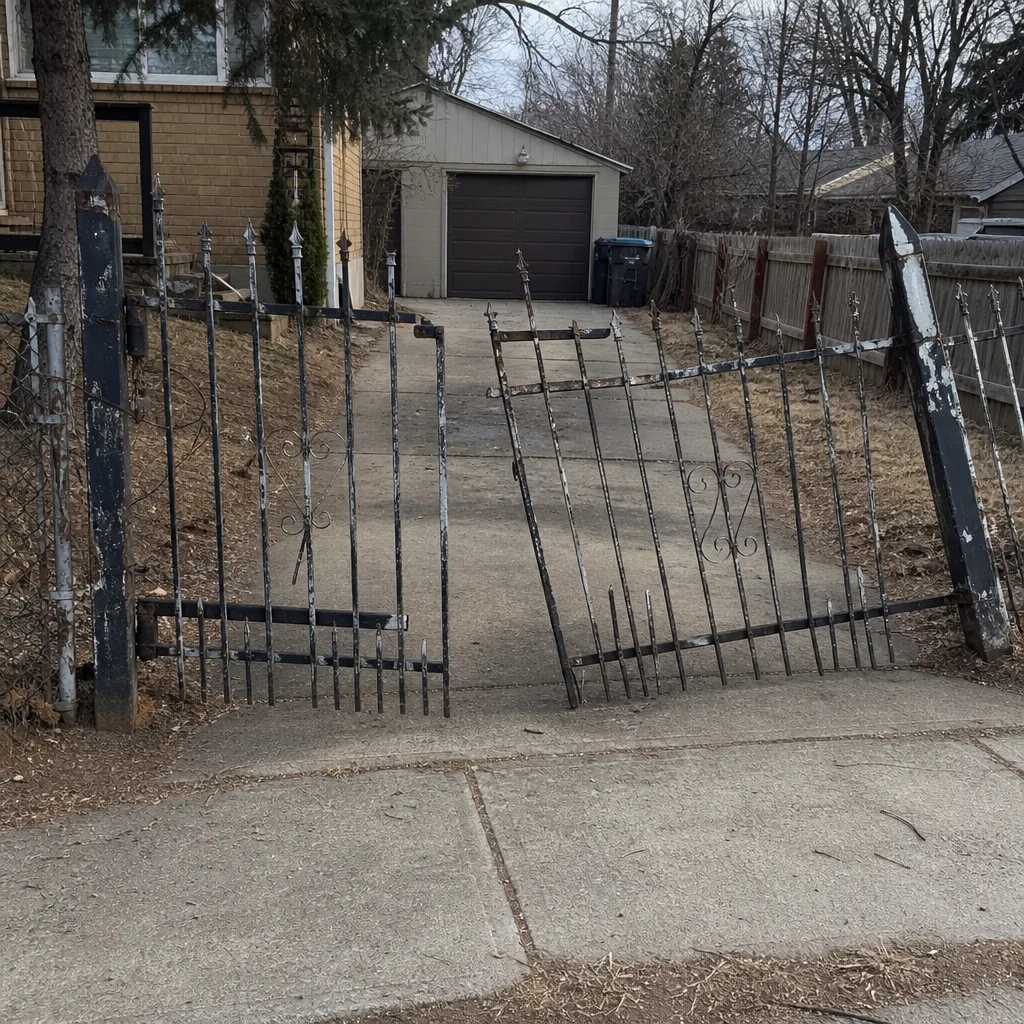 Before
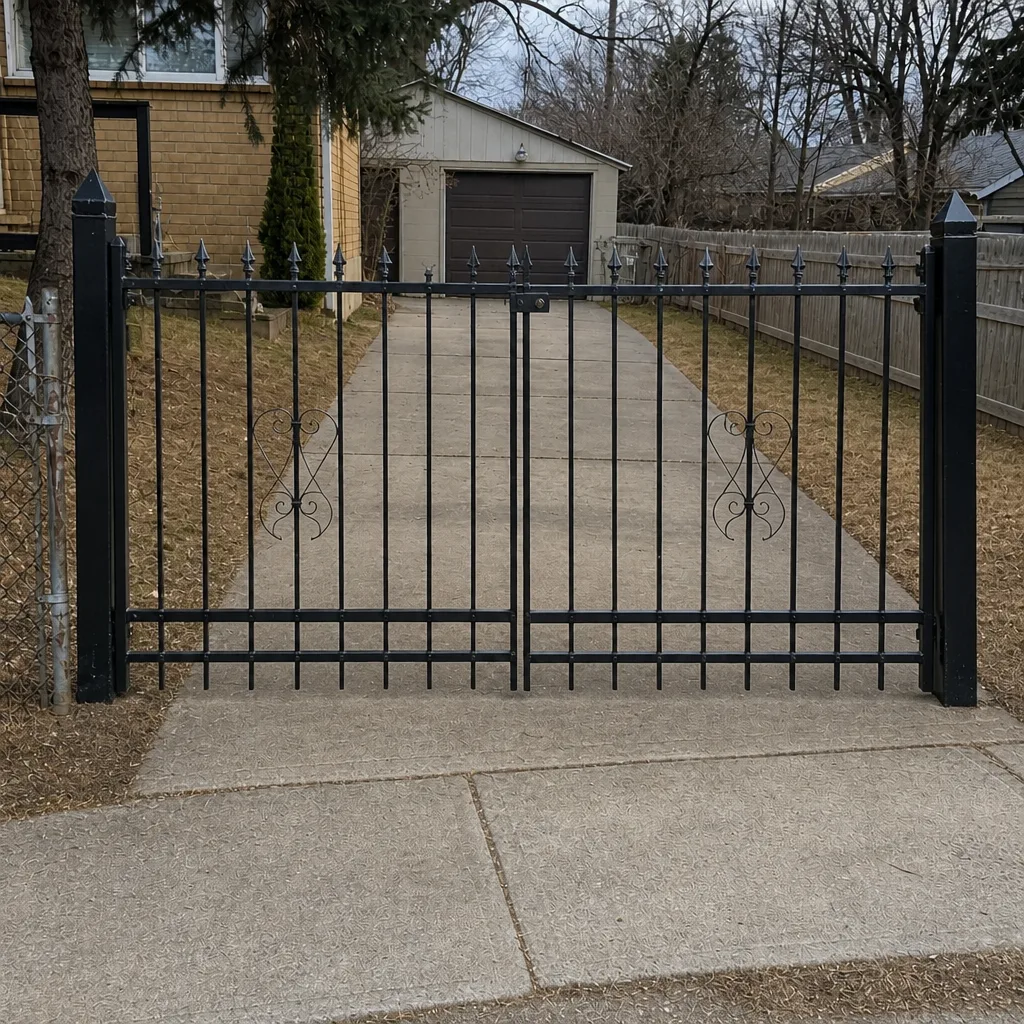 After
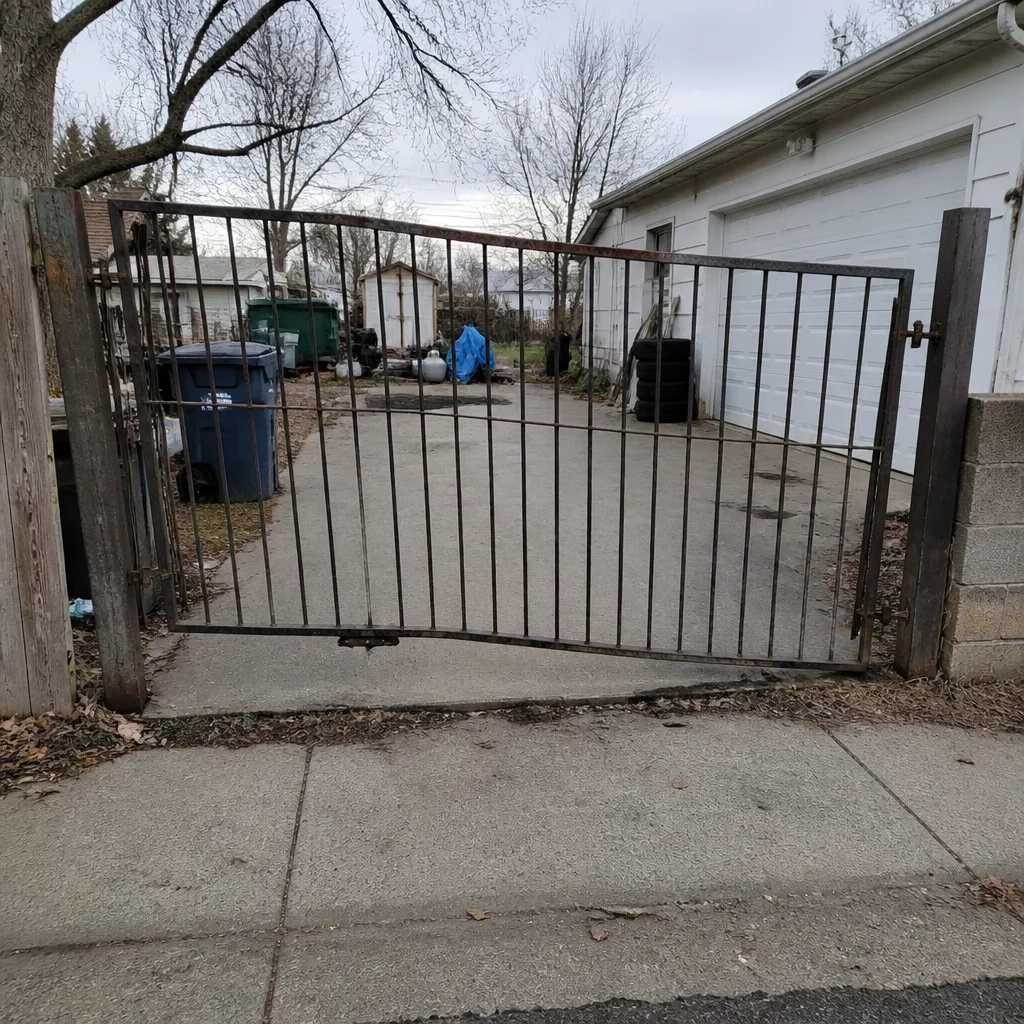 Before
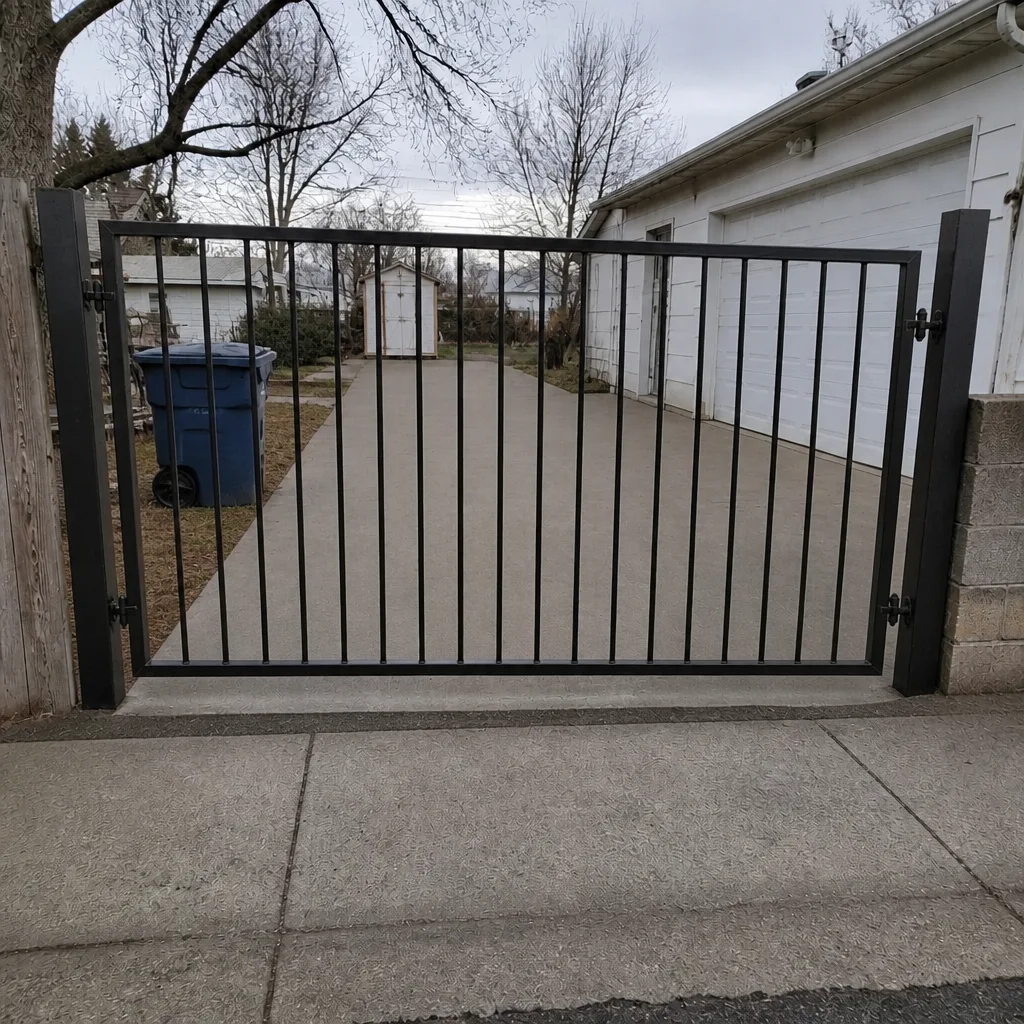 After
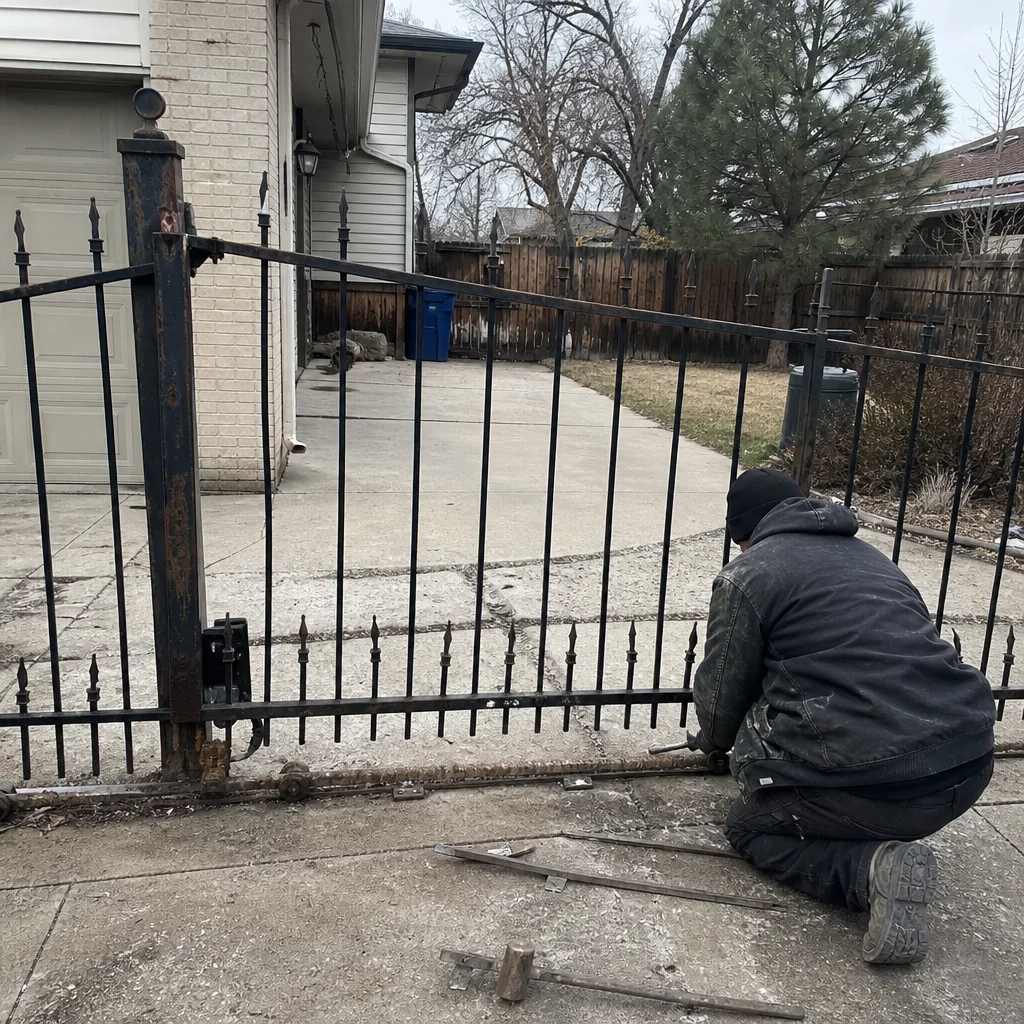 Before
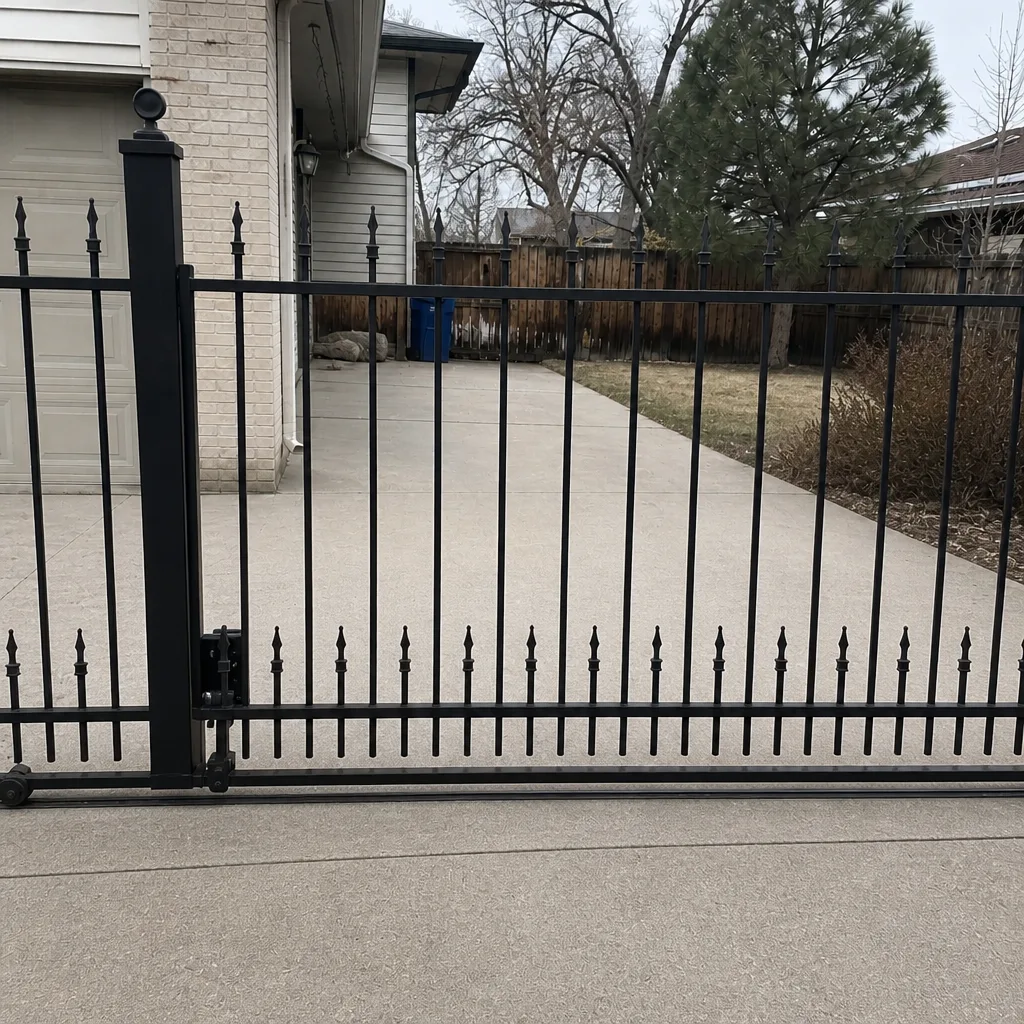 After
When to Call a Professional
Call a professional if you’re seeing any of these: the gate moves on its own, doesn’t reverse on obstruction, has dropped off the track or leans visibly, has grinding that’s getting worse, or shows fault codes you can’t clear. Also call if the gate has begun intermittent behavior – working most days, failing once a week. Intermittent symptoms are usually one of the more diagnostic-friendly conditions because the fault is still in early stage and the cause is easy to find. Waiting turns a small repair into a larger one, and the operator usually pays for it too.
Lakewood Gate Repair offers free estimates in Lakewood – call (866) 330-9331. We work on the brand you have, whether it’s a Ghost Controls on a residential slide gate or a BFT on a heavier system. We answer 24/7. Fast dispatch from 7am to 7pm, Sunday through Friday. Call (866) 330-9331.
Frequently Asked Questions
The five most common warning signs are slow operation, reversal partway through the cycle, grinding noise, partial opening, and failure to respond to the remote. Slow operation usually means mechanical drag from worn rollers, dry hinges, or a track obstruction. Reversal usually means the board is reading resistance and treating it as a safety event. Grinding is metal-on-metal contact and gets worse fast. Call (866) 330-9331 for an expert diagnosis – estimates are free.
No – the operator is doing exactly what it’s programmed to do. Reversal means the board is detecting resistance and treating it as an obstruction. The diagnostic question is what’s creating the resistance: hinge bind, track debris, a misaligned photocell, or a failing safety edge. On a BFT or Linear operator this is often a photocell alignment issue. On a swing gate it’s often a mechanical bind at a specific point in the arc. Call (866) 330-9331 with the location where it reverses – that detail narrows the cause before we arrive.
An emergency is a gate that moves on its own, fails to reverse on obstruction, has come off its track or rollers, or shows exposed or damaged wiring. Stop using the gate and call immediately for any of those. Slow operation, grinding, partial opening, and remote inconsistency can usually wait for a scheduled window, though grinding should be moved up because the parts are actively being damaged. When in doubt, call (866) 330-9331 and describe what you’re seeing. We can tell you whether it needs immediate attention.
Cold thickens grease, contracts steel, and shifts posts slightly as the ground freezes and thaws. On swing gates this shows up as a bind at one point in the arc that isn’t there on warm days. On slide gates it shows up as increased drag that the operator has to overcome. If your gate only misbehaves when it’s cold, note that pattern. It tells a technician to look at mechanical drag rather than electrical failure, which changes the diagnosis entirely. Call (866) 330-9331 for an estimate in Lakewood.
Not necessarily – a slow keypad usually indicates low voltage, which is often the first symptom of a failing transformer or damaged wiring. Those same conditions will eventually damage the operator’s control board. Treat slow keypad response, intercom static, and inconsistent remotes as early warnings and have the gate system checked before the operator fails. Linear and DoorKing access controls are diagnostic-friendly and the source of the low voltage shows up quickly on a meter. Call (866) 330-9331.
Often yes. The combination of symptom, gate type, and brand narrows the fault to a short list. Tell us the brand of your operator, whether it’s a swing or slide gate, where in the cycle the malfunction happens, and whether it correlates with temperature or time of day. That’s four pieces of information that typically point to the cause before dispatch. Our technicians have up to 12 years of experience and we work on the most common operators including BFT, Linear, Viking, and Ghost Controls. Call (866) 330-9331 – we answer 24/7.
The Bottom Line
Gate failures announce themselves early. Slow operation, reversal, grinding, partial opening, and remote inconsistency are all warning signs that show up 60 to 90 days before the gate strands you. The key is reading them correctly, and the same symptom means different things depending on whether you have a swing gate or a slide gate. Structural problems compound and kill operators. Electrical problems surface first in keypads and intercoms. Keep observations from the safe side of the gate, don’t disable safety sensors, and call when a symptom is intermittent or an operator is behaving erratically. Catching a warning sign early is almost always a smaller repair than waiting for the gate to fail.
Written by the team at Lakewood Gate Repair.