
Last updated November 15, 2026
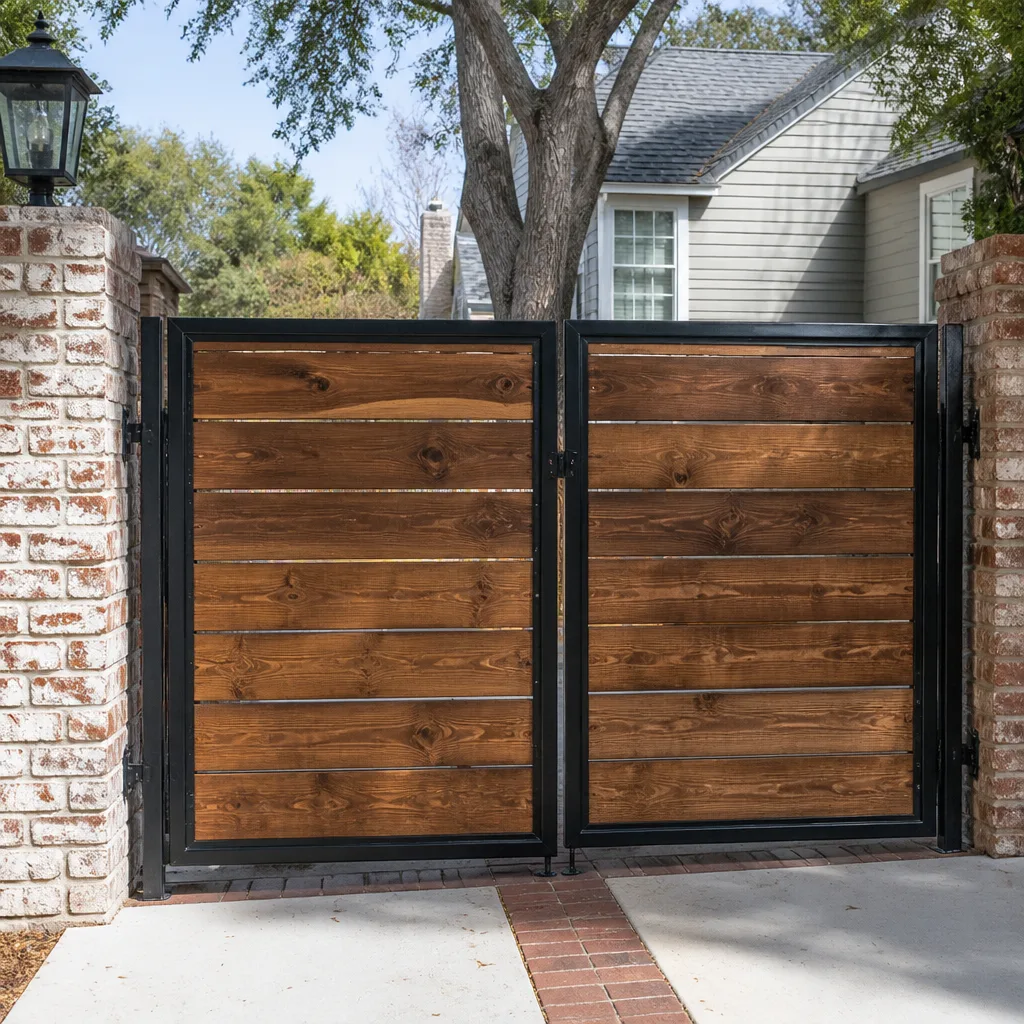 Wood & steel frame
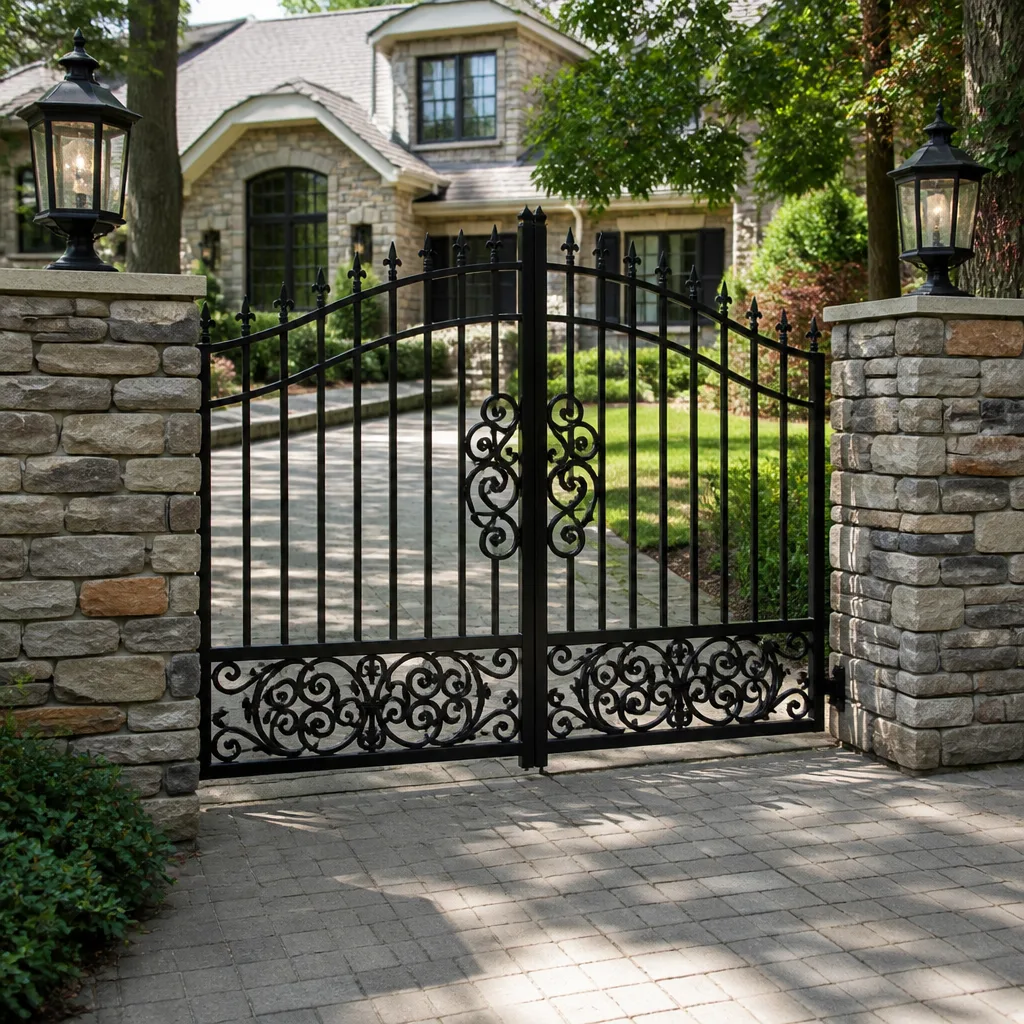 Wrought iron
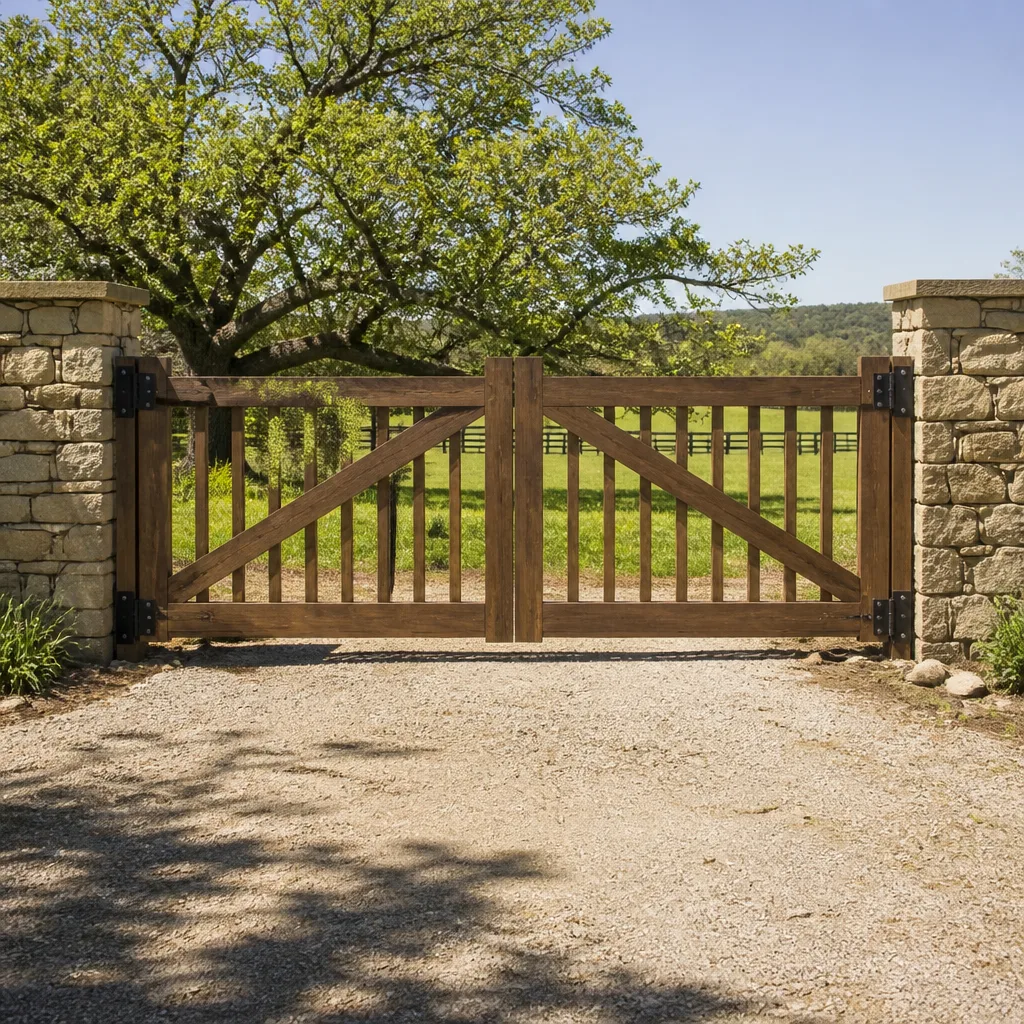 Farm & ranch
 Sliding driveway gates
 LiftMaster operators
Free on-site gate assessment - hinges, posts, and your LiftMaster or Nice gate operator checked before anything is quoted
The assessment is free and the quote is the invoice.
Get your free estimateSeasonal Gate Repair Care for Lakewood: Year-Round Homeowner’s Guide
Most homeowners assume a gate that survived the winter is out of danger by the time the snow melts. In Colorado, the reverse is closer to the truth. The busiest stretch for gate repair calls here isn’t the dead of January, it’s March, when freeze-thaw cycles peak and a gate that held together all winter finally gives out during the violent temperature swings between warm afternoons and hard overnight freezes. The same pattern shows up every year, in the same order, on the same kinds of hardware. This guide lays out that calendar for Lakewood homeowners and property managers: what’s happening to your gate in each season, what to check, and what to fix before the next swing catches it. We’ll cover manual and electric systems alike, from residential operators like Ghost Controls and Viking to commercial-grade units like DoorKing.
Quick Answer
Gate problems in Lakewood follow a predictable seasonal cycle: freeze-thaw movement in late winter and early spring stresses posts, hinges, and operators; summer heat and UV wear on control boards and hydraulic parts; fall is when you prepare the gate for the ground freeze ahead. The single most effective habit is a fall adjustment and a spring re-alignment, plus a two-year full system check that runs regardless of whether anything looks wrong. Electric gate repair issues in particular – slow cycles, sensor faults, board failures – almost always have a seasonal explanation once you know where to look.
Styles & brands we work with
- Wrought iron
- Wood & steel frame
- Farm & ranch
- Sliding driveway gates
- LiftMaster operators
Table of Contents
- Why Gate Failure in Lakewood Follows a Calendar
- Fall Prep: The Adjustment Most Homeowners Skip
- Winter: What Slow Operator Cycles Tell You
- Spring: Re-Aligning After Frost Heave Season
- Summer: Heat, UV, and Your Control Board
- The Two-Year Cycle Check
- Matching Care to Your Gate’s Brand and Hardware
- When to Call a Professional
Why Gate Failure in Lakewood Follows a Calendar
A gate is a mechanical system anchored in soil, and soil in Lakewood moves with the seasons. The ground swells when it’s wet and cold, then contracts and shifts as it dries and warms. Posts that were set correctly in summer can end up a fraction of an inch off plumb by late winter. Multiply that movement across a hinge side and a latch side, and a gate that closed cleanly in October starts dragging in March. Add to that the temperature-driven expansion and contraction of metal panels, the cold-thickening of hydraulic fluid in operators, and the heat load on electronic control boards in July, and you get a system that’s under different stress almost every month.
We’ve watched this pattern repeat across Lakewood properties for years, from older manual swing gates to modern automatic systems. It’s why we built this guide around the calendar rather than a symptom list. If you know what month tends to produce what failure, you can catch problems in the cheap-to-fix stage instead of the replace-the-operator stage. The technicians we connect you with have up to 12 years of experience, and the seasonal call pattern is one of the first things that experience teaches.
Seasonal care isn’t about preventing every failure. It’s about knowing where to look at the right time. A gate system that gets the right attention in fall and spring will usually outlast one that only gets attention after something breaks.
Fall Prep: The Adjustment Most Homeowners Skip
Fall is the season that matters most, and it’s the one most Lakewood homeowners ignore. The core idea is simple: before the ground freezes, you want your gate in its best mechanical alignment, with nothing binding and no hardware already under tension. Any misalignment you carry into winter gets amplified by frost movement. A gate that’s slightly off in October can be significantly worse by February.
Here’s the fall sequence we recommend for any gate, manual or electric:
- Check post plumb and footing stability. Push firmly on each gate post near the top. Any wobble or movement at the base is a signal the footing needs attention before freeze-up, not after.
- Lubricate hinges, rollers, and latches. Cold weather makes everything stiffer; fresh lubrication going into winter reduces strain on both the hardware and the operator.
- Inspect the operator and control board. Look for loose connections, moisture in enclosures, and worn safety sensors. Any fault that’s borderline in mild weather often tips over into a failure in the cold.
- Test all safety devices. Photo-eye sensors and safety edges should stop and reverse the gate reliably. Test them manually before the season turns.
- Adjust the gate leaf to clear the ground. Give the swing or slide some extra clearance underneath. Ground heave can lift or shift the gate, and a small gap going in prevents dragging coming out.
Do this in the weeks before the ground freezes, not after the first hard frost. In Lakewood, that window is short, and a gate that’s properly set in fall is the gate that has the best chance of coming through winter intact. If your gate runs on a LiftMaster or Linear operator, the operator itself deserves a checkup in this window too, since cold weather puts more load on the motor than any other time of year.
Winter: What Slow Operator Cycles Tell You
Gate operators slow down in cold weather. That’s normal, and it isn’t automatically a problem. Battery-backed and hydraulic units are designed to run in cold, but their cycle times lengthen as fluid thickens and batteries lose some capacity. The question every homeowner in Lakewood eventually asks is whether a slow gate in January is normal cold-weather behavior or a sign of damage. The answer usually comes down to how slow, and whether it’s consistent.
Here’s how we distinguish the two:
- Normal cold-weather behavior: The gate is slower than in summer but consistent; it opens and closes smoothly; the slowdown is proportional to how cold it is; it returns to normal speed as temperatures rise.
- Sign of actual damage: The gate is noticeably slower than it was in previous winters; the slowdown comes with grinding, straining, or effort; the gate stalls or reverses partway; the change happened suddenly rather than gradually; or the operator strains even on mild days.
If a gate is doing anything in the “damage” column, treat it as a mechanical problem and have it looked at. Straining an operator that’s already in trouble is how a $200-part repair becomes a full operator replacement. Denver-area freezes are hard on hydraulic operators in particular, where cold-thickened fluid can put real load on the motor. Electric gate repair at this stage is usually about diagnosing whether the issue is the motor, the fluid, or the control board, and a specialist with brand familiarity on something like a FAAC or BFT system will know in short order.
One more winter note: safety sensors and safety edges need to be tested in freezing conditions, not just when it’s warm. Ice build-up on a photo-eye lens can make a gate falsely reverse, which looks like a fault but is actually a sensor maintenance issue.
Spring: Re-Aligning After Frost Heave Season
The ground doesn’t settle back to where it started just because the frost is out. That’s why spring is re-alignment season, and it’s the second busiest stretch for repair in Lakewood. By the time March arrives, a gate that went through the freeze-thaw cycle is quite likely out of alignment to some degree. The trick is telling which post movement is temporary (settling after the ground warms) from which is permanent (footing damage that’s going to repeat every year).
Here’s how to tell them apart:
- Check the gate after a dry, warm stretch. If it’s closer to alignment once the ground has dried, the movement was likely seasonal and the gate should re-align with a simple adjustment.
- Test post plumb at the base. A post that’s out of plumb at the base itself, and stays that way, has footing damage rather than seasonal movement.
- Measure the gap under the gate on both sides. If one side is now much higher than the other, the grade has shifted and the gate needs adjustment to clear it.
- Watch for dragging and binding at the hinges and latch. These are the typical symptoms of frost heave.
Spring is also the time to check the operator’s alignment with the gate. If the gate has moved, the rest of the system needs to keep up with it, especially the limit switches and safety sensors. When the gate travels further or shorter than the operator expects, you’ll see stalls, reversed cycles, or a gate that stops short. A seasonal re-alignment of both the gate and the operator brings everything back into agreement.
Summer: Heat, UV, and Your Control Board
Colorado summers are beautiful and hard on gate electronics. Control boards, motor windings, and hydraulic fluid all see higher temperatures in July and August than the rest of the year, and UV rays degrade the plastic and rubber components over time. The result is a cluster of failures that looks unrelated but shares a common cause: heat and sun load.
What typically fails in summer:
- Control boards that overheat in unshaded enclosures, especially if air circulation is restricted.
- Motor windings that strain under extended run times when the gate is poorly aligned or something has started to bind.
- Hydraulic operators whose fluid becomes thin with heat and whose seals can be compromised by thermal cycling.
- Rubber gaskets and seals that dry and crack from UV exposure.
- Battery backup units whose capacity degrades faster in the heat.
The single best summer intervention is shade. A small sunshield over an operator enclosure can drop internal temperatures significantly. Keep the enclosure clean and free of debris, and make sure the control board has space to breathe. If you’ve noticed your gate slowing during hot afternoons or tripping a breaker more often in summer, the answer is usually thermal, not electrical. A quick inspection by a dedicated gate technician will rule out the serious causes in short order.
The Two-Year Cycle Check
There’s one item worth building into your calendar no matter what the gate looks like: a full system check every two years. The seasonal work catches what’s already starting to fail. The two-year check catches what’s quietly wearing without visible symptoms yet. The two aren’t the same, and for a Lakewood gate system exposed to both freeze-thaw and summer heat, both are worth doing.
A two-year full check covers:
- Hardware condition: hinges, rollers, tracks, latches, and post footings, with photos of anything borderline.
- Operator internals: control board, motor, gearbox, hydraulic fluid level, and battery health.
- Safety devices: photo-eye sensors, safety edges, reversing logic, and the operator’s force settings.
- Performance trend: whether the gate’s cycle is slower than it was two years ago, and by how much.
- Alignment: post plumb, leaf clearance, and operator alignment, roughly a full spring-check re-run.
The rhythm is what matters. By running a full check on a fixed two-year clock, you compare the current state of your gate against a known baseline rather than against your memory of how it “used to feel.” That’s the difference between a system that gets repaired when something breaks and one that gets adjusted before it does. In our experience, the two-year habit catches subtle wear on things like gearbox teeth and photo-eye sensitivity long before they show up as a failure.
Matching Care to Your Gate’s Brand and Hardware
Seasonal care looks a little different depending on what’s running your gate. A residential Ghost Controls system and a commercial DoorKing access-control operator share the same seasonal pressures, but the specific parts that wear, the sensors you test, and the operator adjustments differ. Knowing your brand makes the whole calendar easier to follow.
A few brand-specific points worth keeping in mind:
- Ghost Controls residential operators are common on Lakewood driveways, and their battery-backed control boards benefit from the summer shade advice above more than most.
- Viking swing and slide operators tend to be very reliable if their safety sensors and reversing logic are tested on schedule. Skipping the spring sensor test on a Viking system is a common source of false reverses in summer.
- Linear operators are widely installed on residential and light-commercial gates, and their limit switches are the part most likely to drift after frost heave.
- DoorKing commercial-grade systems usually include access control features where the seasonal wear pattern shifts toward keypads, entry phones, and network components rather than the operator itself.
Year-round care is the same idea across all of them: keep the mechanical parts aligned so the operator isn’t straining, keep the electronics cool and dry, and test the safety devices on schedule. When a problem does surface, brand fluency is what gets it diagnosed fast. We work on nine major gate system brands – LiftMaster, FAAC, BFT, Linear, Viking, Ghost Controls, DoorKing, Elite, and Mighty Mule – from residential systems to professional-grade operators. That range matters because the fix for a slow cycle on a Mighty Mule isn’t the same as the fix on a FAAC.
Common Mistakes to Avoid
- Skipping the fall adjustment entirely. Most Lakewood homeowners do this, and it’s the single biggest reason a gate that was fine in October becomes a repair in March. The pre-freeze adjustment is the cheapest hour of the year.
- Assuming every winter slowdown is normal. Cold-weather behavior is consistent and proportional; actual damage shows up as a sudden worsening, a stall, or strain on mild days. Treating real damage as “just the cold” strains the operator needlessly.
- Re-aligning on the first warm day. If the ground is still settling, an adjustment made too early will be wrong again as the season progresses. Wait for a dry, warm stretch before re-aligning in spring.
- Ignoring summer heat on the control board. Enclosed operators in direct sun can overheat even when they’re working, and a small sunshield is usually enough. Homeowners often replace a control board before considering shade.
- Never running a full system check. Seasonal work catches what’s starting to fail; a two-year check catches what’s failing silently. Doing only the seasonal work means missing the slow wear on gearboxes and sensors.
- Adjusting an operator without checking the gate first. If the gate has moved, adjusting the operator to “cover” the misalignment masks the real problem and makes the next misalignment worse. Align the gate, then the operator.
- Testing safety sensors only in warm weather. Photo-eye sensors and safety edges need to be verified in freezing and in heat, since both extremes expose different faults. A sensor that works at 60 degrees isn’t validated for January.
See the difference
 Before
 After
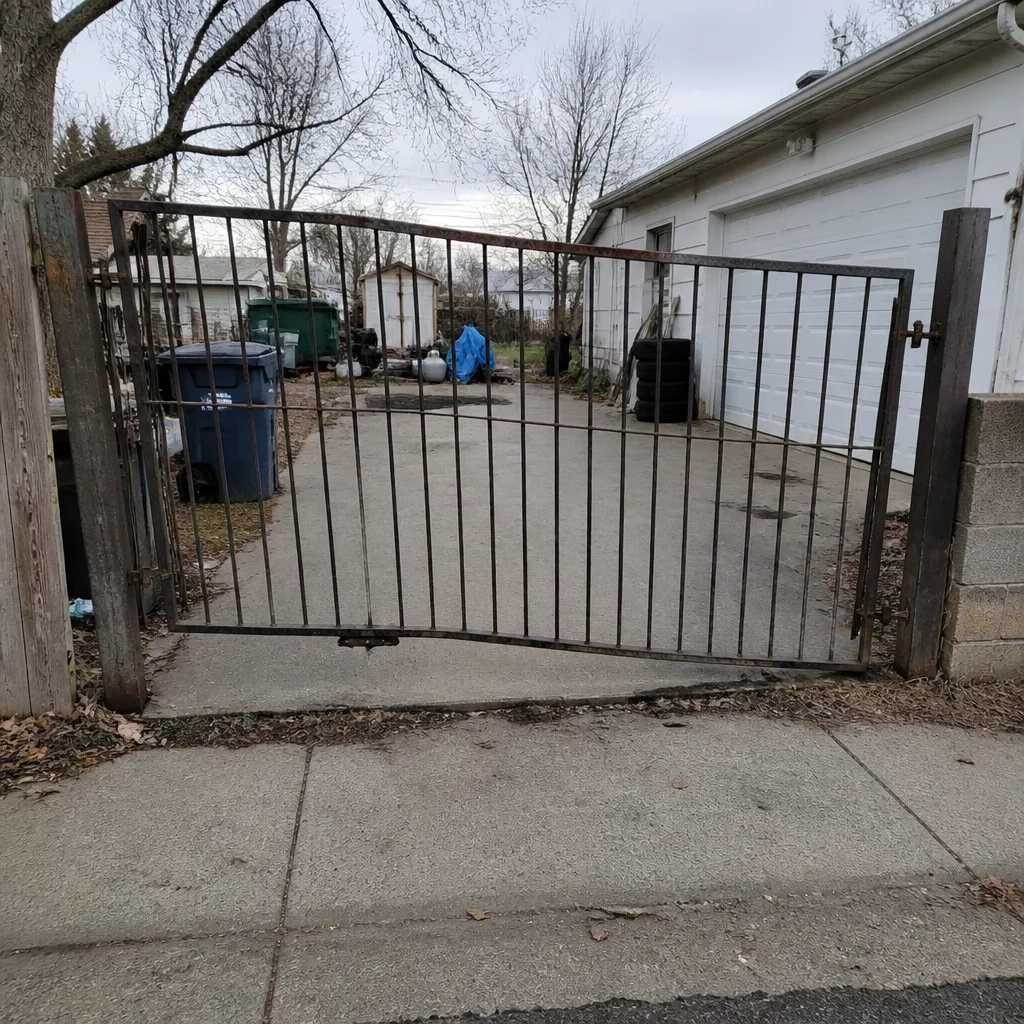 Before
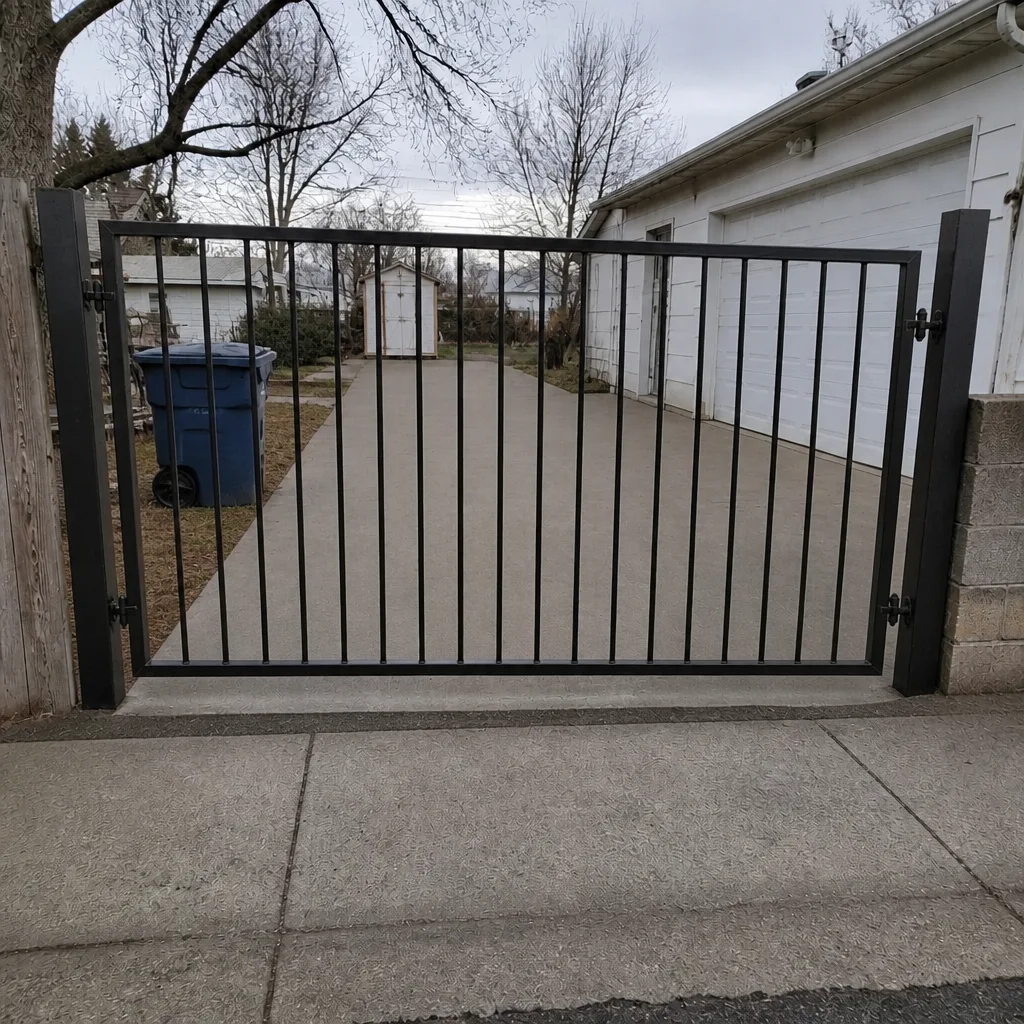 After
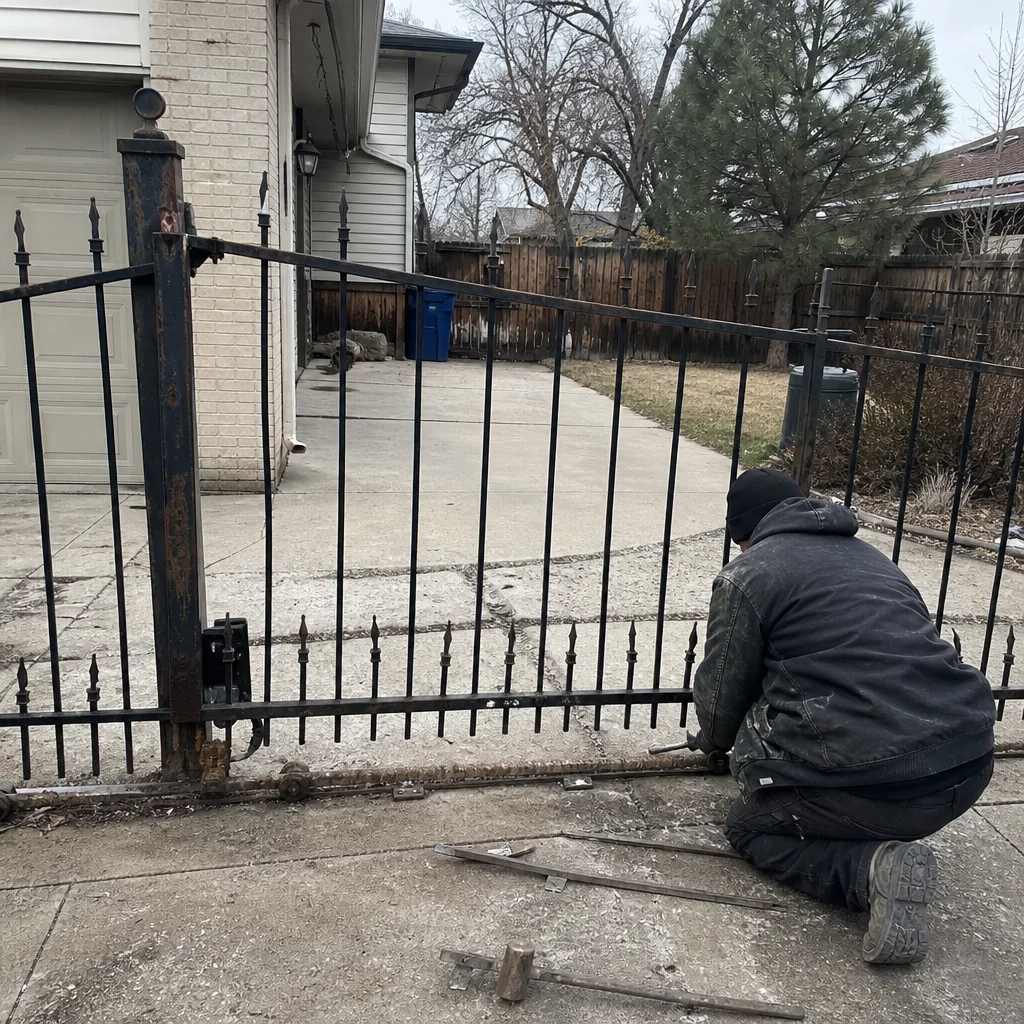 Before
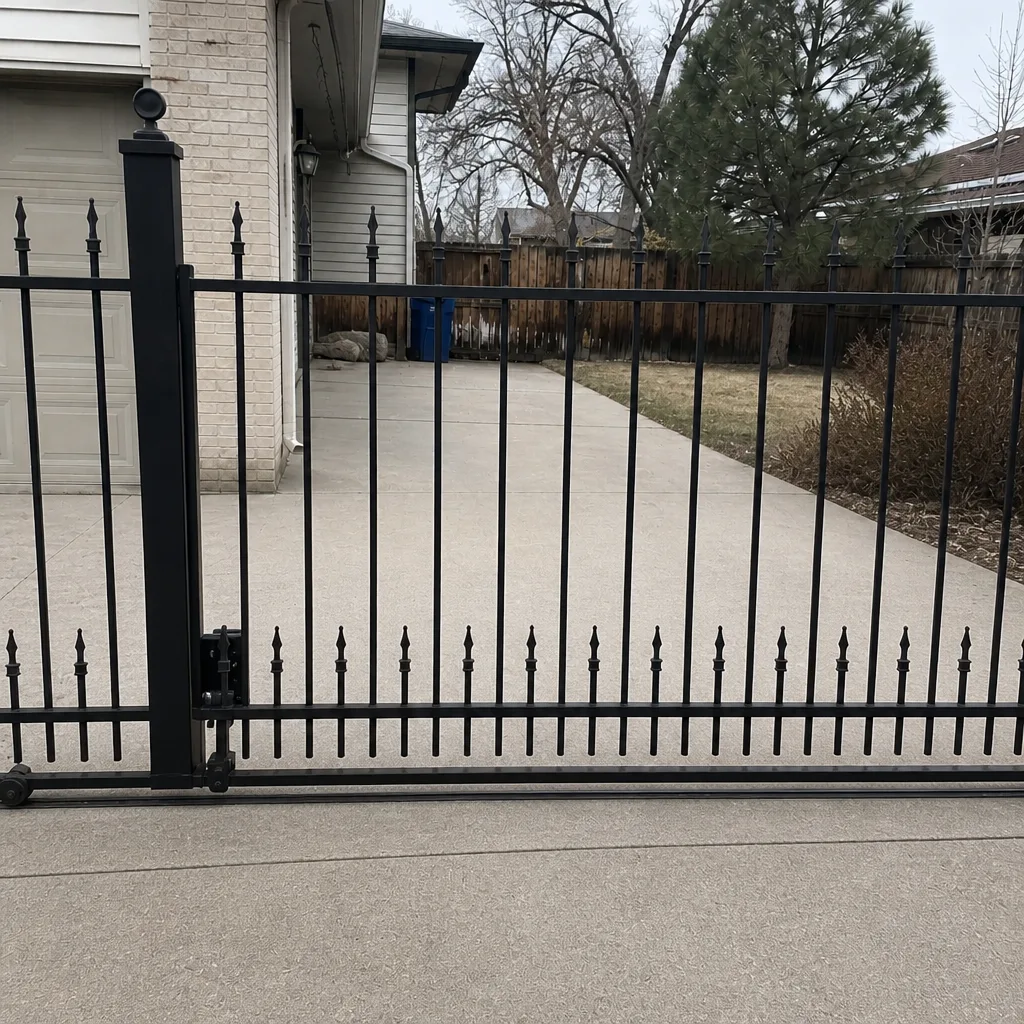 After
When to Call a Professional
Some seasonal checks are homeowner-level: pushing on a post, looking at a control board, testing a sensor. Others aren’t. If your gate has visibly moved and a re-alignment attempt doesn’t fix it, if the operator is stalling or reversing on its own, if you’ve found moisture in the control enclosure, or if you’re seeing safety sensors that work only some of the time, those are the scenarios where a specialist look saves you money. Electric gate repair issues in particular – board faults, motor strain, sensor logic – are usually cheaper to diagnose once than to guess at twice.
There’s also a hard safety line. Gate operators run at mains voltage, and a heavy gate leaf can crush or pin. Anything involving the operator’s wiring, the incoming power, or a heavy gate that has come off its track or settled on the ground should be handled by a trained gate technician, not attempted on a weekend. The same is true of installing a new operator or safety system: it’s a measured, wired job, not a bolt-on.
Lakewood Gate Repair offers free estimates in Lakewood – call (866) 330-9331. We answer 24/7. Fast dispatch from 7am to 7pm, Sunday through Friday. The price is quoted and agreed before any work starts, and the written estimate is what sets the final price. Whether your gate is a Mighty Mule or a FAAC, we’ll know what we’re looking at and tell you what the seasonal calendar has done to it.
Frequently Asked Questions
Late winter and early spring, especially March, are the busiest stretch. Freeze-thaw cycles peak then, and gates that held on all winter finally give out during the temperature swings between warm afternoons and hard overnight freezes. Fall is the second busiest due to the pre-freeze adjustments many homeowners skip. Call (866) 330-9331 for a free estimate – we answer 24/7.
Normal cold-weather behavior is consistent, proportional to temperature, and returns to normal as it warms. Actual damage shows up as a sudden worsening, a stall, a reversal partway, or strain on mild days. If you’re not sure which you have, a quick diagnostic is worth the call – (866) 330-9331.
Light adjustments to a manual gate are within reach for many homeowners, but any gate with an operator, and any gate whose post has moved at the base, needs a professional look. Misaligned operator adjustments are the most common cause of repeat failures. Call (866) 330-9331 for a free estimate and we’ll tell you what your gate needs.
Yes, and it’s the single most useful habit in this guide. Seasonal work catches active problems; a two-year check catches silent wear on gearboxes, photo-eye sensitivity, and battery capacity before it becomes a failure. Free estimates make it easy to schedule – call (866) 330-9331.
Yes. Control boards in unshaded enclosures can overheat in summer, and Denver-area sun on an enclosed operator is a common cause of intermittent faults. A small sunshield and good airflow in the enclosure are usually enough. If your gate has been acting up in the heat, call (866) 330-9331 for a free estimate.
We work on nine major gate system brands: LiftMaster, FAAC, BFT, Linear, Viking, Ghost Controls, DoorKing, Elite, and Mighty Mule. That covers residential systems and commercial-grade operators, and sometimes both on the same property. For a free estimate on your specific brand, call (866) 330-9331 – we answer 24/7. Gate repair is the only trade we do, so electric gate repair is a first-class service here, not a referral out.
The Bottom Line
Lakewood’s gate failure calendar is predictable. Fall is the adjustment that prevents winter damage. Winter slowdowns need to be distinguished from actual damage, and the clue is whether the change is consistent and proportional or sudden and strained. Spring is re-alignment season, and the key is telling seasonal post movement from footing damage. Summer is heat and UV on electronics, and shade is the cheapest fix. Running a two-year full check on a fixed clock is what separates a gate that gets serviced from one that gets replaced. Two things worth remembering above all: the written estimate sets the final price before any work starts, and gate repair is a specialist’s trade, not a generalist’s. Whether you’re on a residential Ghost Controls or a commercial DoorKing, seasonal care in the right season saves you real money. For the whole calendar and the specific parts, call Lakewood Gate Repair at (866) 330-9331 for a free estimate. We answer 24/7. Fast dispatch from 7am to 7pm, Sunday through Friday.
Written by the team at Lakewood Gate Repair.