
Last updated November 15, 2026
 Wood & steel frame
 Wrought iron
 Farm & ranch
 Sliding driveway gates
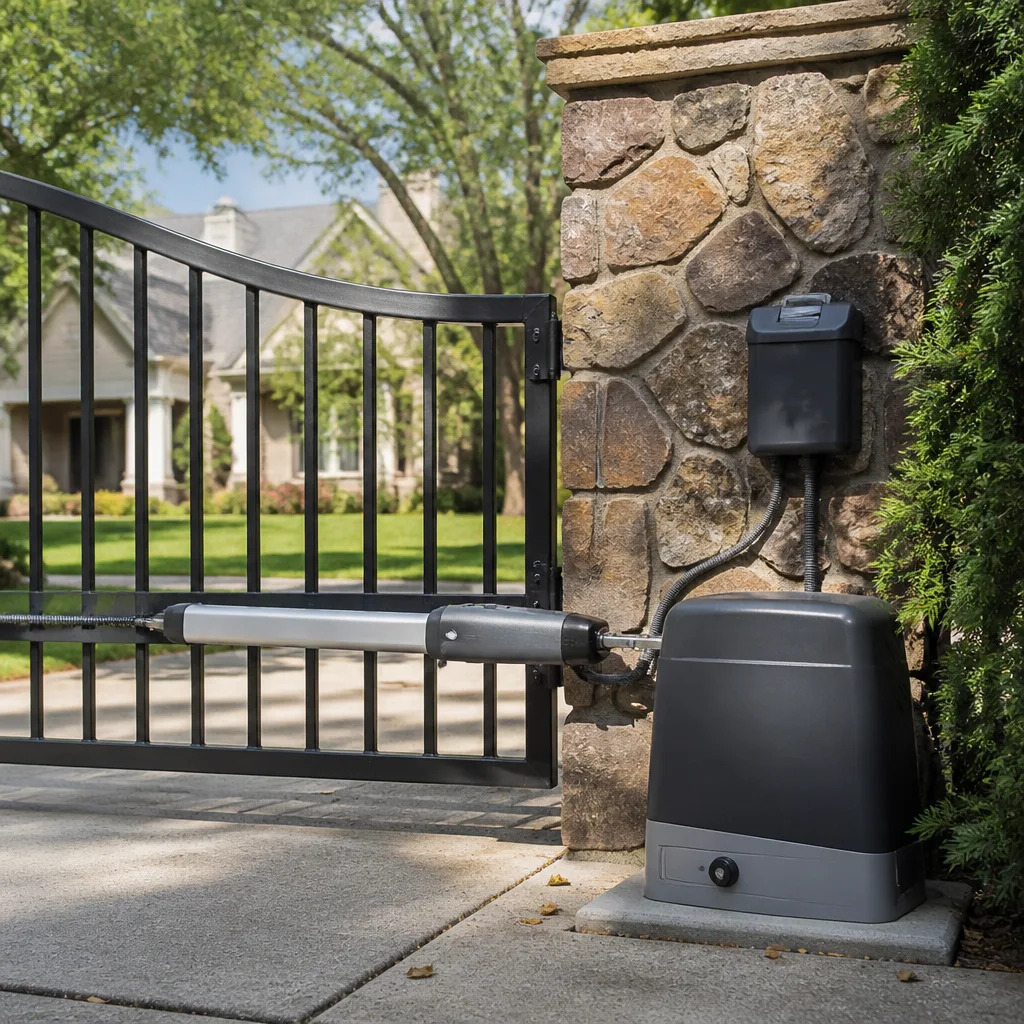 LiftMaster operators
Free on-site gate assessment - hinges, posts, and your LiftMaster or Nice gate operator checked before anything is quoted
The assessment is free and the quote is the invoice.
Get your free estimateDIY vs Professional Gate Repair: The Lakewood Homeowner’s Decision Guide
A gate that drags, hums, or stops halfway looks like one problem. It’s usually two or three wearing parts failing together, and the repair that fixes the symptom isn’t always the repair that’s safe to attempt. Some gate work genuinely belongs in your hands: adjusting a limit switch, reprogramming a remote, tightening a hinge bolt. Other work, like a leaning post or anything touching the entrapment protection system, carries real consequences when it goes wrong. This guide draws the line by repair type, not by how handy you feel, using what we see on gates across Lakewood and the surrounding neighborhoods.
Quick Answer
Safe DIY gate repairs are limited to lubrication, limit switch adjustment, remote reprogramming, and minor hinge bolt tightening. Post work, operator wiring, loop detector installation, welding, and anything involving the entrapment protection system should be handled by a trained technician. When a repair touches structure, power, or safety devices, the risk of a failed DIY attempt costs more to undo than the original repair would have cost.
Styles & brands we work with
- Wrought iron
- Wood & steel frame
- Farm & ranch
- Sliding driveway gates
- LiftMaster operators
Table of Contents
- Repair-by-Repair: What’s Safe to DIY and What Isn’t
- Why Colorado Changes the DIY Math
- The Limit Switch Adjustment: A Step-by-Step Walkthrough
- Operator Wiring and Why It’s Off-Limits
- What a Failed DIY Attempt Actually Costs
- How to Read Your Manual and Know Your Scope
- Why Brand Familiarity Matters for the Repairs You Outsource
- Common Mistakes to Avoid
Repair-by-Repair: What’s Safe to DIY and What Isn’t
The DIY-versus-professional question gets answered best one repair at a time. A single gate can have a safe DIY job, an unsafe DIY job, and a job that’s physically doable but unwise, all in the same week. Here’s where we draw the lines.
Repairs that are reasonable DIY tasks for a handy homeowner
- Lubrication. Greasing hinges, rollers, and slide tracks with the lubricant your manufacturer specifies is a maintenance task, not a repair. It reduces wear and quietens a gate that squeals.
- Limit switch adjustment. If your gate stops short or over-travels at the open or closed position, the limit switches set those endpoints. Adjusting them is a legitimate homeowner task with a clear procedure.
- Remote reprogramming. A remote that stops working or a new one you want paired with the receiver is typically a button-hold sequence, brand-specific but simple. Linear and Ghost Controls systems both publish clear pairing procedures.
- Minor hinge bolt tightening. A bolt that works loose is a five-minute fix with a wrench. Anything beyond snugging it up (a bent hinge, a stripped thread, a shifting gate leaf) is a different job.
Repairs that should never be DIY
- Post work. A leaning post means the gate’s structural anchor has moved. Fixing that correctly requires understanding the soil, the footing depth, and the load the post carries. Getting it wrong turns a leaning gate into a falling one.
- Operator wiring. Line voltage, control voltage, and the low-voltage safety circuit all run through the operator. A miswired control board destroys an expensive component, and a miswired safety circuit may mean the entrapment protection doesn’t stop the gate when it should.
- Loop detector installation. Vehicle loop detectors require sawcutting the driveway, placing the loop in the correct geometry, and tuning the detector to the loop. That’s a professional installation, not a weekend project.
- Welding. Structural welds on gate frames, hinges, and posts should be done by someone who welds daily and knows what a gate frame needs to hold. A cold weld looks fine until the gate is under load.
- Anything touching entrapment protection. Photo eyes, safety edges, and the reversing logic exist to stop a gate from closing on a person, a pet, or a car. Never modify, bypass, or “test by walking through” the safety system.
Why Colorado Changes the DIY Math
A repair that’s straightforward in a mild climate can be risky in Lakewood, and it comes down to what the ground and the sun do to your gate over time.
Clay soil and post movement. Much of the Front Range sits on expansive clay that swells when wet and shrinks when dry. That movement works a gate post loose in ways you can’t see from the surface. A homeowner who re-levels a gate leaf without addressing the footing makes the gate look straighter while the post keeps pushing. When we’re called to look at a post repair on a Lakewood property, we check the whole footing, not just the visible tilt.
Frost and freeze-thaw. Colorado’s winter freeze-thaw cycles do their own work on a footing. Ground that heaves in winter and settles in spring puts repeated lateral pressure on a post. Setting a post correctly means going to proper footing depth for the conditions, not the shallow depth that works where the ground never freezes.
UV degradation of wiring. The high-altitude sun here is hard on exposed wire insulation and on the plastic housings around control board connections. Wire that was fine five years ago can be brittle and cracked at the terminals. That’s why operator wiring problems on a Lakewood gate often show up as intermittent faults that appear and disappear, and why chasing them without a multimeter and the correct test points wastes hours.
Snow and ice load. A gate that ices up in a snowstorm puts load on hinges, rollers, and the operator that an open-climate gate never sees. A few heavy storms a season are enough to wear out a hinge bolt that seemed fine. Snugging a bolt is safe DIY work; discovering a bent hinge bracket in January is not.
The Limit Switch Adjustment: A Step-by-Step Walkthrough
This is the most common DIY job we get asked about, and it’s a good one to walk through because it also shows you what a well-defined repair looks like. The procedure below is general; your operator’s manual will have the brand-specific version. Linear and Viking systems tend to have mechanical limit switches you can adjust at the operator housing, while some newer operators set limits electronically through the control board.
- Make sure the gate is clear. Nobody in the drive, nobody near the gate path. Close the gate manually and confirm the area is clear.
- Cut the operator power at the breaker. Not just the remote. Physically cut power before you put a tool on the limit assembly.
- Identify the open and closed limit cams. Your manual will show the two adjustment points. Note the current position before you turn anything, so you can undo the change if you overshoot.
- Make a quarter-turn at a time. Small adjustments, then test. Turning the cam a full rotation at once usually means chasing the gate back and forth all afternoon.
- Restore power and cycle the gate. Watch the open and closed limits separately. The gate should stop cleanly at each end without hitting the hard stop.
- Verify entrapment protection still works. Put an object in the gate’s path while the gate is closing and confirm it reverses. If the gate doesn’t reverse, stop and call a technician. Do not use the gate until the safety system is working.
If your gate doesn’t have mechanical limit switches and the manual directs you into the control board menu, we’d suggest stopping there. Setting electronic limits is also doable, but it’s easy to change a parameter you didn’t intend to and harder to know whether the safety circuit is still live. Call electric gate repair for help if you’re not sure what you’re looking at. Estimates are free.
Operator Wiring and Why It’s Off-Limits
We get asked about operator wiring more than any other repair, and the honest answer is that it’s not a homeowner job even for a confident electrician. Here’s why.
A gate operator has three wiring domains that intersect: line voltage supplying the operator, control voltage running the logic, and low-voltage safety circuits connecting photo eyes and safety edges. The photo eyes and safety edges are what tell the operator to stop or reverse when something is in the way. A single miswired terminal swaps the polarity or drops a connection that makes the safety edge fail silently. Gate moves fine. Safety edge doesn’t stop it. That’s a serious problem waiting for the wrong moment.
On top of that, an operator has a control board with protection circuitry that only tolerates a miswired terminal once before a component fails. Replacing a control board is a much bigger expense than having the wiring done correctly.
We’ve worked on DoorKing operators where a homeowner replaced a photo eye without matching the transmitter and receiver, and the gate ran fine for weeks until the alignment drifted and the operator started reversing randomly. That kind of diagnostic work is what our technicians have up to 12 years of experience doing. If your gate’s symptoms change after a wiring repair you attempted, call Lakewood Gate Repair and we’ll sort it out.
What a Failed DIY Attempt Actually Costs
The dollar math on a failed DIY gate repair is worse than the price of having the job done right the first time, and the reason is simple: undoing work costs labor the original repair wouldn’t have needed. Here’s where the money goes when a repair has to be re-done.
- Post work. A homeowner who resets a post with surface-set concrete gets a gate that looks level. Six months later it leans again, and now the technician has to remove the failed concrete, dig to proper footing depth, and re-set the post from scratch. The redo quote is roughly double what a first-time correct fix would have been.
- Operator wiring. A miswired terminal that damages a control board raises the repair cost by the price of the board plus the labor to replace it and re-verify the entire safety circuit.
- Welding. A cold weld on a hinge bracket that fails sends the gate leaf down under load. That’s a follow-up repair on the gate frame, the hinge, and possibly the operator that’s now fighting a bent gate.
- Loop detector installation. An in-ground loop that doesn’t detect a car is often a geometry or tuning problem. Sawcutting the driveway a second time to re-do the loop is a bigger job than the original install.
- Entrapment system tampering. Any repair that leaves the reversing function compromised has the potential to fail in the worst way. We won’t put a dollar figure on that.
Estimates are free. If you’d like a firm number for a repair you’re unsure about, call (866) 330-9331 before you start. The written estimate sets the final price.
How to Read Your Manual and Know Your Scope
Before you put a tool on your gate, your operator’s manual is the first thing to open. Most manuals have a short section at the front called something like “Homeowner Maintenance” or “Routine Care,” and anything listed there is what the manufacturer intends the homeowner to do. Anything outside that section, especially anything involving wiring, control board menus, or structural adjustment, is intended for a trained installer.
Three things to look for in the manual before you start:
- The troubleshooting table. Most manuals include a symptom-and-cause table. If your gate’s symptom is listed with a “Call dealer” or “Qualified technician” note, that answer is the one to take.
- Wiring diagrams. If a repair requires you to trace a wire on a diagram, it’s out of scope. Wiring diagrams are for installers.
- Safety section. Read the safety section for the specific entrapment devices on your operator. If the manual describes a specific test for the photo eyes or safety edge, run that test on your gate. If the gate fails the test, stop using it and call us.
Ghost Controls and Mighty Mule both publish homeowner-facing manuals that draw the line fairly clearly. Pro-tier operators like DoorKing often have installation manuals written for a trained installer, and the homeowner section is thinner. That’s not a reflection of your capability, it’s a reflection of the design intent of the manufacturer. Reading your manual before you start is the fastest way to know which team you’re on for a given repair.
Why Brand Familiarity Matters for the Repairs You Outsource
When you do call a professional, brand recognition is what separates a gate specialist from a generalist who uses the same gate as a problem they haven’t seen before. We work directly with your brand. We’re fluent in nine gate system manufacturers: LiftMaster, FAAC, BFT, Linear, Viking, Ghost Controls, DoorKing, Elite, and Mighty Mule. Whether it’s a Mighty Mule you installed yourself or a FAAC operator on a light-commercial property, we know the failure patterns and the parts, from the motor to the hinge.
That matters most for the repairs you’re outsourcing. A post repair on a Viking gate with a residential-grade operator has a different footing spec than a commercial DoorKing installation. A control board swap on a BFT operator isn’t interchangeable with a Linear swap. When you call a generalist, they may get it right, or they may walk the property twice before ordering parts. When you call us, we recognize the hardware and the fix ahead of time. That’s the whole reason our trade is gate-only, every job, every day.
We also handle the full lifecycle: emergency repair, ongoing maintenance after a problem, and new installation when a gate is beyond repair. If you’re in Lakewood and you’ve got a gate issue you can’t identify, gate repair covers the diagnostic and the fix.
Common Mistakes to Avoid
- Adjusting a limit switch with the operator powered. Two minutes of convenience against a real risk of getting a finger caught in the drive. Cut the breaker before you put a tool on the limit assembly.
- Testing the safety edge “by walking through.” Never put your body in a closing gate’s path to test the reversing function. Use a firm object like a trash can or a length of lumber, and confirm the gate reverses cleanly.
- Re-leveling a gate leaf without checking the post. If the post has moved, straightening the leaf only hides the problem for a season. In Lakewood’s clay, the post keeps moving after the leaf is leveled.
- Using the wrong lubricant on rollers and hinges. Grease that thickens in cold weather makes the gate harder to move in a Colorado January. Use the lubricant the manufacturer specifies, not whatever’s in the garage.
- Mismatching photo eyes when replacing one. Transmitter and receiver have to be a matched pair, and mixing brands or firmware versions is one of the most common causes of an “operator that randomly reverses.”
- Assuming a repair is safe because a video showed it. A clip edited for ten minutes skips the soil conditions, the load calculations, and the safety circuit checks that make a repair safe.
- Putting off a hinge bolt that works loose. A loose bolt gets worse. Snugging it up when you notice it is fine. Discovering a bent bracket under heavy January ice is not.
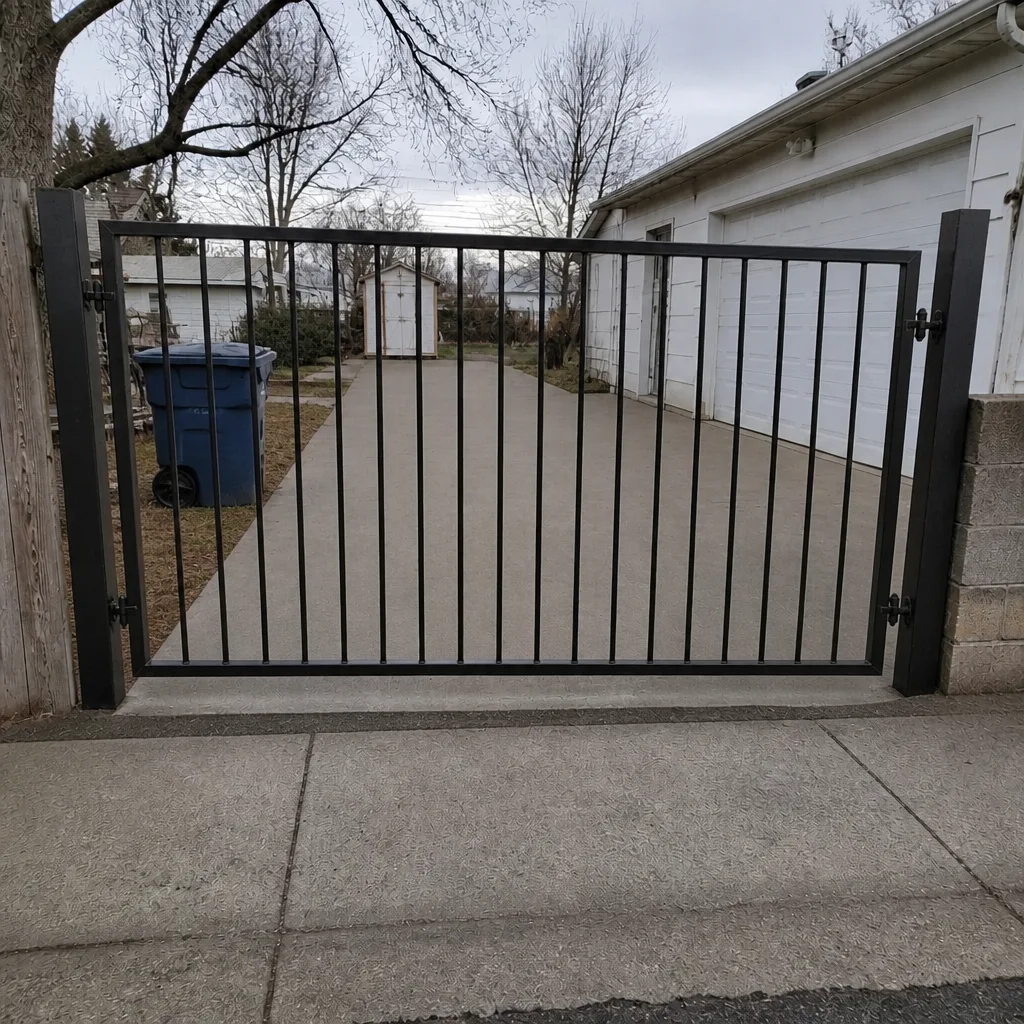
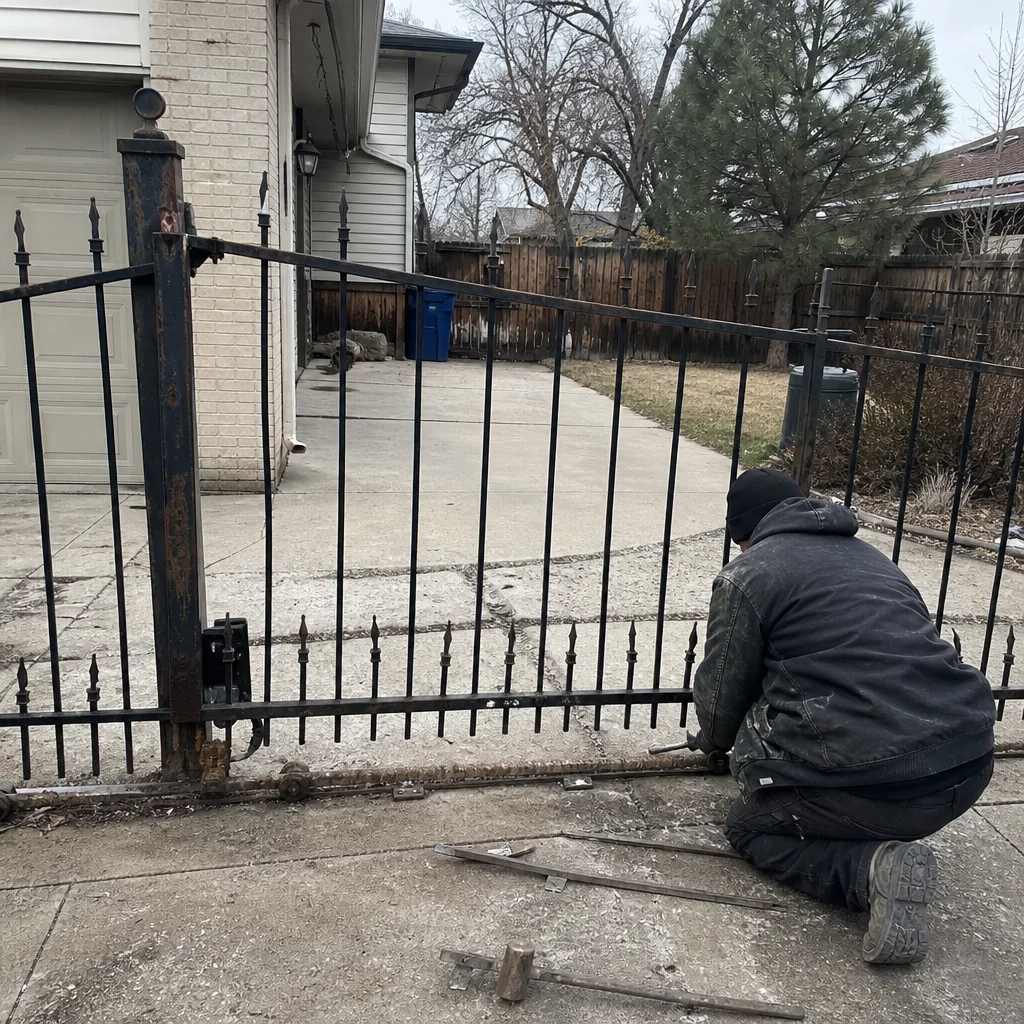
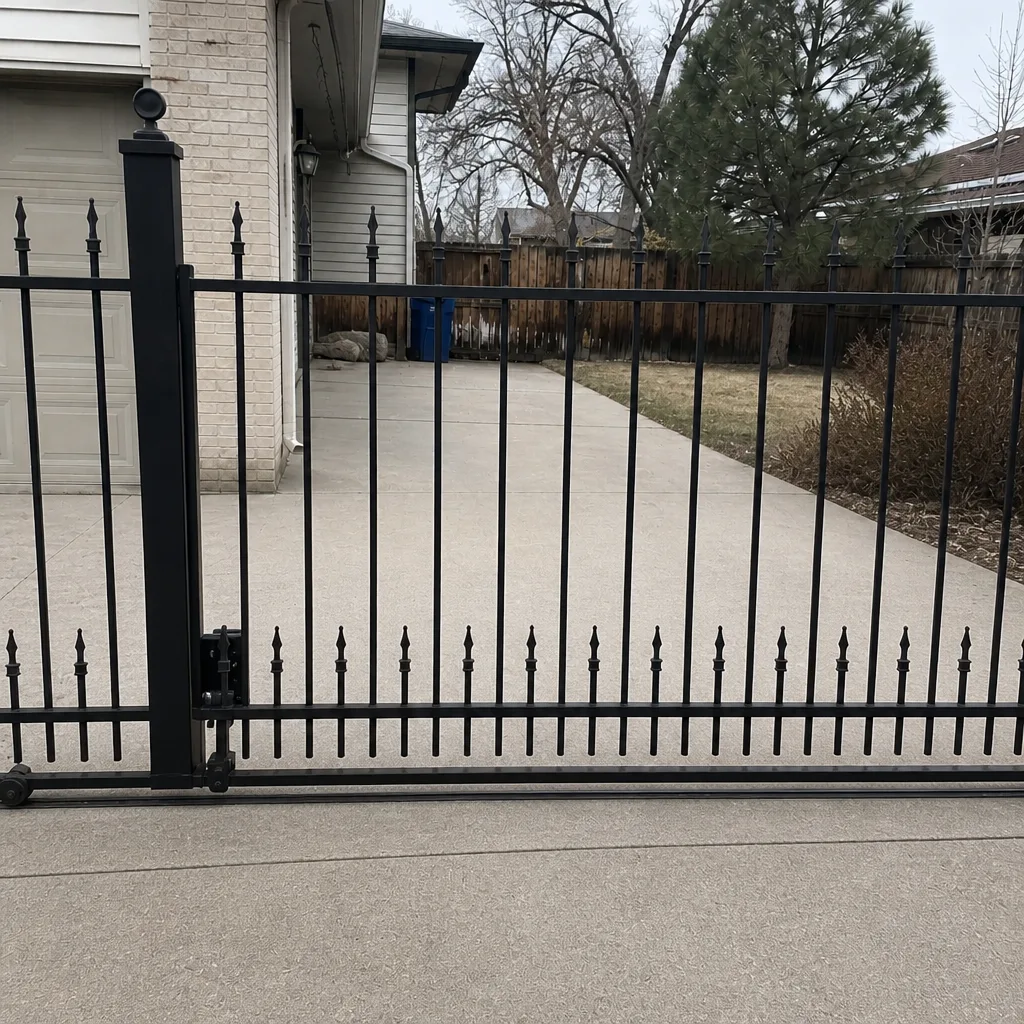
See the difference
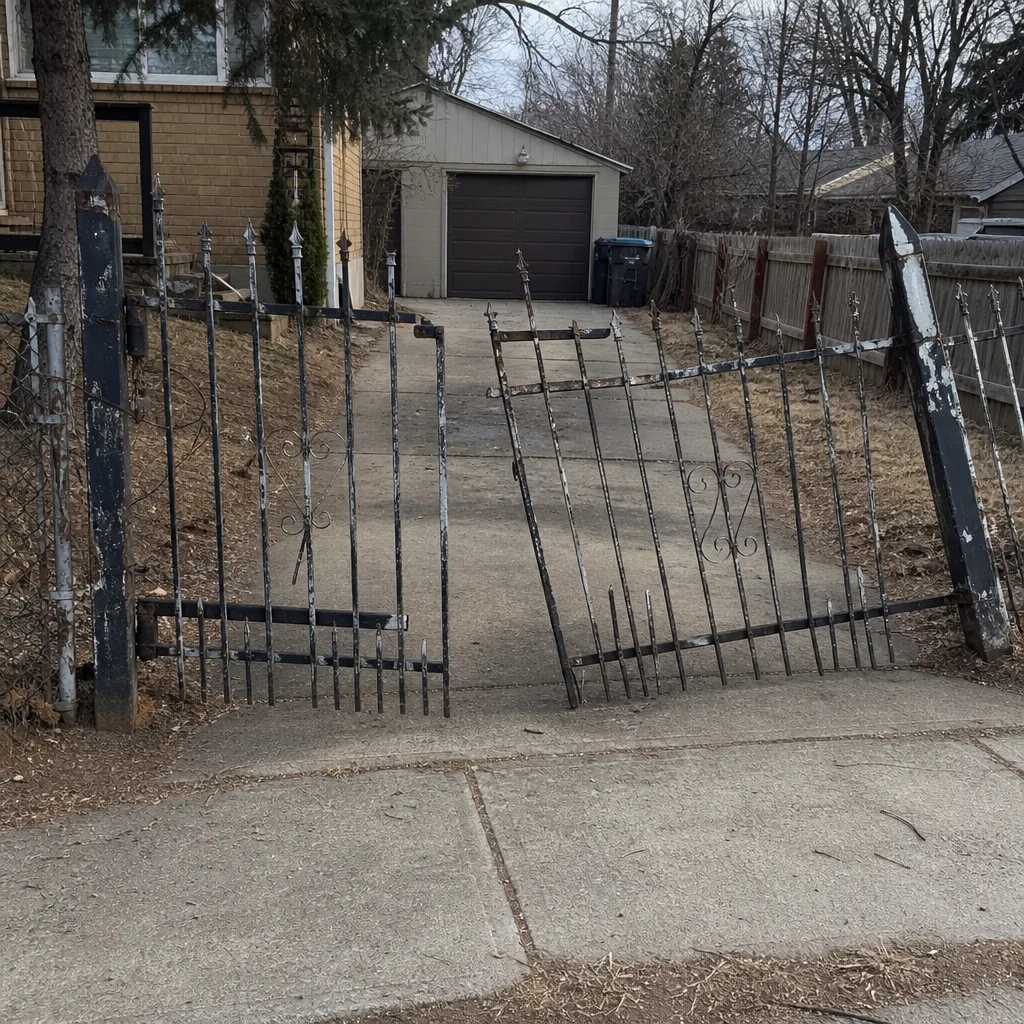 Before
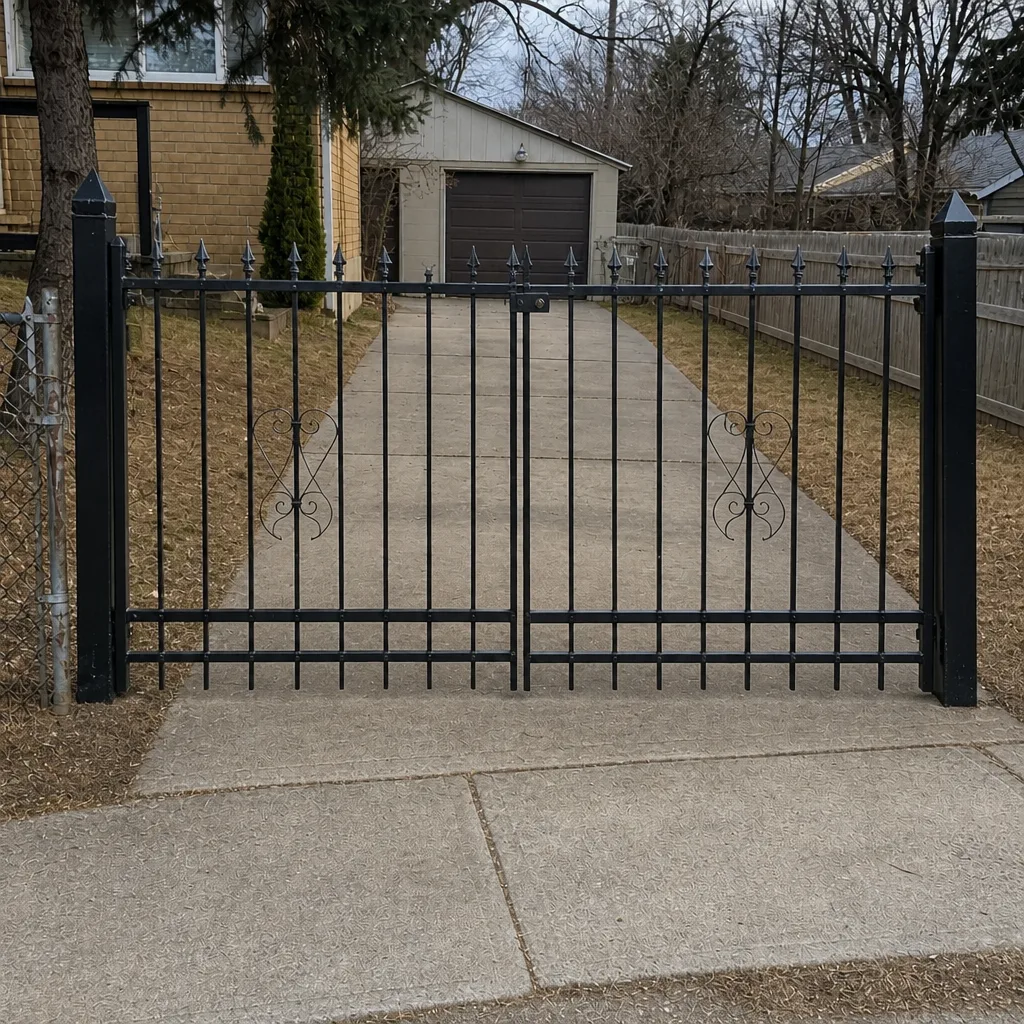 After
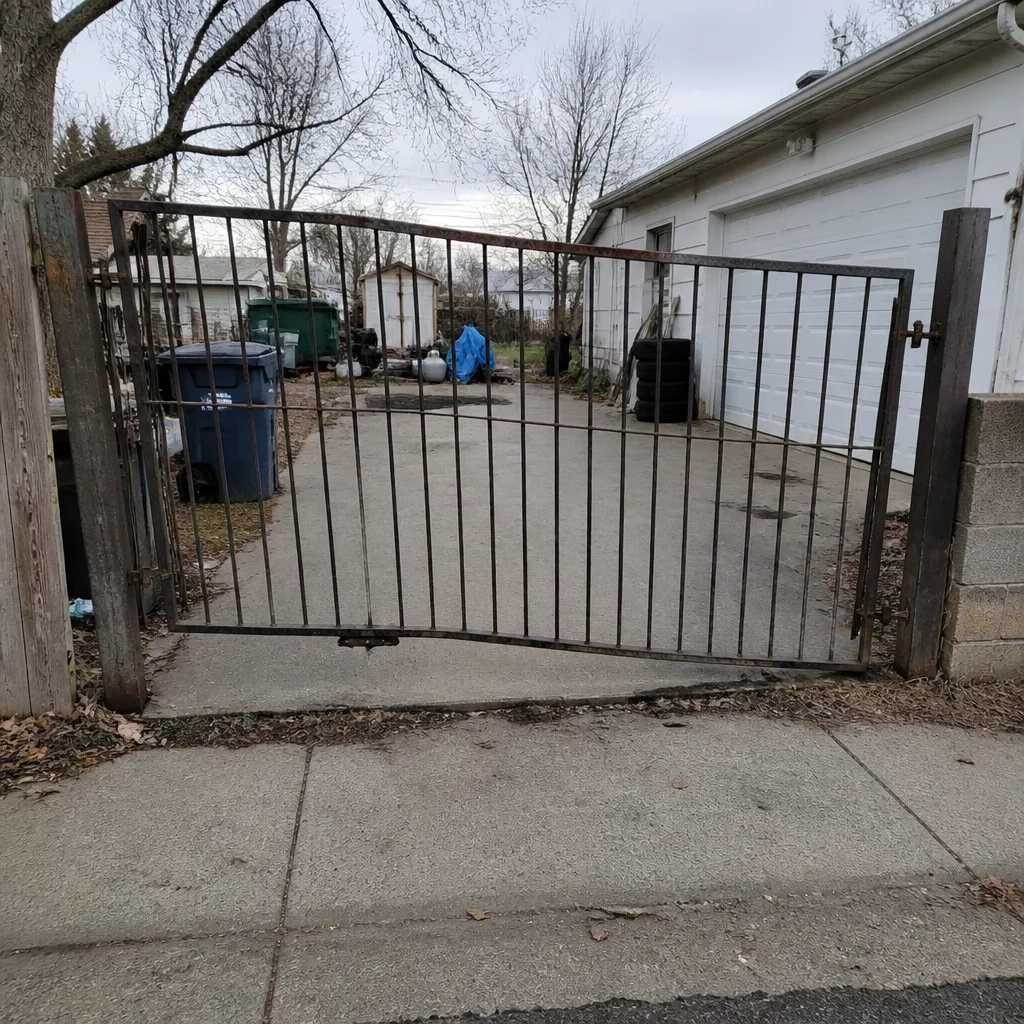 Before
 After
 Before
 After
When to Call a Professional
Call a professional when the repair touches your gate’s post, its operator wiring, its loop detector, or its entrapment protection system. Call us if your gate reverses at random, if it fails the safety edge test in your operator’s manual, if a post is leaning, if a hinge bracket is bent, if a weld cracked, or if the limit switch adjustment doesn’t take after two or three attempts. Post work and safety-device work carry risks that no homeowner should absorb. Lakewood Gate Repair offers free estimates in Lakewood. Call (866) 330-9331. We answer 24/7. Fast dispatch from 7am to 7pm, Sunday through Friday.
Frequently Asked Questions
Yes, on most operators with mechanical limit switches, adjusting the endpoints is a safe homeowner task using the procedure in your manual. The parts to check are turning the cam a quarter-turn at a time and testing after each change. If your operator uses electronic limits through the control board menu, the adjustment is still doable but less forgiving of a wrong parameter, and we’d suggest calling if the manual isn’t clear. Call (866) 330-9331 for an exact quote if you’d like a technician to handle it. Estimates are free.
A leaning post repair in Lakewood is quoted per job after the technician checks the footing depth and the soil, because a post that looks like a small re-level can turn out to need a full re-set once the concrete is pulled. The written estimate is agreed with you before any work starts, so the invoice matches the quote. Call (866) 330-9331 for an exact quote. Estimates are free.
No. A gate that reverses at random is almost always an alignment issue with a photo eye, a failing safety edge, or a drift in the limit position, and all three are safety devices that need proper diagnostics with a meter. Getting the reversing function right is not a job to attempt at home. Call (866) 330-9331. We answer 24/7 for the phone and the dispatch window is 7am-7pm Sunday through Friday.
We wouldn’t recommend it. A vehicle loop requires cutting the driveway in the right place, laying the loop in the correct geometry, and tuning the detector to the specific loop. A loop that’s off by a few inches or tuned wrong reads cars inconsistently, and the fix means cutting the driveway again. Call (866) 330-9331 for a free estimate on the install.
Call us before you do anything else, and don’t use the gate until a technician has looked at it. Undoing a failed attempt is a different job than the original repair, and it usually costs more because the technician has to diagnose both the original fault and whatever the attempt left behind. Call (866) 330-9331 for an estimate. We answer 24/7.
Yes, we work on all nine brands we specialize in: LiftMaster, FAAC, BFT, Linear, Viking, Ghost Controls, DoorKing, Elite, and Mighty Mule. We cover residential and light-commercial operators within that roster, which means the diagnostic and parts approach is right for your gate the first time. Call (866) 330-9331 for an exact quote on your repair. Estimates are free, and the price is set per job by the written estimate before any work starts.
The Bottom Line
The DIY-versus-professional question comes down to which repair you’re facing, not how confident you feel. Lubrication, limit switch adjustment, remote reprogramming, and minor hinge tightening are reasonable homeowner tasks. Post work, operator wiring, loop detector installation, welding, and anything touching the entrapment protection system should go to a trained technician every time. In Lakewood, clay soil, freeze-thaw cycles, and UV exposure make several of those “safe to try” repairs riskier than they look in a video. Undoing a failed attempt costs more than the original repair would have. If you’re on the fence, call.
If you’re in Lakewood with a gate problem and you want a straight answer about whether it’s a DIY job or a technician’s, call Lakewood Gate Repair at (866) 330-9331 for a free estimate. Our technicians have up to 12 years of experience and work on your brand, from a Ghost Controls system on a residential driveway to a DoorKing operator on a light-commercial property.
Written by the team at Lakewood Gate Repair.