
Last updated November 15, 2026
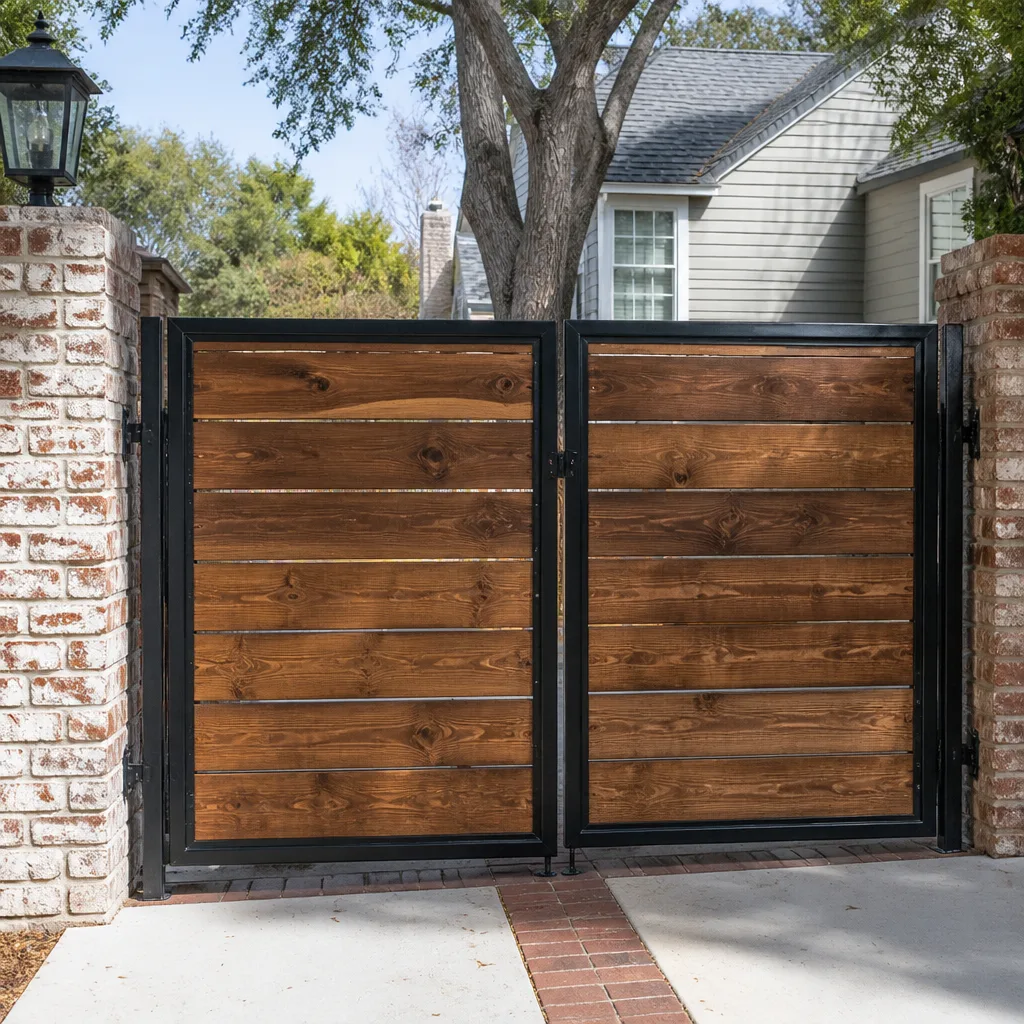 Wood & steel frame
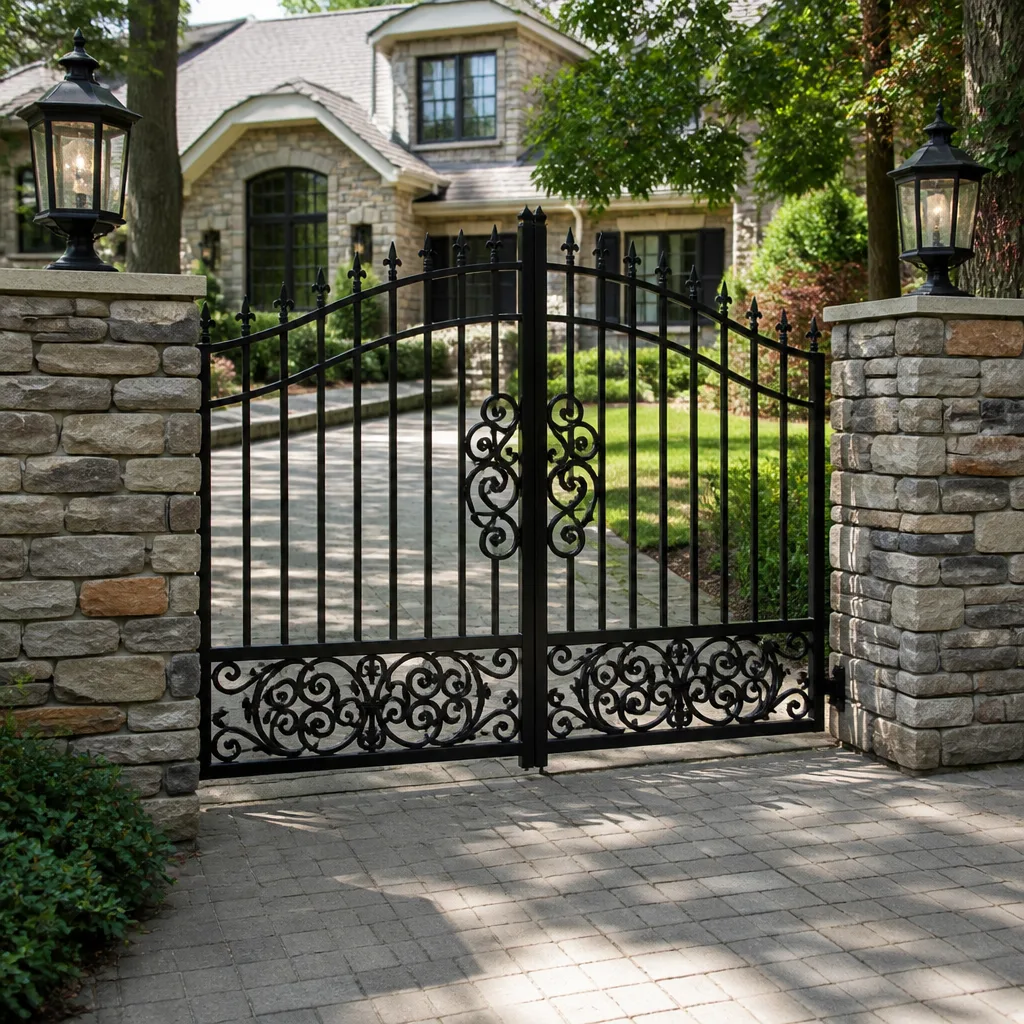 Wrought iron
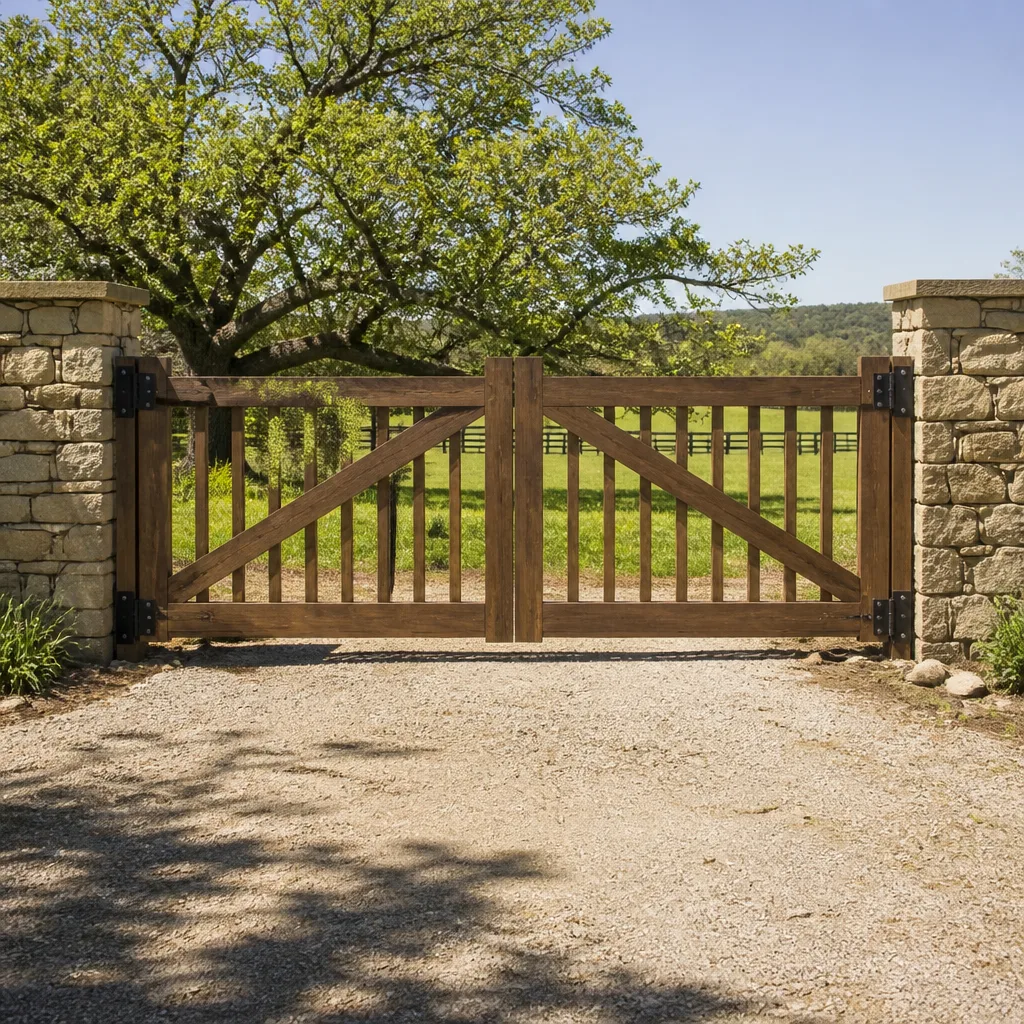 Farm & ranch
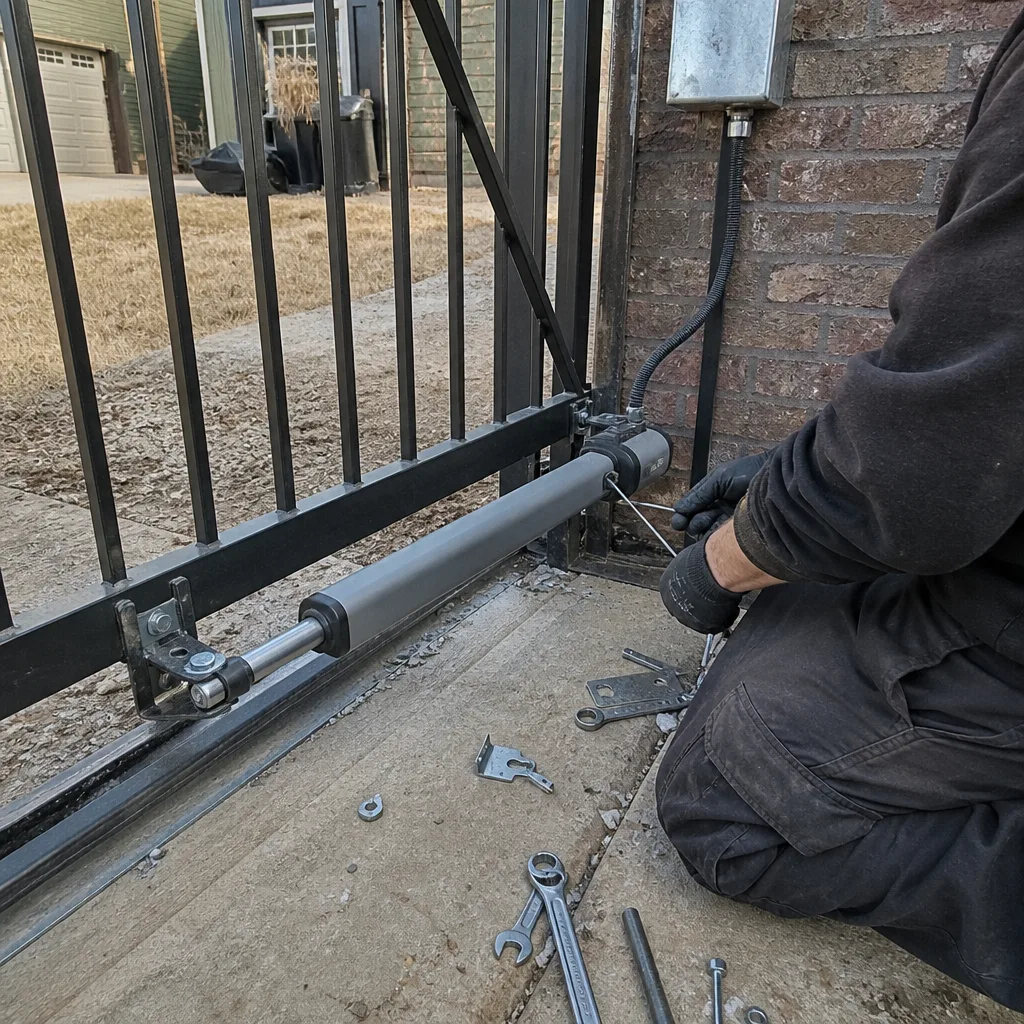
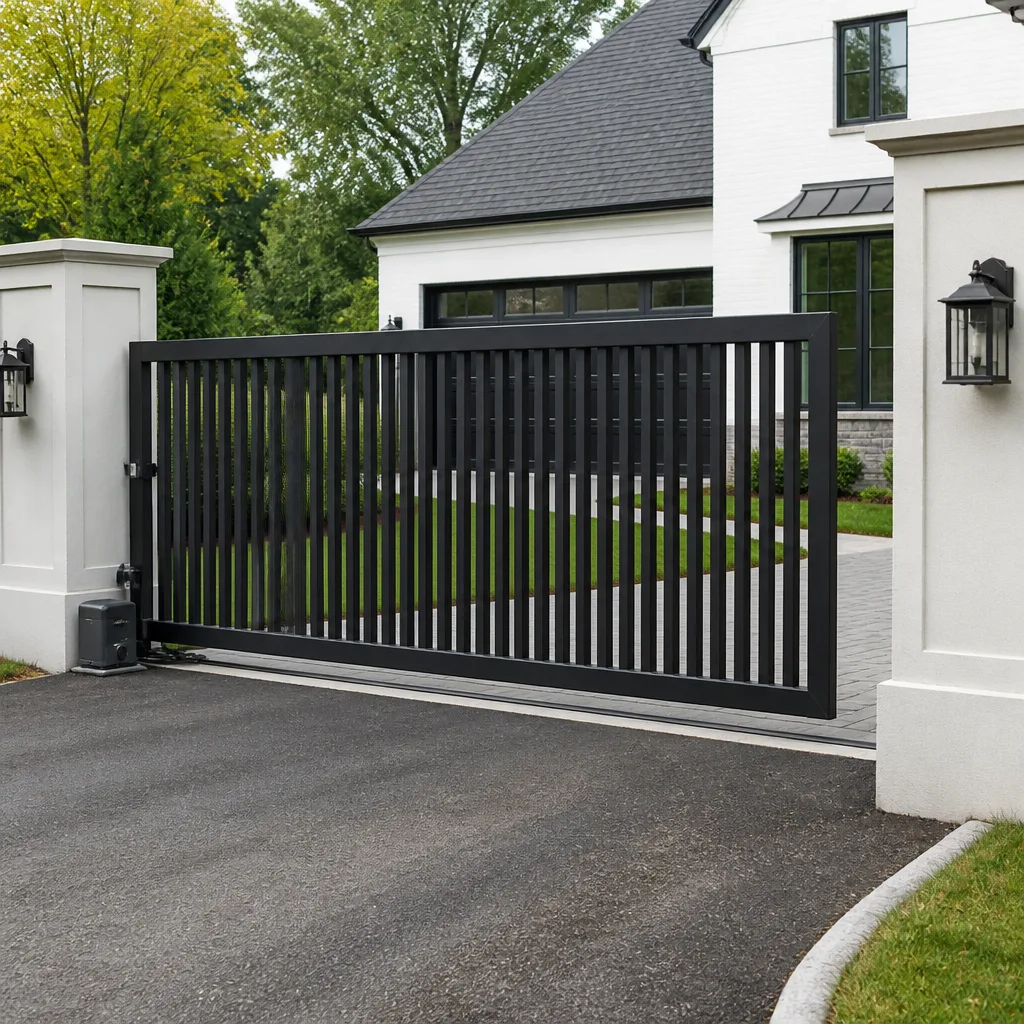 Sliding driveway gates
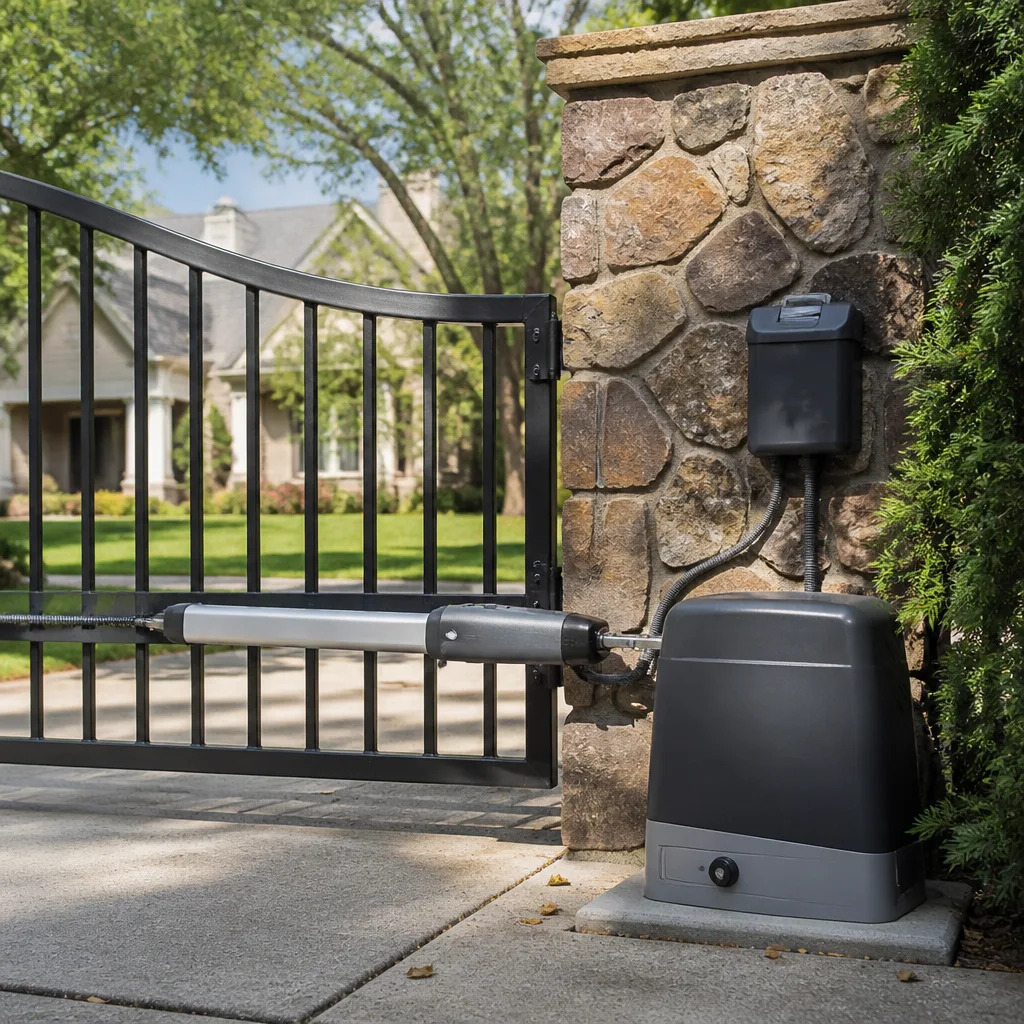 LiftMaster operators
Free on-site gate assessment - hinges, posts, and your LiftMaster or Nice gate operator checked before anything is quoted
The assessment is free and the quote is the invoice.
Get your free estimateHow to Hire a Gate Repair Contractor in Lakewood: A Step-by-Step Guide
Here’s a test you can run in the first two minutes of any phone call: ask the contractor to explain the difference between a rack-and-pinion slide gate and a chain-drive system. If the answer comes slow, or lands somewhere near “they’re all pretty similar,” you’re talking to someone who does gates as a side job. That matters more than most hiring guides admit. Gate work in Lakewood lives on slopes, in freeze-thaw soil, and under operators that generalists rarely see. This guide walks you through the exact questions, estimate red flags, and vetting steps that separate a real gate specialist from a garage door company that took your call because nobody else was free.
Quick Answer
To hire a gate repair contractor in Lakewood, verify trade-specific knowledge first (ask about slide vs. swing systems and specific operator brands), insist on an on-site measurement before any operator or gate is quoted, and read the estimate to confirm labor and parts are itemized rather than bundled. A legitimate gate specialist will recognize your existing hardware, whether it’s a LiftMaster residential operator or a FAAC swing system, and will inspect the posts and foundation before recommending anything. If a bidder hesitates on mechanical questions or skips the site measurement, keep calling.
Styles & brands we work with
- Wrought iron
- Wood & steel frame
- Farm & ranch
- Sliding driveway gates
- LiftMaster operators
Table of Contents
- Why a Garage Door Company Is the Wrong Call for Gate Work
- The Trade Knowledge Questions to Ask Before You Schedule
- Why a One-Brand Contractor Is a Warning Sign
- How to Read a Gate Repair Estimate Line by Line
- What a Real Gate Specialist Brings to the Job
- Gate Repair Bid Red Flags Specific to Lakewood
- What Happens When You Call
- A Note for Property Managers
Why a Garage Door Company Is the Wrong Call for Gate Work
Gates and garage doors share a motor and a remote, and that’s roughly where the overlap ends. A garage door travels on a fixed track in a controlled opening. A gate swings or slides across open ground, on hinges or a track set into soil that moves with the seasons. The mechanisms, the safety devices, and the failure patterns are different trades. When a garage door company takes gate work, the technician is often learning your system on your dime.
Here in Lakewood, that gap shows up fast. Our soil swells and shrinks with moisture through the year, and a gate post that was plumb in July can lean by February. A company that doesn’t inspect footings and post depth will adjust the hinge, collect payment, and leave you with the same sag within a season. That’s the “second repair call” pattern we see most often: a generalist fixes the symptom, and the underlying post or track problem keeps working.
There’s also the parts question. A gate operator’s control board, safety edges, and loop detectors aren’t stocked in the same catalog as garage door springs and panels. Specialists who work on gates every day build pattern recognition across brands and failure types. They know that an electric gate repair call on a FAAC swing operator often traces back to a worn limit switch rather than the motor itself, and they can diagnose it before the appointment is scheduled.
What “specialist” actually means
It doesn’t mean the contractor only works on one brand or one gate style. It means every job, every day is a gate job. At Lakewood Gate Repair, that’s the whole service list: gate repair, electric gate repair, and gate installation. Nothing else competes for the schedule or the training budget. When you’re vetting anyone in Lakewood, ask what percentage of their work is gates. A vague answer is your answer.
The Trade Knowledge Questions to Ask Before You Schedule
Generic “are you licensed and insured” questions are table stakes, and most homeowners already ask them. The questions below are the ones that separate a gate specialist from a generalist who will figure it out on-site. Ask them on the phone. A real specialist answers in specifics, because these are the systems they touch every week.
- “What kind of gate do I have, and how would you know?” A specialist will ask you to describe or photograph the gate, then identify whether it’s a slide or swing system, what the operator is mounted to, and whether the track is above-ground or buried. If they can’t tell slide from swing without seeing it, that’s a signal.
- “How does a rack-and-pinion slide gate differ from a chain-drive system?” The rack-and-pinion system uses a toothed rail bolted to the gate and a pinion gear on the operator. A chain-drive pulls the gate with a roller chain. The failure modes, maintenance needs, and parts are different. A gate technician answers this without pausing.
- “When a swing gate won’t open, what’s the first thing you check?” Good answers start with power and the control board, then the safety devices, then the operator itself. A technician who jumps straight to “the motor’s probably bad” hasn’t thought it through.
- “How do you handle safety edges and photo-eyes?” A gate that closes on a person or a vehicle is a liability. Safety edges and photo-eye sensors are not an upsell; they’re the reason the system is legal to operate automatically. A specialist will tell you this directly.
- “Do you inspect the posts and footing before quoting a repair?” This is the question that catches generalists. Post and foundation inspection is the core of every gate diagnosis in Lakewood’s soil. If the answer is “if we need to,” push back.
- “Which brands have you worked on recently?” Listen for specific names: LiftMaster, FAAC, BFT, Linear, Viking, Ghost Controls, DoorKing, Elite, Mighty Mule. A specialist will name several because they see them all.
You don’t need to know the answers yourself. You’re listening for whether the person on the other end does. Confidence plus specifics is the pattern you want. Confidence plus hedging is not.
Why a One-Brand Contractor Is a Warning Sign
If a contractor sells and installs only one brand of operator, that’s not automatically a problem, but it changes the nature of the conversation. A single-brand contractor is a dealer first. Their recommendation is shaped by what’s on their shelf, not necessarily what fits your gate, your property, or your existing hardware. That’s a conflict you want to notice before you sign anything.
Brand-agnostic expertise looks different. It means the contractor can walk up to a residential Mighty Mule gate operator and a commercial-grade DoorKing system on the same week and diagnose both on their own terms. It means they know when a FAAC swing operator can be repaired and when it’s time to replace, and they can explain the difference in plain language. It means they’ll tell you that a Linear operator is a solid choice for one application and the wrong one for another, without steering you by what’s easiest to sell.
How to tell in one question
Ask: “If my current operator is fine but the gate itself needs work, would you recommend replacing the operator too?” A brand-locked contractor will lean toward replacement. A specialist will separate the two problems and quote accordingly. That single question tells you whether you’re getting an assessment or a sales pitch.
We work on your brand whether it’s a consumer-tier system or a professional one, and the diagnosis starts with what’s actually on your property. That’s what fluency across nine major manufacturers (LiftMaster, FAAC, BFT, Linear, Viking, Ghost Controls, DoorKing, Elite, and Mighty Mule) actually buys you: the ability to recognize your system on sight and fix it on its own terms.
How to Read a Gate Repair Estimate Line by Line
An estimate is not a single number. It’s a document you should be able to read like a receipt. The best gate repair estimates in Lakewood break out labor and parts separately, name specific components, and state the scope of work in a way you can hold the contractor to. Here’s what a legitimate estimate contains and how to read it.
What a good estimate itemizes
- Diagnostic findings: What was found wrong, in plain language. Not just “operator failure,” but which component, and why.
- Labor: A clear line for labor, quoted as a job price. Not bundled into parts.
- Parts: Each part listed by name (motor, control board, safety edge, hinge, roller, rack section) with a price per part, not a single lump.
- Post and foundation notes: Whether post and footing inspection was performed and what was found. If the estimate says nothing about the posts, that’s a red flag on any slide gate repair.
- Safety device status: Whether the safety edges and photo-eyes are present and functional after the repair. Any electric gate repair that skips this line is incomplete.
- The total, and the note that the written estimate sets the final price: The price you’re quoted before work begins is the price you pay. That should be on the document.
What bundled pricing hides
When labor and parts are rolled into one lump sum, you can’t tell whether you’re paying for a $300 part or a $900 one, or whether the labor reflects a simple swap or a full rehang. Bundling also makes it impossible to compare two bids, which is likely the point when a generalist quotes this way. Ask for the itemization in writing. A specialist will provide it without grumbling.
An estimate without a site measurement is not an estimate
An operator or a new gate quoted over the phone, without anyone measuring the opening, the gate weight, the slope, or the track run, is a guess. Gate systems are sized to the specific property. A specialist measures first and quotes second. If you’re comparing gate repair bids and one arrived without an on-site visit, set it aside.
What a Real Gate Specialist Brings to the Job
You don’t need to inspect the truck, but you do need to know what kind of kit the technician is bringing, because it tells you whether they’re set up to solve the problem on the first visit or make a second trip for parts. A dedicated gate technician arrives with gate-specific tooling and diagnostic gear, not a bag of garage door tools and a hope.
- Multimeter and wiring tools: Electric gate repair starts with testing power, continuity, and control signals. Any technician without a meter to diagnose a control board is guessing.
- Gate-specific hardware: Hinges, rollers, rack sections, operator mounting brackets, and safety edges sized for gate systems. Garage door hardware doesn’t substitute.
- Operator parts for the common brands: Control boards, limit switches, and remotes for mainstream and professional operators.
- Post and footing assessment tools: A level, a probe, and the knowledge of how to check soil movement around a gate post. This is where Lakewood gate work lives or dies.
- Safety device test gear: Photo-eyes and safety edges have to be tested, not just inspected. A specialist tests them before they leave.
When a generalist improvises, the signs are predictable. They drill new holes in the frame to make a hinge fit. They adjust a limit switch by feel and leave the gate operating outside its designed travel. They quote a motor replacement when the real problem is a sliding gate that has come off its track by an inch. All three are second calls waiting to happen.
Our technicians have up to 12 years of experience, and every one of them is on gate work every day. That’s the idea behind “from the motor to the hinge”: the diagnosis covers the whole system, not the piece that looks broken first.
Gate Repair Bid Red Flags Specific to Lakewood
Some bid language is generic to the trade. Others are specific to what goes wrong on gates in this climate and this housing stock. Here are the ones to watch for, each with a quick test of how a specialist handles it differently.
Vague warranty language
“Warrantied” with no specifics tells you nothing. Ask what’s covered, for how long, and whether it’s labor, parts, or both. A specialist explains the terms in plain language. No confirmed warranty term has been approved by our business, so if a bidder quotes you a number you should still ask them to put it in writing.
No mention of post or foundation inspection
This is the biggest red flag in Lakewood specifically. A gate whose posts are leaning or whose footing has shifted will fail again no matter how many times the operator is adjusted. Any bid that doesn’t address the posts is treating the symptom. Ask directly: “Will you check the posts and footings before quoting?” If the answer is anything short of yes, keep looking.
Operators quoted without a site measurement
Gate weight, opening width, slope, and the number of cycles per day all affect which operator is right. A phone-quoted operator, sight unseen, is either a placeholder or a sales number. Either way it isn’t an estimate.
No safety device line on an electric gate
An electric gate repair that reinstalls an operator without testing safety edges and photo-eyes is not finished. It also leaves you exposed if the system is triggered. A specialist flags this every time.
A pushy timeline
There’s a difference between urgency on a gate that fails to close (the security concern is real) and urgency used as a sales tactic. A specialist will tell you what’s actually critical and what can wait for a scheduled visit. A hard close is a warning.
What Happens When You Call
Most gate repair conversations start with a phone call before any appointment is booked. Here’s what to expect when you call us. We answer 24/7. Fast dispatch from 7am to 7pm, Sunday through Friday. Gates that fail on a Saturday can still call; we’ll book you into the next opening.
The first few questions are diagnostic. We’ll ask what kind of gate you have, how it’s moving (or not), what you’ve already tried, and roughly when the problem started. You don’t need to know the brand or the model. If you have a photo of the operator, the control board, or the gate itself, that helps. If not, we’ll work from your description and confirm on-site.
If the problem sounds like an urgent security issue, like a swing gate stuck open or a slide gate that won’t fully close, we’ll prioritize it in the schedule. If it sounds like something that can wait for a scheduled visit, we’ll say so. The written estimate is free, and the price is quoted and agreed before any work starts. You’ll never get a surprise invoice after the fact.
What the first visit covers
- On-site inspection of the gate, operator, and controls.
- Post and footing check, including how the gate has settled since installation.
- Safety device test on any electric gate.
- Written estimate with labor and parts itemized separately.
- Scheduling for the repair or installation once you approve the estimate.
A Note for Property Managers
Property managers in Lakewood have a different problem than homeowners. You’re not just picking a contractor; you’re managing access for multiple gates, coordinating with tenants, and keeping records that hold up against an HOA or a liability review. The vetting questions above still apply, but the stakes on safety device documentation and post inspection go up.
Ask any gate contractor you’re screening to provide written documentation of the safety edge and photo-eye status on every electric gate on the property. If a slide gate serves a shared driveway, verify that the track and footing have been inspected, not just the operator. And when you’re comparing bids across multiple gates, insist on line-item estimates per gate so you can see whether the pricing tracks the work.
It also helps to have a contractor who can service more than one brand, since a single property can end up with a DoorKing on the entry and a Linear or BFT on a secondary access point. Brand fluency isn’t a luxury on a multi-gate property; it’s the difference between one vendor and three.
Common Mistakes to Avoid
- Hiring a garage door company that also “does gates.” The mechanical systems are different, and the parts expertise doesn’t transfer. You’ll often pay for a repair and a follow-up correction.
- Skipping the post and footing question. In Lakewood’s soil, a gate post that’s out of plumb will keep pulling the gate out of alignment no matter how many times the operator is adjusted.
- Accepting a bundled estimate. A single lump sum hides what you’re paying for and makes it impossible to compare bids. Ask for labor and parts itemized.
- Waving off the safety edge test. Photo-eyes and safety edges are the reason an electric gate is legal to operate automatically. Any electric gate repair that skips the test isn’t complete.
- Quoting an operator over the phone. Gate weight, slope, and duty cycle determine which operator is right. Nobody can pick one without measuring first.
- Ignoring the brand mix on your property. If your gate has a Mighty Mule operator on one access point and a FAAC on another, a contractor who only knows one brand will eventually refer you out. Find one who works both.
- Booking on price alone. The lowest bid on gate work is usually the one that doesn’t include the post inspection. That’s not a lower price; it’s a smaller scope.
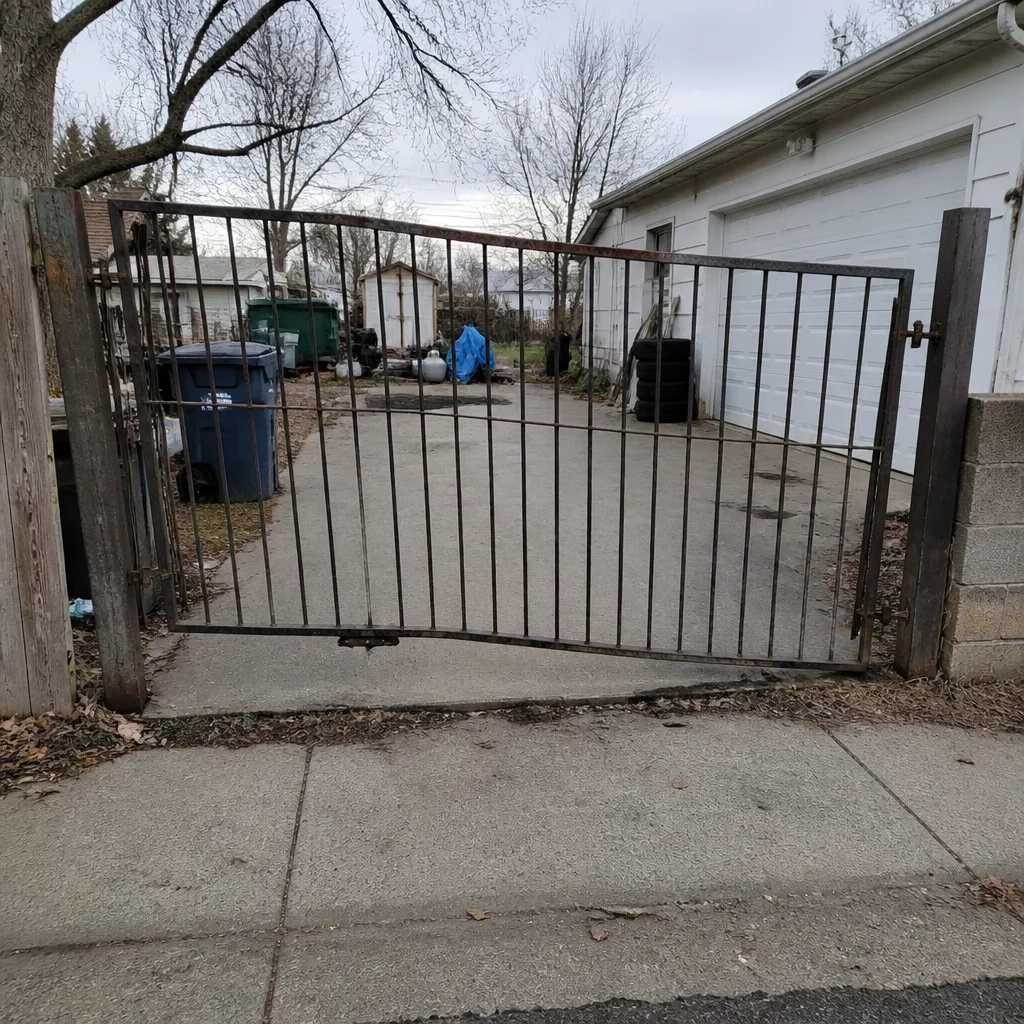
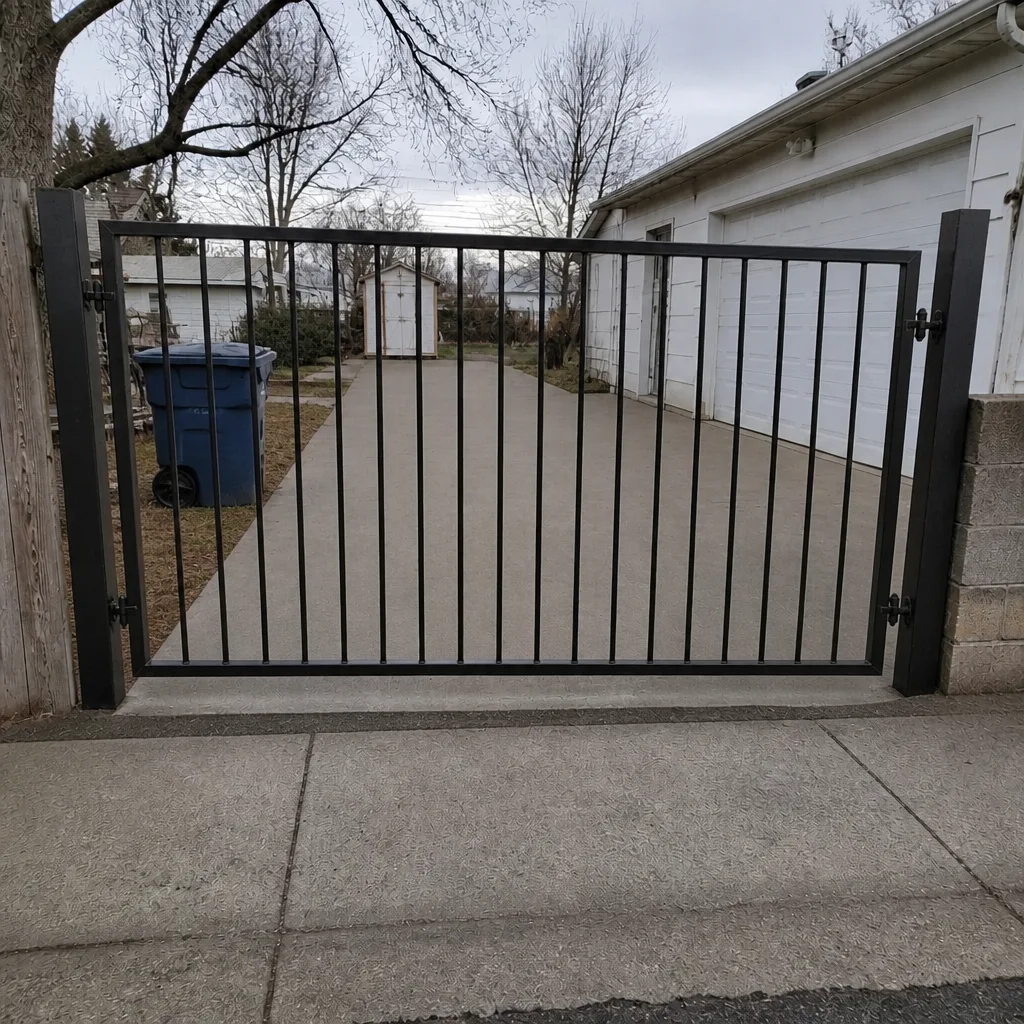
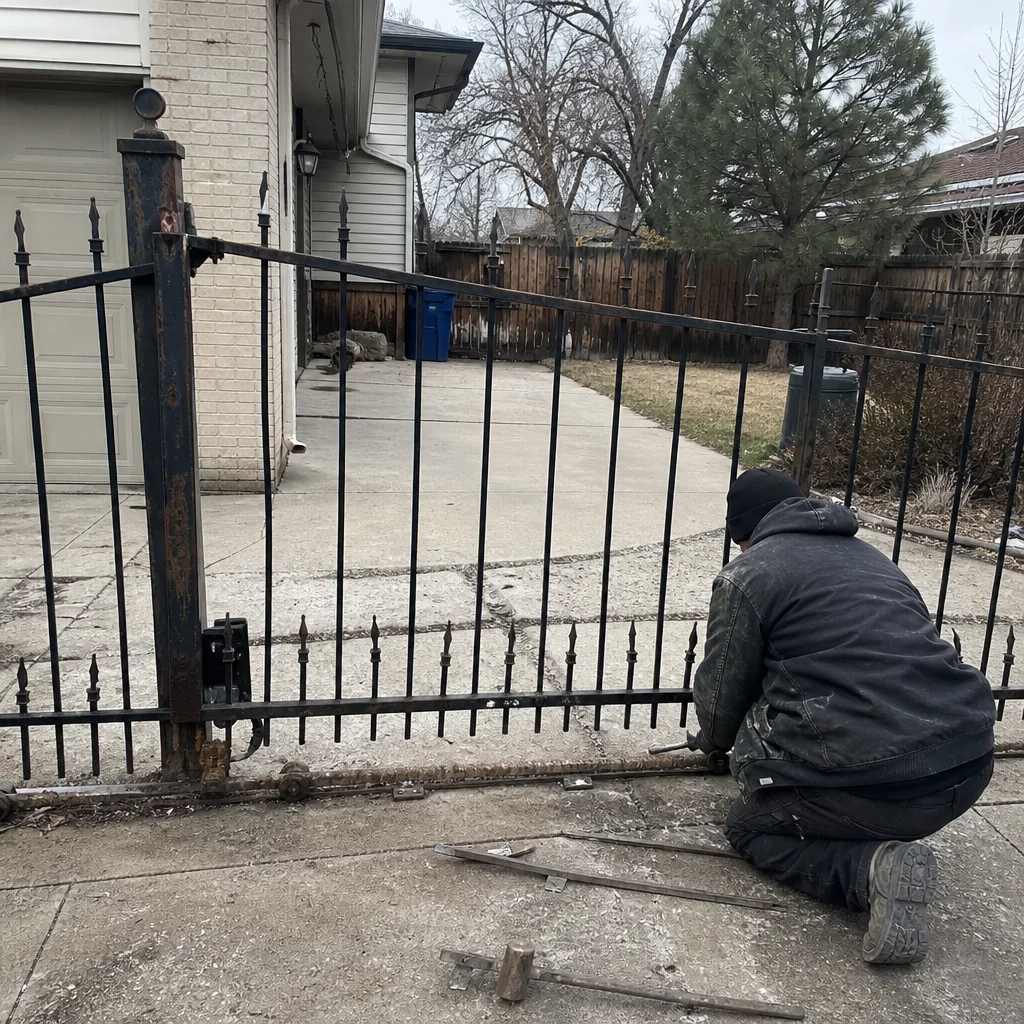
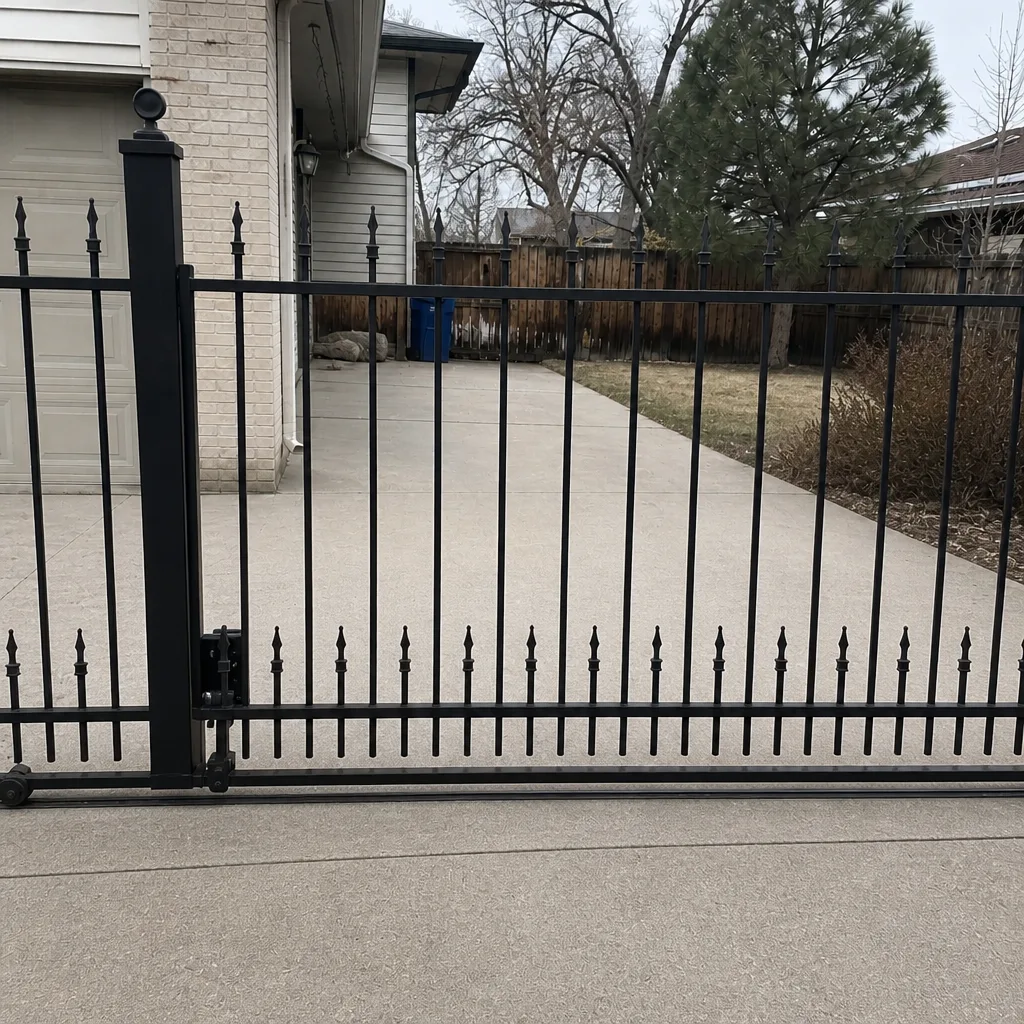
See the difference
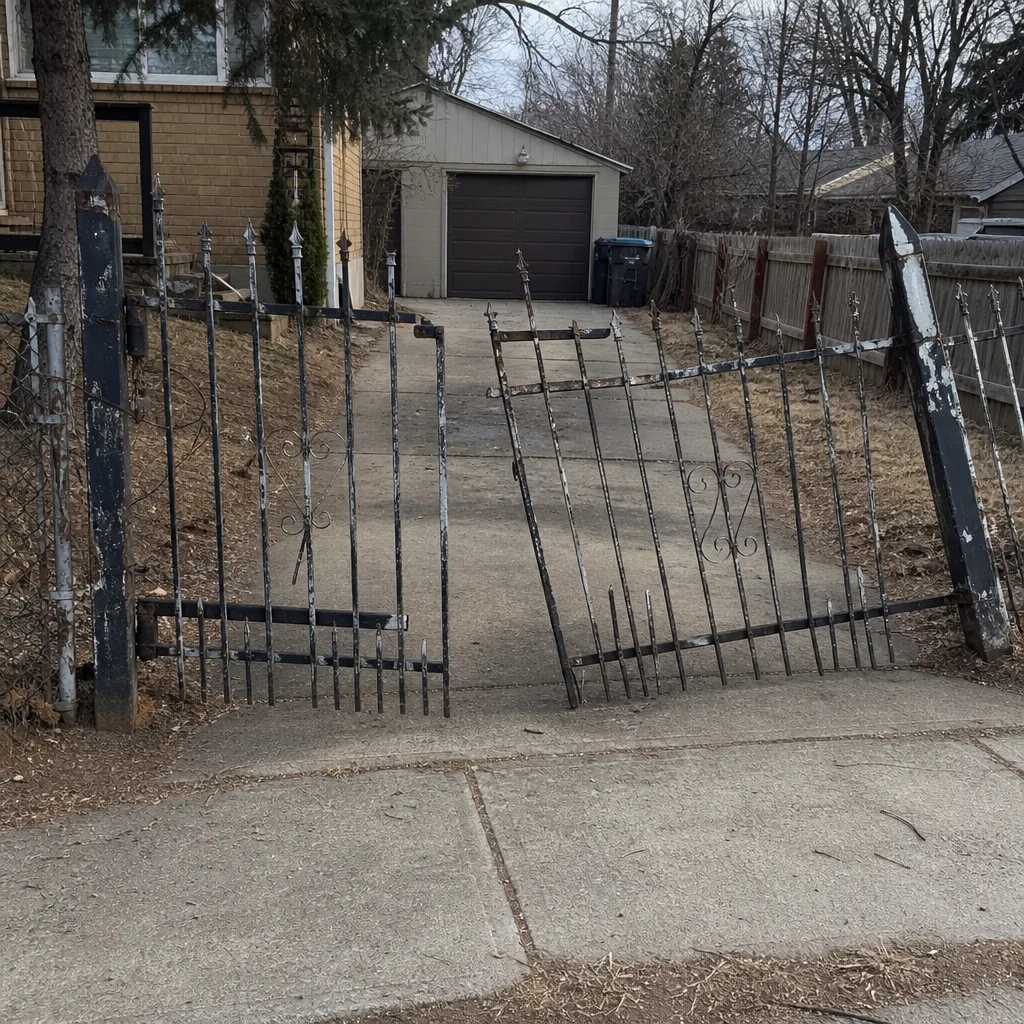 Before
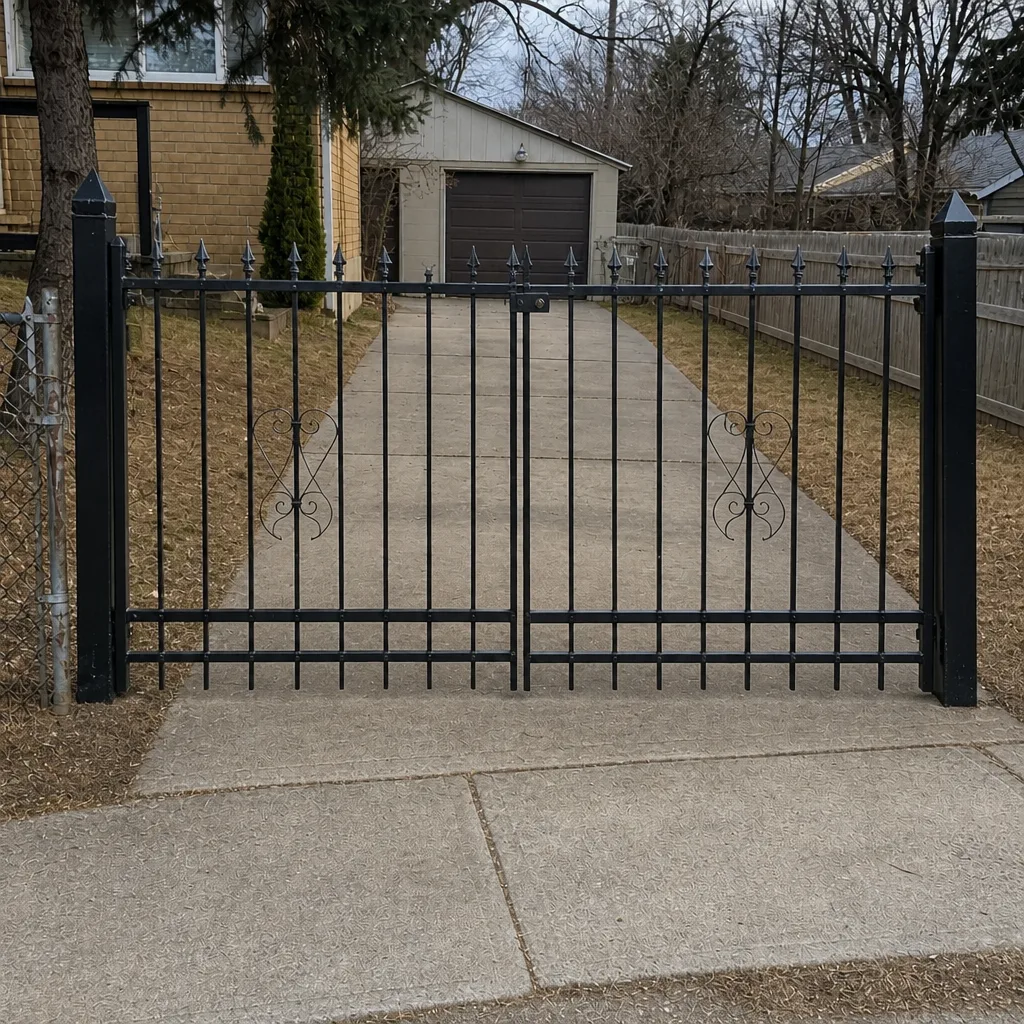 After
 Before
 After
 Before
 After
When to Call a Professional
Some gate issues are clearly beyond a homeowner’s reach. An electric gate operator runs on household current, and the wiring, control board, and safety devices are not a place to experiment. A slide gate that has come off its track can weigh hundreds of pounds and drop without warning. Swing gate panels are heavy and can crush hands or feet if they come free of a hinge. If any of these describe your situation, call a trained technician rather than attempting a DIY fix. Post and footing problems, limit switch adjustment, and operator wiring are all in that category.
Other situations are less urgent but still worth a call: a gate that’s gotten noticeably harder to open over a season, an operator that trips its breaker intermittently, a remote that only works from a short distance, or a gate that’s started scraping on one side. Each of these usually points to a specific component that’s wearing, and each is cheaper to fix before it fails completely.
Lakewood Gate Repair offers free estimates in Lakewood. Call (866) 330-9331. We answer 24/7. Fast dispatch from 7am to 7pm, Sunday through Friday.
Frequently Asked Questions
The price depends on the specific system and the component that failed. A simple hinge or roller replacement costs less than an operator repair, and a control board replacement costs less than a full operator swap. The written estimate sets the final price, and it’s free to get one. Call (866) 330-9331 for an exact quote.
For urgent issues like a gate stuck open or one that won’t close, we prioritize in the schedule. We answer 24/7, with fast dispatch from 7am to 7pm, Sunday through Friday. Call (866) 330-9331 and we’ll confirm timing on the phone.
A gate installation includes the gate itself, the operator or manual hardware, hinges or track and rack, posts and footings set to proper depth, wiring for any electric system, and tested safety devices. Every installation is measured on-site before the estimate is written. Call (866) 330-9331 to schedule a free measure and a written price.
Yes. Electric gate installation includes the power connection, the control board, the safety edges, and the photo-eye sensors that make the system safe to operate automatically. We test all of it before we leave. Call (866) 330-9331 to talk through your specific property.
A slide gate rolls horizontally along a track or cantilever arm and doesn’t swing open. A swing gate pivots on hinges, opening like a door. Most homeowners can tell just by watching the gate operate. If you’re not sure, describe it on the phone and we’ll identify it from there.
We work on nine major gate system brands: LiftMaster, FAAC, BFT, Linear, Viking, Ghost Controls, DoorKing, Elite, and Mighty Mule. That covers both residential DIY-tier systems and professional-grade commercial operators. If you’re not sure of your brand, we’ll identify it on-site. For more about our full range of work, see Lakewood Gate Repair or the Lakewood service area page.
The Bottom Line
Hiring a gate repair contractor in Lakewood comes down to three things: trade-specific knowledge, on-site measurement, and an itemized estimate. Ask the mechanical questions on the phone. Insist on post and footing inspection before any repair is quoted. Refuse bundled pricing and any operator quoted without a site visit. Verify that safety edges and photo-eyes are tested on every electric gate. A specialist will pass all of it without blinking, and a generalist will stumble on at least one. Bring us in for a free estimate and we’ll show you what the assessment looks like from the other side.
Call (866) 330-9331 for a free estimate. We answer 24/7. Fast dispatch from 7am to 7pm, Sunday through Friday. The estimate is free and the written price is agreed before any work begins.
Written by the team at Lakewood Gate Repair.